
Every year, thousands of british households relocate far beyond their local postcodes, yet only about 3.2 miles is the typical moving distance in England and Wales. Tackling a journey across counties or regions feels like entering a whole new chapter. Understanding what truly qualifies as a long-distance move can save time, reduce stress, and help families avoid common pitfalls. This overview breaks down definitions, planning tips, and practical steps for a confident start to any major relocation.
Table of Contents
- Defining Long Distance Moves In The UK
- Types Of Long Distance Relocations
- Planning And Packing For Long Distance Moves
- Choosing A Reputable Moving Company
- Understanding Costs And Insurance Options
- Common Pitfalls And How To Avoid Them
Key Takeaways
| Point | Details |
|---|---|
| Understanding Long-Distance Moves | A long-distance move in the UK is generally defined as a relocation of 50 miles or more, often necessitating complex logistical planning. |
| Types of Long-Distance Relocations | These can be broadly categorised as employer-initiated moves or personal moves, each requiring different planning strategies. |
| Planning and Packing Importance | Successful long-distance moves hinge on meticulous planning and systematic packing to ensure safe transit and minimised stress. |
| Choosing a Reputable Mover | Selecting a trustworthy moving company significantly impacts the relocation experience, emphasising the need for thorough research and transparency in pricing. |
Defining Long Distance Moves in the UK
Understanding what constitutes a long-distance move in the United Kingdom requires a nuanced approach. According to the UK Department for Transport, a long-distance journey is technically defined as a trip of 50 miles or more in one direction with a single main purpose gov.uk.
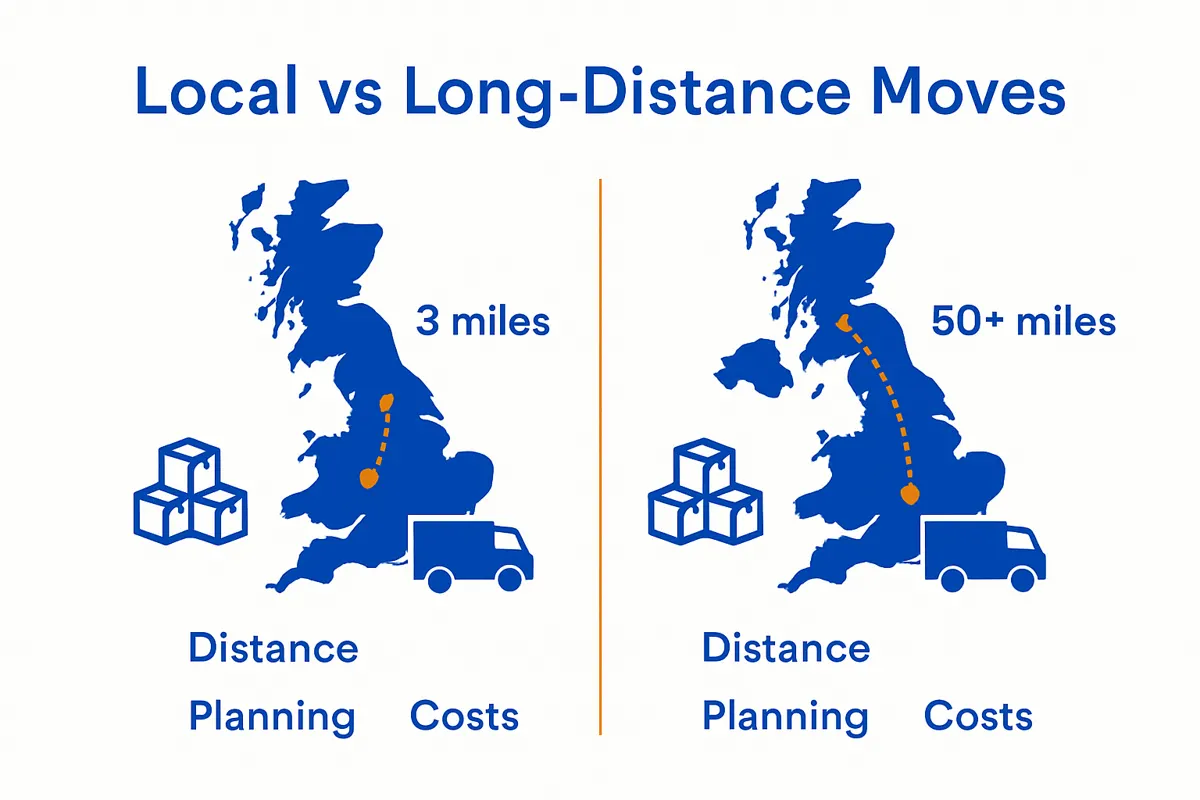
Research from the Centre for Advanced Spatial Analysis reveals a fascinating insight into household mobility. By analysing national data, they discovered that the median distance of a household move in England and Wales is just 3.2 miles cdrc.ac.uk. This statistic means that any relocation exceeding this distance could potentially be categorised as a long-distance move, particularly for residents in smaller counties or regions like County Durham and the North East.
For most families and individuals in the UK, a long-distance move typically involves relocating between counties, regions, or significant geographical areas. This might mean moving from a small town like Darlington to a major city, or transitioning between different regions such as the North East to the South West. These moves often involve more complex logistical planning, increased transportation costs, and more comprehensive removal services compared to local relocations. For those considering such a move, consulting a guide on essential long distance move tips can provide invaluable preparation strategies.
Key characteristics of a long-distance move in the UK often include:
- Relocation beyond immediate local authority boundaries
- Moves requiring significant travel time (typically over 2 hours)
- Relocations involving interstate or inter-regional transitions
- Moves that necessitate more comprehensive planning and specialised removal services
Whether you’re a professional relocating for work, a family seeking new opportunities, or someone looking to change your living environment, understanding the nuances of long-distance moves is crucial for a smooth transition.
Types of Long Distance Relocations
Long-distance relocations are complex undertakings with multiple distinct categories that reflect the diverse reasons people and businesses move. According to nidirect, these relocations can be broadly categorised into two primary types: employer-initiated moves and personal moves. Employer-initiated relocations occur when companies require employees to transfer between offices or regions, often providing comprehensive support and potential financial assistance.
Personal moves represent another significant category of long-distance relocation. These transitions are typically driven by individual aspirations such as career opportunities, lifestyle changes, family considerations, or pursuing educational goals. Whether moving from a small town like Darlington to a major metropolitan area or transitioning between different regions of the UK, these relocations demand meticulous planning and strategic preparation.
Interestingly, emerging moving methodologies are transforming traditional relocation approaches. The ‘lift and shift’ method is gaining popularity for long-distance relocations, which involves transporting entire structures or modular units intact to minimise disruption. For businesses and individuals seeking a comprehensive understanding of such advanced moving techniques, consulting a guide on long-distance office relocation can provide invaluable insights.
Key types of long-distance relocations include:
- Corporate Relocations: Employees moving for work assignments
- Personal Career Moves: Individuals relocating for professional opportunities
- Educational Transitions: Students or academics moving for studies or research
- Family Relocations: Moves driven by family needs or lifestyle changes
- Retirement Relocations: Individuals moving to different regions for retirement
Understanding these relocation types helps individuals and organisations plan more effectively, ensuring smoother transitions and minimising potential challenges associated with long-distance moves.
Planning and Packing for Long Distance Moves
Planning a long-distance move requires meticulous organisation and strategic preparation. According to hoa.org.uk, effective planning begins with obtaining accurate removal cost estimates, which critically depend on factors such as property size, relocation distance, and additional services like professional packing.
The UK government emphasises the importance of comprehensive planning to ensure a safe and efficient relocation process gov.uk. This involves creating a detailed timeline, cataloguing belongings, and developing a systematic approach to packing. For residents in areas like County Durham or Darlington, understanding local logistics and potential challenges becomes paramount when preparing for a long-distance move.
Packing for a long-distance relocation demands more than simply putting items into boxes. It requires a strategic approach that minimises potential damage during transit and maximises efficiency. For those seeking a comprehensive strategy, consulting a stress-free moving checklist can provide invaluable guidance through this complex process.
Key planning and packing strategies include:
- Inventory Management: Create a comprehensive list of all items being moved
- Strategic Categorisation: Sort belongings by fragility, weight, and transportation requirements
- Quality Packing Materials: Invest in robust boxes, bubble wrap, and protective packaging
- Systematic Labelling: Clearly mark boxes with contents and handling instructions
- Essential Items Kit: Prepare a separate box with immediate necessities for arrival
Successful long-distance moves are built on thorough preparation, careful planning, and a methodical approach to packing and transportation.

Choosing a Reputable Moving Company
Selecting a trustworthy moving company is a critical decision that can significantly impact the success of your long-distance relocation. According to hoa.org.uk, comparing quotes from verified and trusted house removal companies can help ensure you select a reputable mover, with potential savings of up to £291 on your moving expenses.
The UK government provides essential guidance on choosing moving companies, emphasising the importance of selecting providers who adhere to rigorous health and safety protocols gov.uk. For residents in areas like County Durham and Darlington, this means carefully evaluating potential removal companies based on their local reputation, professional credentials, and commitment to safe moving practices. For those seeking comprehensive insights, consulting a guide on choosing removal companies can provide invaluable assistance in navigating this critical decision.
When evaluating potential moving companies, it’s crucial to look beyond surface-level promises and conduct thorough research. This involves examining customer testimonials, checking industry accreditations, and understanding the full range of services offered. Professional movers should provide transparent pricing, comprehensive insurance coverage, and a clear explanation of their moving processes.
Key considerations when selecting a reputable moving company include:
- Professional Accreditations: Look for memberships in professional moving associations
- Comprehensive Insurance: Verify full coverage for your belongings during transit
- Transparent Pricing: Seek detailed, written quotes with no hidden charges
- Customer Reviews: Examine independent testimonials and ratings
- Experience: Prioritise companies with proven expertise in long-distance moves
Ultimately, the right moving company will offer peace of mind, professional service, and a smooth transition during your long-distance relocation.
Understanding Costs and Insurance Options
Long-distance moving expenses can vary significantly, with costs influenced by multiple factors. According to hoa.org.uk, removal costs range from £800 for a one-bedroom flat to £2,000 for a four-bedroom house, depending on property size and relocation distance. These estimates provide a crucial starting point for budgeting your move, particularly for residents in areas like County Durham and Darlington.
Interestingly, some employers offer financial support for relocation expenses. As reported by hr.admin.cam.ac.uk, certain companies cover costs including legal fees, removal expenses, and temporary accommodation up to a specified limit. For those seeking comprehensive guidance on navigating these financial considerations, consulting a guide on comparing removal quotes can provide valuable insights.
Insurance represents another critical aspect of long-distance moving costs. Professional removal companies typically offer various insurance options to protect your belongings during transit. These range from basic coverage to comprehensive protection plans that safeguard against potential damage, loss, or unexpected incidents during the move.
Key considerations for costs and insurance include:
- Detailed Quote Breakdown: Request itemised pricing for all services
- Insurance Coverage Levels: Understand different protection options
- Additional Service Costs: Factor in packing, storage, and special handling fees
- Employer Relocation Support: Investigate potential workplace reimbursement
- Comprehensive Risk Assessment: Evaluate potential financial exposures
Successful long-distance moves require careful financial planning, balancing cost-effectiveness with comprehensive protection for your valuable possessions.
Common Pitfalls and How to Avoid Them
Long-distance relocations can be fraught with unexpected challenges that can derail even the most meticulously planned moves. According to gov.uk, employees should carefully review their employment contracts for mobility clauses to understand their legal obligations and assess the reasonableness of potential relocations. This advice is particularly crucial for professionals in regions like County Durham and Darlington, where job market dynamics can significantly impact relocation decisions.
Career transitions involving relocation demand comprehensive evaluation. As highlighted by nidirect, it’s essential to thoroughly assess relocation packages by considering factors beyond immediate compensation, such as long-term career prospects, job role changes, and personal circumstances. For those seeking strategic guidance through these complex decisions, consulting a comprehensive moving guide can provide invaluable insights into navigating potential pitfalls.
Many individuals underestimate the emotional and logistical complexities of long-distance moves. Common mistakes include inadequate planning, underestimating moving costs, failing to research new locations thoroughly, and neglecting to prepare for potential lifestyle adjustments. Successful relocations require a holistic approach that balances practical considerations with personal well-being and future aspirations.
Key pitfalls to avoid during long-distance moves include:
- Incomplete Financial Planning: Failing to budget for unexpected expenses
- Inadequate Research: Overlooking local infrastructure and community dynamics
- Poor Documentation: Neglecting to maintain comprehensive moving records
- Emotional Unpreparedness: Underestimating the psychological impact of relocation
- Rushed Decision-Making: Making hasty choices without thorough consideration
Navigating a long-distance move successfully requires strategic planning, emotional intelligence, and a willingness to adapt to new circumstances.
Make Your Long Distance Move Stress Free with Experienced Support
Long distance moves often bring complex challenges such as detailed planning, managing high costs, and ensuring the safe transportation of your cherished belongings. If you are facing these obstacles and seeking a reliable, professional partner to ease your relocation journey, exploring real customer experiences can help build confidence before you commit. Discover how Schott Removals has helped families and businesses overcome these challenges by reading our Testimonials Archives – Schott Removals.
Take the stress out of your move by choosing a family-run company with over 30 years of expertise in Darlington and beyond. Our comprehensive services cover local, national, and international removals with tailored packing and secure storage solutions designed to fit your unique needs. Visit Schott Removals now to get an easy online quote and access helpful resources that guide you through every stage of your long distance move. For insights on how to prepare effectively and avoid common pitfalls, the Uncategorised Archives – Schott Removals also offers valuable advice. Don’t leave your relocation to chance act today and make your transition smooth and worry free.
Frequently Asked Questions
What constitutes a long-distance move?
A long-distance move is generally defined as a relocation that exceeds 50 miles in one direction, involving complex logistics and more comprehensive planning compared to local moves.
How can I plan effectively for a long-distance move?
Effective planning involves obtaining accurate removal cost estimates, creating a timeline, cataloguing belongings, and developing a systematic approach to packing.
What are the key factors that affect the cost of a long-distance move?
The cost of a long-distance move can be influenced by property size, relocation distance, and additional services such as professional packing or storage requirements.
How do I choose a reputable moving company for my long-distance relocation?
When choosing a moving company, look for professional accreditations, comprehensive insurance coverage, transparent pricing, and positive customer reviews to ensure reliability and quality service.
Recommended
- Moving Day Organization Tips for North East Moves 2025 | Schott Removals
- Managing Moving Day Logistics: Expert Tips for UK Moves 2025 | Schott Removals
- Stress-Free Moving Checklist 2025: UK, International & Business Moves | Schott Removals
- Removals Process Explained: A Complete Guide for UK Moves 2025 | Schott Removals
- Move Out Cleaning Tips: Expert Guide for Collin County in 2025
- Ultimate Moving Decluttering Checklist for Stress-Free Moves – BLUSHBEES USA