Moving house ranks among life’s most stressful events, yet 73% of UK self storage demand comes from domestic customers during relocations. Self storage offers a practical solution to space and security challenges during relocation or downsizing. This guide explains the main benefits, security features, innovations, and practical tips to help you choose the right self storage for your next move.
Table of Contents
- Understanding The Growth And Demand For Self Storage In The UK
- Why Self Storage Is Essential During Relocation And Downsizing
- Security And Accessibility Features In Self Storage
- Technological Innovations And Service Enhancements
- Psychological And Practical Benefits Of Self Storage
- Comparison Framework Of Storage Options For UK Individuals And Families
- Choosing The Right Self Storage Unit During A Move Or Downsizing
- Discover Reliable Self Storage Solutions With Schott Removals
- Frequently Asked Questions
Key takeaways
| Point | Details |
|---|---|
| Flexible space solutions | Self storage provides temporary, secure space to manage belongings during moves and downsizing transitions |
| Enhanced security and access | Facilities offer monitored CCTV, AI technology, and 24/7 access for peace of mind and convenience |
| Technological advances | AI improves pricing, security, and customer service across 68% of UK facilities |
| Mental wellbeing benefits | Decluttering via self storage reduces anxiety and supports better organisation during stressful life changes |
| Strategic selection matters | Choosing the right unit size, location, and provider ensures cost-effective, convenient storage |
Understanding the growth and demand for self storage in the UK
The UK self storage sector has experienced remarkable expansion, reflecting growing recognition of storage as essential during major life transitions. Available space expanded by 7.2% in 2024, reaching 64.3 million square feet, demonstrating that providers are responding to sustained customer demand. This growth isn’t speculative. Facilities maintained a strong 75.1% average occupancy rate, proving that people genuinely need these services.
Financial indicators confirm this trend. Self storage turnover in the UK reached £1.2 billion in 2024, growing over £100 million from the previous year. This investment reveals that consumers increasingly value the security and flexibility that professional storage provides during relocation and downsizing.
The customer profile tells an important story. Domestic users, primarily individuals and families relocating or downsizing, represent 73% of self storage customers. This isn’t commercial warehousing. These are people like you, managing household belongings during significant life changes, seeking reliable solutions to bridge gaps between moving dates or to simplify downsizing processes.
Did you know? The UK self storage market has grown consistently for over a decade, with domestic relocations driving the majority of demand across all facility types.
Why self storage is essential during relocation and downsizing
Timing mismatches create one of the most common moving headaches. You’ve sold your house, but your new property isn’t ready for another month. Self storage solves this problem by providing flexible, temporary space to manage household belongings during transitions. 40% of domestic customers use self storage specifically during house moves, validating this as a mainstream solution rather than a niche service.
Downsizing presents unique challenges that storage addresses effectively. When moving from a four-bedroom house to a two-bedroom flat, you can’t decide what to keep overnight. Self storage allows staged clearing of surplus items, giving you time to make thoughtful decisions without pressure. This gradual approach reduces the emotional stress of parting with possessions whilst maintaining access to items you might need.

Security concerns weigh heavily during moves. Your belongings spend weeks in transition, vulnerable to damage or loss. Professional storage facilities keep items safe in controlled environments, offering peace of mind during an already chaotic period. This security extends beyond theft prevention to include protection from weather, pests, and accidental damage.
Organisation improves dramatically when you can declutter before moving day. Consider these practical benefits:
- Store seasonal items like garden furniture or Christmas decorations separately from daily essentials
- Keep valuable or sentimental items secure whilst showing your property to potential buyers
- Stage your home more effectively by removing personal clutter and excess furniture
- Separate items destined for charity, sale, or disposal without rushing decisions
- Pack systematically over weeks rather than in a frantic final weekend
Accessibility matters as much as security. You need to retrieve items without complicated processes. Modern facilities understand this, offering flexible access that fits your schedule rather than forcing you to work around limited opening hours. Quality packing materials and secure storage solutions further protect your belongings during extended storage periods.
Pro Tip: Create a detailed inventory with photos before storing items. This documentation helps with insurance claims and makes retrieval much easier when you need specific items months later.
Security and accessibility features in self storage
Security technology has transformed self storage from basic lock-up spaces to sophisticated facilities. 82% of stores use monitored CCTV and most units provide flexible or 24/7 access hours, creating environments where your belongings stay safe whilst remaining accessible when you need them. These aren’t just cameras pointed at corridors. Modern systems actively monitor unusual activity and can alert security personnel in real time.
Access control systems add multiple security layers. You typically receive a unique access code or key card that records every entry and exit. This creates an audit trail showing exactly who accessed your unit and when, deterring unauthorised access whilst giving you peace of mind. Individual unit alarms provide additional protection, triggering if anyone attempts to force entry.
Insurance options are commonly available for stored belongings, though policies vary between providers. Some facilities include basic coverage in rental fees, whilst others offer upgraded protection for valuable items. Always verify what’s covered and consider whether your home contents insurance extends to stored items.
Flexibility defines modern storage access:
- 24/7 entry at many facilities lets you retrieve items on your schedule, not the facility’s
- Extended access hours accommodate working families who can’t visit during standard business hours
- Drive-up units allow easy loading and unloading without navigating corridors or lifts
- Climate-controlled options protect sensitive items from temperature and humidity fluctuations
- Loading equipment like trolleys and carts simplifies moving heavy boxes
Online booking and digital services have simplified rental processes dramatically. You can reserve units, manage payments, and even monitor access logs through mobile apps. This convenience extends to customer support, with many providers offering digital chat services alongside traditional phone support. Fire safety matters too, with facilities maintaining strict protocols and offering fire safety storage products for additional protection.
Security isn’t just about preventing break-ins. Secure storage boxes protect valuable items within your unit, whilst proper planning around UK move security tips ensures comprehensive protection. Following proven burglary prevention tips adds further layers of protection for your stored belongings.
Technological innovations and service enhancements
Artificial intelligence has revolutionised UK self storage operations, moving beyond basic automation to intelligent systems that improve customer experience. 68% of UK self storage businesses use AI technology for enhanced operations, applying machine learning to everything from pricing optimisation to security monitoring. This isn’t technology for technology’s sake. These systems deliver tangible benefits that make storage more affordable, secure, and convenient.
Dynamic pricing algorithms adjust rates based on demand, seasonality, and local market conditions. Unlike fixed pricing that might overcharge during quiet periods or leave money on the table during peak demand, AI optimises rates continuously. You benefit from competitive pricing that reflects real-time market conditions, potentially saving money compared to traditional static pricing models.
Security enhancement through AI extends beyond simple camera monitoring. Modern systems use computer vision to detect unusual behaviour patterns, identifying potential security threats before incidents occur. These algorithms learn normal activity patterns for each facility, flagging anomalies that human monitors might miss during overnight shifts or busy periods.
Automation enables unmanned stores that operate efficiently whilst maintaining customer trust:
- Self-service kiosks handle rentals, payments, and access card issuance without staff presence
- Remote monitoring allows security personnel to oversee multiple locations simultaneously
- Automated gate systems grant access based on rental status and payment history
- Digital communication tools provide instant customer support through chatbots and video calls
- Predictive maintenance systems alert facilities to equipment issues before they affect customers
Digital booking platforms have simplified rental processes dramatically. You can view available units, compare sizes and prices, read reviews, and complete rentals entirely online. Virtual tours using 360-degree photography help you assess units without visiting facilities, saving time during busy moving periods. Mobile apps extend this convenience, letting you manage rentals, make payments, and contact support from your phone.
Customer support increasingly relies on AI-assisted systems that provide instant responses to common questions whilst routing complex issues to human agents. This hybrid approach delivers faster service without sacrificing the personal touch needed for important decisions. The technology balances cost with accessibility and security, creating better experiences at competitive prices.
Pro Tip: Ask potential storage providers about their technology features before signing contracts. Facilities investing in modern systems typically deliver better service and security than those relying solely on traditional methods.
Psychological and practical benefits of self storage
Moving house generates significant stress, with research consistently ranking it among life’s most challenging events. Clutter amplifies this stress, creating visual chaos that compounds the anxiety of major life transitions. Self storage addresses this by providing a practical outlet for belongings you’re not ready to sort, reducing the immediate pressure whilst giving you breathing room to make thoughtful decisions.
Decluttering your current home before moving creates multiple psychological benefits. You reclaim living space, making your environment feel calmer and more manageable during a chaotic period. This improved environment supports better decision-making about what to keep, sell, or donate. The physical act of organising and clearing also provides a sense of control when many aspects of moving feel overwhelming.
Downsizing to a smaller property presents particular challenges. You’ve accumulated possessions over decades, each with memories or potential future use. Storage allows a middle path between keeping everything and disposing of items prematurely. You maintain access to belongings whilst adapting to reduced living space, easing the psychological transition to downsized accommodation.
Staged retrieval supports methodical unpacking in your new home:
- Move only essential items initially, reducing chaos during the critical settling-in period
- Gradually retrieve stored belongings as you determine where they fit in your new space
- Avoid overcrowding your new home with boxes that sit unopened for months
- Take time to assess what you genuinely need versus what you kept from habit
- Reduce the risk of damage by unpacking systematically rather than rushing
Improved organisation extends beyond moving day benefits. Properly stored items in labelled boxes, protected from moisture and pests, emerge in better condition than those hastily stacked in garages or attics. This preservation maintains value for items you might sell later or pass to family members. Storage products for organisation enhance this protection, keeping your belongings in excellent condition.
Mental wellbeing improves when you simplify stressful processes. Rather than facing the overwhelming task of sorting an entire household in weeks, storage lets you approach the challenge in manageable stages. This gradual process respects the emotional weight of possessions whilst maintaining forward momentum towards your moving goals.
Comparison framework of storage options for UK individuals and families
Several storage alternatives exist beyond professional self storage facilities, each offering distinct advantages and limitations. Understanding these differences helps you make informed decisions aligned with your security needs, access requirements, and budget constraints.
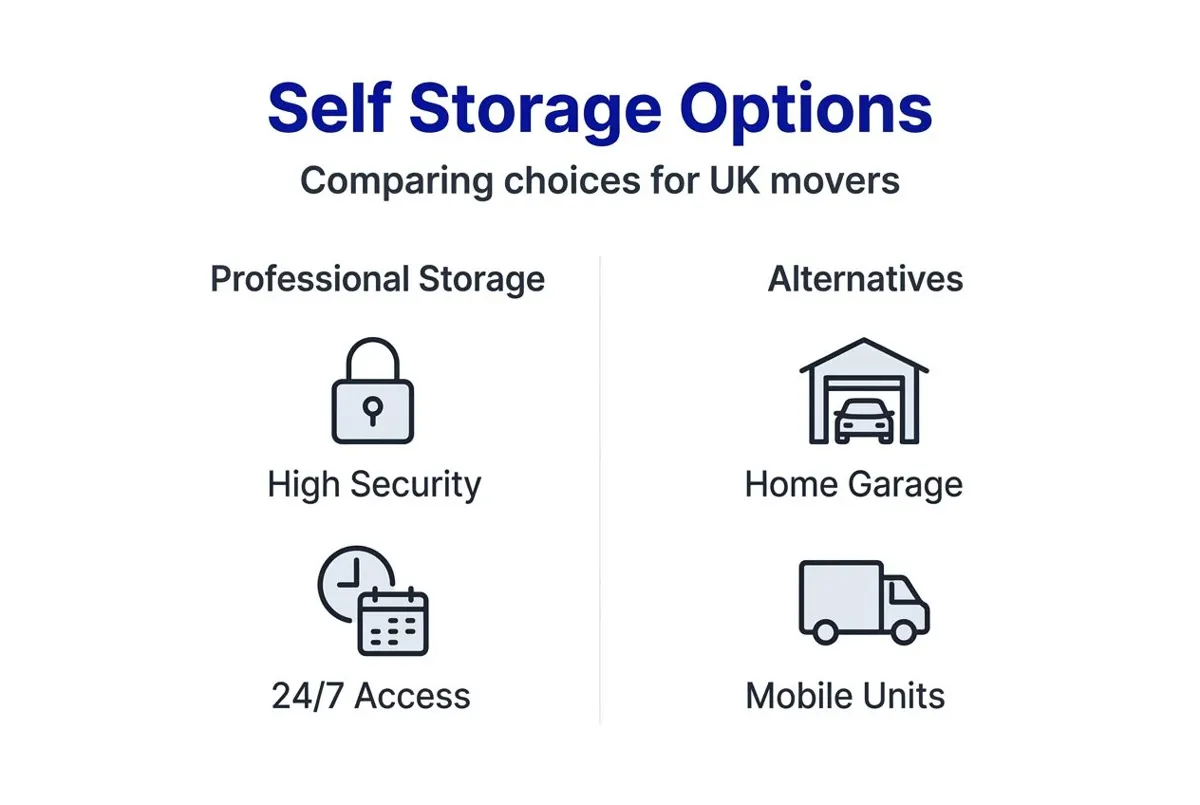
| Storage option | Security level | Access flexibility | Average monthly cost | Best for |
|---|---|---|---|---|
| Professional self storage | High (CCTV, alarms, AI monitoring) | 24/7 or extended hours | £80-£200 depending on size | Valuable items, frequent access needs, long-term storage |
| Garage or shed rental | Low to medium (basic locks) | Depends on landlord availability | £50-£120 | Budget-conscious, low-value items, infrequent access |
| Mobile storage units | Medium (locked container) | Limited to delivery schedule | £100-£180 including delivery | One-time moves, items not needed during transition |
| Friend or family storage | Variable (depends on location) | Based on personal arrangements | Free to low cost | Short-term, trusted relationships, small volumes |
Garage or rented room storage often lacks monitored security and flexible access. You depend on the property owner’s availability and goodwill, which creates complications if you need items urgently. These spaces typically lack climate control, exposing belongings to moisture, temperature extremes, and pests. Whilst costs appear lower initially, the risk of damage can exceed any savings.
Mobile storage units provide convenience for one-time moves by delivering containers to your door. You pack at your leisure, then the company collects and stores the container. However, this limits frequent access and control. If you need something mid-storage period, you must schedule retrieval, often incurring additional fees. The trade-off between convenience and accessibility suits some situations but not others.
Cost considerations extend beyond monthly fees:
- Self storage insurance protects against theft and damage that cheaper alternatives don’t cover
- Climate control prevents moisture damage that could destroy furniture, documents, or electronics
- Security monitoring deters theft more effectively than basic padlocks
- Flexible access prevents lost time and frustration when you need items unexpectedly
- Professional facilities maintain consistent standards rather than depending on individual landlords
Choosing the right option depends on your specific circumstances. High-value items justify professional storage costs through superior security and insurance. Frequent access needs make 24/7 facilities essential despite higher prices. Budget constraints might push you towards alternatives, but only after carefully assessing risks to your belongings.
Outdoor storage boxes and home storage furniture work well for items you can keep at your new property. Secure garage storage options and best storage containers complement professional storage for a layered approach that balances cost with protection.
Choosing the right self storage unit during a move or downsizing
Selecting appropriate storage requires systematic assessment of your needs, careful provider research, and attention to contract details. This process determines whether storage solves your problems or creates new ones through poor planning.
-
Assess your storage volume accurately. Walk through your home listing items for storage by room. Furniture pieces, boxes, and large items like bicycles or garden equipment all require space. Underestimating leads to cramped units where you can’t access items easily. Overestimating wastes money on unused space. Most providers offer sizing guides comparing unit dimensions to room equivalents.
-
Research local providers thoroughly. Don’t choose based solely on price. Read customer reviews focusing on security incidents, access reliability, and customer service responsiveness. Visit facilities in person when possible, assessing cleanliness, security measures, and overall maintenance. Request tours to see actual units rather than relying on website photos.
-
Compare pricing structures and included services. Some providers include insurance, whilst others charge separately. Administration fees, deposit requirements, and notice periods for termination vary significantly. Calculate total costs over your expected storage duration, not just monthly rates. Ask about discounts for longer commitments or referrals.
-
Evaluate access policies carefully. If you anticipate frequent visits, 24/7 access becomes essential despite higher costs. Limited access hours might suffice if you only need occasional retrieval. Consider location relative to your current home, new property, and regular routes. Proximity saves time and petrol over extended storage periods.
-
Review security features and certifications. Verify CCTV coverage, individual unit alarms, and access control systems. Ask about staff presence and monitoring procedures. Check whether the facility holds relevant industry certifications or memberships. Insurance requirements and available coverage levels indicate the facility’s confidence in their security measures.
-
Read contracts thoroughly before signing. Pay special attention to rental increase policies, notice periods for price changes, and termination requirements. Some contracts auto-renew with penalties for early termination. Others require written notice weeks in advance. Understand your obligations and the facility’s responsibilities regarding damage, access, and service standards.
Location strategy balances convenience with cost. Facilities near city centres charge premium rates but save travel time. Suburban or edge-of-town locations offer better value whilst potentially adding 20 minutes to each visit. Calculate whether time savings justify higher monthly fees based on your expected access frequency.
Unit size directly impacts both cost and usability. Smaller units save money but become unusable if packed so tightly you can’t reach items. Larger units cost more but provide working space to reorganise belongings as needs change. Many customers find that paying slightly more for adequate space prevents frustration and additional moves between units.
Discover reliable self storage solutions with Schott Removals
Navigating self storage options during relocation or downsizing requires expertise and support from experienced providers who understand UK moving challenges. Schott Removals offers secure, flexible self storage solutions tailored to individuals and families managing major transitions, combining over 30 years of industry experience with modern facilities and customer-focused service.
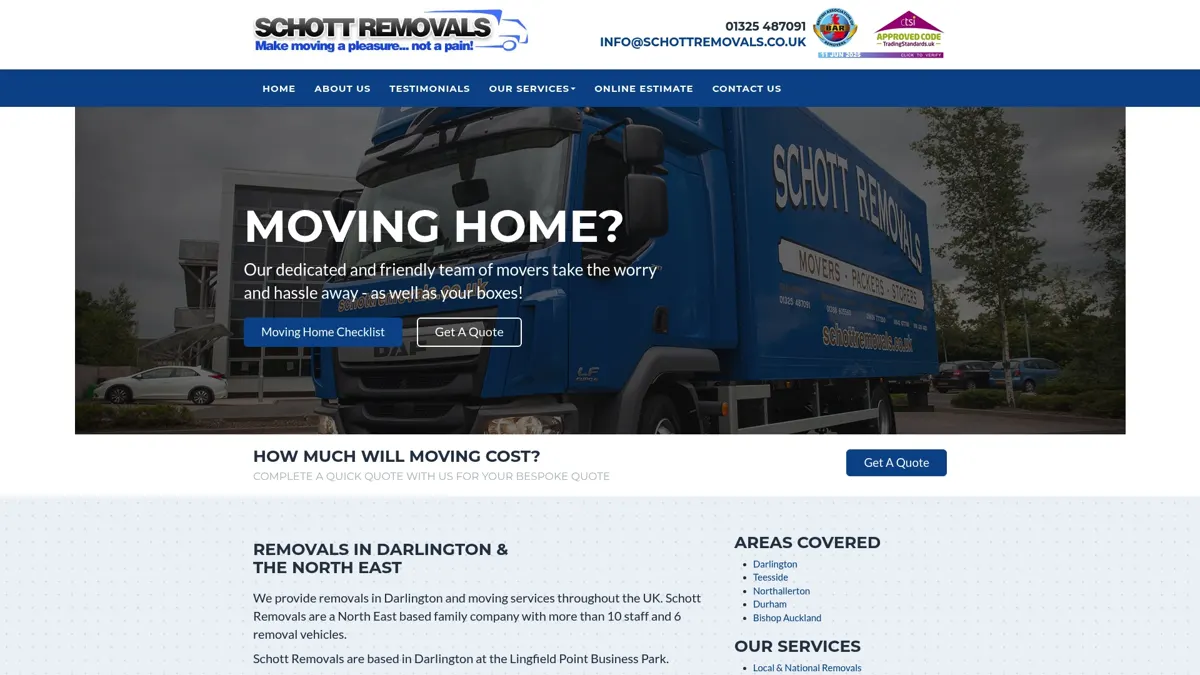
Their facilities feature advanced security including monitored CCTV and controlled access systems that protect your belongings throughout storage periods. Flexible rental terms accommodate unpredictable moving timelines, whether you need storage for weeks or months. Professional support guides you through sizing decisions, packing strategies, and retrieval planning, ensuring your storage experience enhances rather than complicates your move. Insurance options provide additional peace of mind for valuable items.
Safety extends beyond security monitoring. Schott Removals maintains strict fire safety protocols with specialised storage products protecting against potential hazards. Their commitment to staying current with industry standards means you benefit from facilities that meet the latest UK removals regulations 2025. Explore comprehensive moving and storage services at Schott Removals to simplify your next transition.
Frequently asked questions
What size self storage unit do I need when moving house?
Assess volume by counting items room by room, then add 20% extra space for access pathways and future additions. A one-bedroom flat typically needs 50-75 square feet, whilst a three-bedroom house requires 150-200 square feet. Consult facility sizing guides or request professional assessments for accuracy.
How secure are self storage units in the UK?
Most UK facilities feature monitored CCTV, individual unit alarms, and secure access control systems that record all entries. Many offer insurance options for additional protection. Reputable providers maintain security certifications and staff presence during operating hours.
Can I access my belongings anytime during my storage rental?
Many UK self storage providers offer 24/7 access or extended hours accommodating various schedules. Access policies vary between facilities, with some limiting hours to daytime or requiring advance booking. Verify specific access terms before signing rental agreements.
Is self storage cost effective compared to alternatives like garages or mobile units?
Self storage typically costs more than basic garage rentals but offers superior security, climate control, and flexible access. The peace of mind and convenience during stressful moves often justify higher costs. Calculate total expenses including potential damage to belongings when comparing options.
How long can I rent a self storage unit during my move?
Rental periods vary from weekly to monthly or longer-term contracts depending on provider policies. Most facilities offer flexible terms without long-term commitments, though longer rentals sometimes qualify for discounted rates. Review notice requirements and termination policies before committing to ensure flexibility matches your moving timeline.