
Many UK families mistakenly believe container storage is only for businesses or large commercial moves. The truth is that smaller container sizes and flexible rental options make it ideal for residential relocations, whether you’re moving locally or internationally. This guide will explain what container storage is, how it works, and why it could be the perfect solution to ease your move whilst saving you money and stress.
Table of Contents
- Understanding Container Storage Basics
- Security And Protection Benefits Of Container Storage
- Cost Considerations And Pricing Of Container Storage
- Container Storage For International Moves
- Common Misconceptions About Container Storage
- Choosing The Right Container Storage Option
- A Conceptual Framework For Container Storage
- Find Your Ideal Container Storage Solution With Schott Removals
Key takeaways
| Point | Details |
|---|---|
| Container storage offers secure, weatherproof space in various sizes | Choose from 10ft, 20ft, or 40ft containers to suit your household volume and budget. |
| It can reduce moving costs by up to 20% compared to traditional self-storage | Lower facility overheads and fewer handling steps mean significant savings for your move. |
| You can pack at your own pace with flexible access and rental periods | Containers are delivered to your location, giving you control over packing timelines. |
| Container storage simplifies international moves by reducing handling steps | Using the same container from packing to delivery minimises damage risk and customs complications. |
| Selecting the right container size and provider is key to a smooth experience | Assess your household volume carefully and verify security features before booking. |
Understanding container storage basics
Container storage involves using large steel or composite containers to securely store household items, with containers often delivered to the customer’s location for packing and then transported or stored offsite. This approach differs fundamentally from traditional self-storage because it integrates storage and transport into a single, streamlined service.
Common container sizes include 10ft, 20ft, and 40ft options, each suited to different household volumes. A 10ft container typically holds the contents of a one-bedroom flat, whilst a 20ft container accommodates a two to three-bedroom house. The 40ft container works for larger properties or commercial needs. You select the size based on your inventory, pack the container at your residence, and the provider handles collection and storage.
This method applies equally well to local moves and international relocations. For local moves, containers can be stored at secure facilities until you need them delivered to your new address. For international relocations, the same container travels from your current home to your destination country, reducing the need for multiple handling steps compared to traditional storage. Fewer transfers mean lower damage risk and simpler logistics.
Container storage also offers flexibility in timing. You pack at your own pace without the pressure of tight removal deadlines. Once packed, the container is collected and stored securely until you’re ready for delivery. This flexibility proves invaluable during complex moves involving property chains or extended relocation timelines.
Security and protection benefits of container storage
Containers are weatherproof and lockable, shielding your belongings from rain, wind, and temperature fluctuations. The robust steel or composite construction provides a first layer of defence against environmental damage. You retain the only key to your container, ensuring exclusive access to your possessions throughout the storage period.
Security features extend beyond basic locks. Reputable providers offer CCTV surveillance at storage facilities, GPS tracking during transit, and tamper-evident seals that reveal any unauthorised access attempts. These measures create multiple security layers that traditional self-storage units often lack. GPS tracking is particularly valuable for international moves, allowing you to monitor your container’s location in real time.
Research shows a lower incidence of damage and theft with container storage compared to standard self-storage. The single-use nature of containers means your items aren’t exposed to shared facilities or frequent human traffic. Everything remains sealed from the moment you lock it until delivery, minimising opportunities for loss or damage.
Protection extends to the transit phase, not just storage. Your belongings stay in the same secure container whether stationary or moving, eliminating the vulnerability that comes with transferring items between vehicles and storage units. This continuity of protection is especially important for fragile or valuable possessions.
Pro Tip: Before booking, verify the provider’s specific security measures. Ask about CCTV coverage, tracking capabilities, and insurance options. Request evidence of certifications or memberships in professional storage associations to ensure you’re working with a credible company.
Cost considerations and pricing of container storage
Average weekly costs for container storage in the UK range from £20 to £50, depending on container size and rental length. Smaller 10ft containers typically cost less, whilst 40ft containers command higher rates. Longer rental periods often qualify for discounted weekly rates, making extended storage more economical.

Using container storage can cost 10 to 20% less than comparable self-storage units in the UK due to reduced overheads in facilities and the avoidance of intermediate handling fees. Traditional self-storage facilities maintain climate-controlled buildings, staffing, and customer access infrastructure, all of which increase operational costs passed to customers. Container storage eliminates many of these expenses.
| Feature | Container Storage | Traditional Self-Storage |
|---|---|---|
| Average weekly cost | £20 to £50 | £25 to £60 |
| Transport included | Often included | Usually separate fee |
| Handling steps | Minimal (1 to 2) | Multiple (3 to 5) |
| Security | GPS, seals, CCTV | CCTV, facility access |
| Flexibility | High (pack at home) | Medium (facility hours) |
Pricing is influenced by container size, rental duration, and location. Urban areas typically charge more due to higher land costs, whilst rural storage facilities offer better value. Container size directly impacts price, so accurate household volume assessment prevents overpaying for unused space.
Consider hidden costs like transport fees, access charges, and insurance when comparing options. Some providers include delivery and collection in the quoted price, whilst others charge separately. Access fees apply if you need to visit the storage facility to retrieve items during the rental period. Comprehensive insurance coverage, whilst optional, adds peace of mind and should factor into your budget calculations.
Container storage for international moves
Using the same container from packing to final delivery reduces handling and damage risk significantly. Your belongings remain sealed in one unit throughout the journey, whether travelling by road, rail, or sea. This continuity eliminates the transfer points where items typically get damaged or lost during international relocations.
Container storage supports customs procedures through sealed, tracked shipments. Customs authorities prefer containerised shipments because they can verify seals and review manifests without unpacking everything. Tamper-evident seals provide clear evidence that contents haven’t been accessed since packing, simplifying clearance processes and reducing delays at borders.
GPS tracking and tamper-evident seals enhance security during international transit. You can monitor your container’s progress across countries and receive alerts if seals are broken. This visibility proves invaluable when coordinating arrivals and planning your relocation timeline. Knowing your possessions’ exact location reduces anxiety during the weeks or months between departure and arrival.
Container storage reduces delays and complications commonly experienced with separate storage and shipping arrangements. Traditional international moves often involve storing items at origin, transferring them to a shipping company, and then storing again at destination before final delivery. Each transfer introduces scheduling dependencies and potential for mishaps. Container storage consolidates these steps into a single, managed process.
Valuable and fragile household items receive better protection overseas through container storage. Antiques, artwork, musical instruments, and family heirlooms stay in controlled conditions throughout transit. You pack and secure these items yourself, using appropriate packing supplies and organisers to ensure maximum protection. This personal involvement provides confidence that precious belongings are handled with care.
Common misconceptions about container storage
Many people believe container storage is only for large commercial moves, but smaller sizes exist specifically for home use. The 10ft container perfectly suits studio flats or one-bedroom properties, whilst 20ft containers accommodate typical family homes. Providers design these residential options to match household needs, not just business requirements.
Another common myth suggests container storage is always more expensive than self-storage. The reality is often the opposite. Container storage frequently costs less because it eliminates facility overheads and multiple handling fees. The integrated transport and storage model creates efficiencies that translate into lower prices for customers.
Some assume container rentals lack flexibility and accessibility. Modern container storage services offer highly flexible terms, from weekly rentals to year-long commitments. Whilst containers are typically stored at secure facilities rather than providing daily access like self-storage units, most providers accommodate reasonable access requests with advance notice. This balance between security and accessibility suits most moving situations.
Concerns about container sizing often deter potential users. People worry they’ll choose the wrong size and waste money or run out of space. Reputable providers offer detailed sizing guides and volume calculators to help you estimate accurately. Many also provide free consultations where experts assess your inventory and recommend appropriate container sizes.
Pro Tip: Consult sizing guides and ask providers for bespoke recommendations based on photos or inventories of your belongings. Most companies have seen thousands of moves and can accurately predict what will fit, helping you avoid overspending on unnecessarily large containers or facing the stress of insufficient space.
Choosing the right container storage option
Evaluate your household volume and type of belongings to estimate container size accurately. Create a detailed home inventory listing furniture, boxes, and large items with approximate dimensions. Online volume calculators help translate this inventory into cubic metres, which you can then match to container specifications.
Consider security features offered by providers suited to your specific items. If you’re storing valuable antiques or electronics, prioritise facilities with 24-hour CCTV, alarmed perimeters, and robust GPS tracking. For standard household goods, basic security measures may suffice. Match the security level to the value and vulnerability of your possessions to avoid paying for unnecessary features.
Compare rental flexibility and access policies to fit your moving schedule. Some providers offer truly flexible monthly rolling contracts, whilst others require minimum rental periods. If your move timeline is uncertain, favour providers with shorter notice periods and no early termination penalties. Access policies vary widely, so clarify how much notice you need to give for facility visits and whether additional charges apply.
Account for your budget and potential cost savings by matching size and rental length carefully. Oversizing wastes money on unused space, whilst undersizing forces you to rent additional containers or upgrade mid-contract. Longer rental commitments usually unlock better weekly rates, so if you know you’ll need storage for six months, negotiate a fixed-term contract rather than rolling monthly.
Follow these numbered steps from volume assessment to final booking:
- Complete a thorough household inventory with measurements and quantities of all items requiring storage.
- Use provider volume calculators or consult with company representatives to determine appropriate container size.
- Request quotes from at least three providers, ensuring quotes include all transport, storage, and access fees.
- Verify security features, insurance options, and contract terms before making your selection.
- Confirm delivery and collection dates align with your moving timeline and property access requirements.
- Review and sign the rental agreement, retaining copies of all documentation for your records.
A conceptual framework for container storage
Container storage combines storage, transport, and security in a single user-friendly solution that transforms how you approach moving. Unlike traditional methods that separate these functions, container storage integrates them seamlessly. You pack once, the container travels to storage or directly to your destination, and your belongings stay secure throughout.
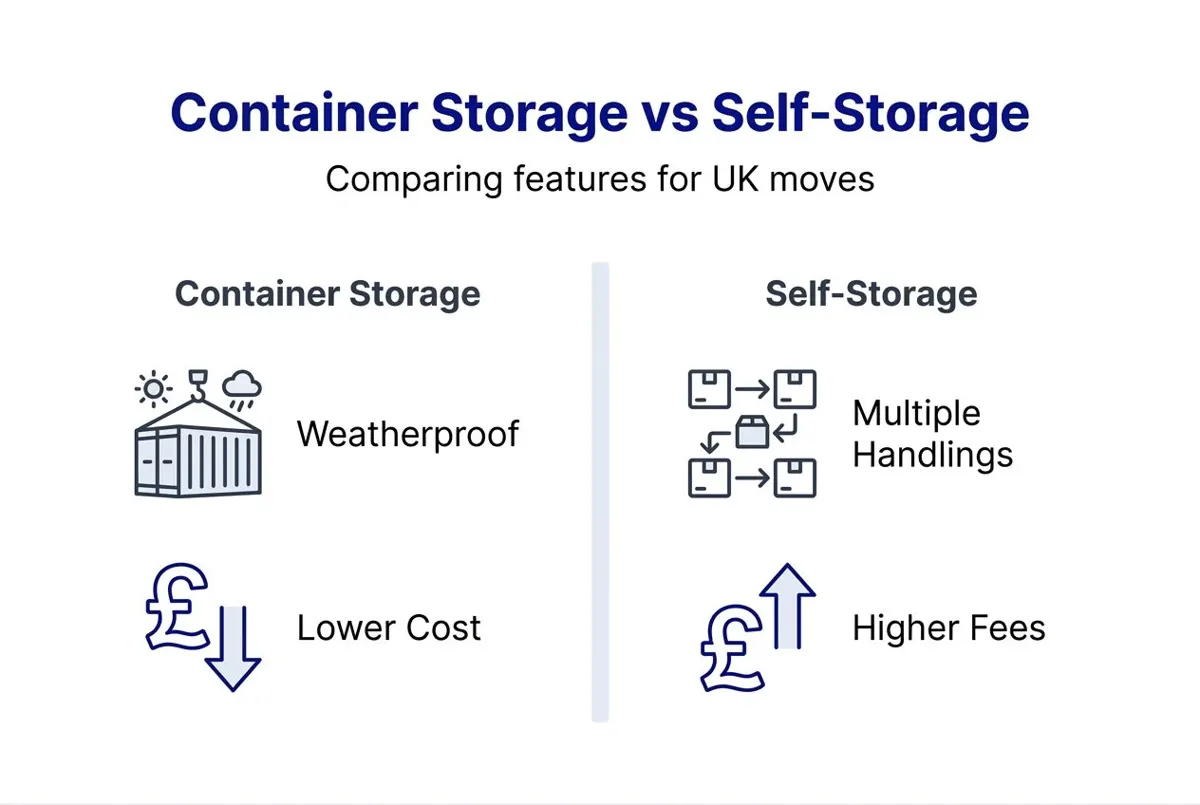
This integration reduces handling steps by up to 30%, lowering damage and delays significantly. Traditional moves involve packing, loading onto a removal van, unloading into storage, reloading for transport, and final unloading at destination. Container storage eliminates the middle steps. You pack into the container at origin, and it travels directly to destination or secure storage, cutting handling points from five to two.
Traditional self-storage separates storage and transport, often increasing complexity and cost. You arrange removal to the storage facility, pay facility fees, and later arrange separate transport to your new location. Each arrangement involves different companies, contracts, and coordination efforts. Container storage consolidates these under one provider with unified pricing and single-point accountability.
| Aspect | Container Storage | Traditional Self-Storage + Removal |
|---|---|---|
| Handling steps | 1 to 2 (pack and deliver) | 3 to 5 (pack, load, store, reload, deliver) |
| Provider coordination | Single provider | Multiple companies |
| Damage risk | Lower (fewer transfers) | Higher (multiple handling points) |
| Cost structure | Integrated pricing | Separate storage and transport fees |
| Timeline control | High (flexible scheduling) | Medium (depends on coordination) |
This framework helps you visualise streamlining your move with container storage. Instead of juggling multiple services and timelines, you work with one provider who manages the entire process. Your mental model shifts from coordinating separate storage and moving tasks to managing a single, linear workflow.
Better planning and stress reduction come through simplified logistics. You know exactly where your belongings are at all times, who is responsible for them, and when they’ll arrive. This clarity eliminates the anxiety that comes from coordinating multiple providers and tracking possessions through complex transfer chains.
Find your ideal container storage solution with Schott Removals
Now that you understand how container storage works and its benefits for UK moves, you’re ready to make an informed decision about your relocation. Schott Removals offers tailored container storage options for families and individuals moving locally or internationally, with flexible container sizes and secure storage solutions that match your specific needs.

Our expert team stays current with UK removals regulations 2026, ensuring your move complies with all legal requirements whilst providing transparent costs and reliable customer service. Whether you need a 10ft container for a studio flat or a 40ft container for a large family home, we’ll guide you through selecting the right size and rental terms to optimise both cost and convenience for your move.
FAQ
What is container storage and how does it work?
Container storage means using secure, weatherproof containers delivered to your home for packing, then transported or stored offsite until you need them. It integrates storage and transport to simplify moving by keeping your belongings in one sealed unit throughout the process.
How does container storage differ from traditional self-storage?
Container storage combines storage and transport in one service, reducing handling steps and coordination complexity. Traditional self-storage requires you to arrange separate transport to and from the facility, involves fixed rental terms, and often proves less flexible for moving timelines.
Is container storage suitable for small moves or just large households?
Smaller containers, particularly 10ft and 20ft sizes, are widely available and ideal for studio flats, one-bedroom properties, or apartment moves. Container storage flexibly accommodates all household sizes, from single-person relocations to large family homes.
What factors affect the cost of container storage in the UK?
Costs depend primarily on container size, rental duration, and storage facility location, with urban areas typically charging more than rural sites. Choosing the right size through careful volume assessment and negotiating flexible rental terms based on your timeline can significantly reduce overall expenses.
Can container storage help with international relocations?
Yes, container storage reduces handling and damage risk during international moves, facilitates customs clearance through sealed shipments, and ensures security with GPS tracking and tamper-evident seals. Using international container options keeps your belongings safe from origin to final destination across borders.