

Moving house ranks among life’s most stressful events, yet most people underestimate the emotional and logistical complexity of truly settling in. Beyond transporting boxes, successful relocation demands strategic planning across psychological adjustment, community integration, and systematic unpacking. Professional removals and storage services play a transformative role, reducing stress whilst accelerating the journey from unfamiliar space to genuine home.
Table of Contents
- Understanding Psychological Adjustment Phases
- Leveraging Professional Moving And Storage Services
- Practical Unpacking And Home Organisation Strategies
- Addressing Common Misconceptions About Settling In
- Community And Cultural Integration Tips For Uk Movers
- Post-Move Essential Tasks Checklist
- Make Your Move Stress-Free With Schott Removals
- Frequently Asked Questions
Key takeaways
| Point | Details |
|---|---|
| Professional removals reduce stress | Using professional services cuts moving-related stress by 40%, freeing energy for emotional adjustment. |
| Adjustment follows predictable phases | Emotional phases typically span 4 to 12 weeks with distinct honeymoon, crisis, recovery, and adjustment stages. |
| Prioritised unpacking accelerates comfort | Focusing on essential rooms like kitchen and bedroom speeds functionality and reduces overwhelm. |
| Community engagement matters significantly | Active community involvement helps 65% of families adjust faster than those delaying social engagement. |
| Checklists prevent critical oversights | Systematic checklists reduce overlooked post-move tasks by 70%, ensuring timely utility setup and registrations. |
Understanding psychological adjustment phases
Settling into a new home involves far more than arranging furniture. Recognising the emotional journey helps set realistic expectations and reduces frustration during the transition.
Psychologists identify four distinct phases most people experience. The honeymoon phase brings initial excitement about exploring your new area and possibilities. The crisis phase follows as novelty fades, homesickness surfaces, and daily challenges mount. During recovery, you develop coping strategies and routines that bring stability. Finally, the adjustment phase arrives when your new location genuinely feels like home.
Adjustment phases usually span 4 to 12 weeks with these defined emotional stages: honeymoon, crisis, recovery, and adjustment. Duration varies based on individual circumstances, support networks, and how far you’ve moved. Understanding this timeline prevents the false belief that something’s wrong if you don’t feel settled immediately.
Common emotional responses include:
- Excitement mixed with anxiety about the unknown
- Temporary feelings of isolation or loneliness
- Frustration with unfamiliar surroundings and routines
- Gradual confidence as you establish new patterns
“Acknowledging that settling takes time removes pressure to feel instantly at home. Give yourself permission to adjust gradually whilst taking active steps to build familiarity and connections.”
Emotional stress significantly impacts how quickly you feel comfortable in your new environment. Recognising these phases as normal rather than personal failings helps you navigate them more effectively. Professional support during the physical move reduces one major stressor, allowing more energy for emotional adaptation.
Leveraging professional moving and storage services
Choosing professional removals transforms the moving experience from overwhelming chaos to manageable transition. The difference extends beyond physical labour to encompass stress reduction and peace of mind.
Using professional services can reduce moving-related stress by 40%, a substantial improvement that affects your entire settling process. When you’re not exhausted from heavy lifting and logistics, you retain energy for unpacking, exploring your neighbourhood, and emotional adjustment.
Professional removals offer several advantages:
- Experienced handling reduces damage to belongings and property
- Proper equipment protects furniture during transport
- Insurance coverage provides financial security
- Time efficiency allows same-day moves in many cases
- Physical safety prevents personal injury from heavy items
Storage services complement removals by managing timing and space challenges. Temporary storage allows phased unpacking, particularly valuable when downsizing or awaiting renovation completion. You can prioritise essential items whilst keeping seasonal or occasional belongings accessible but out of the way.
Quality packing materials significantly impact the moving outcome. Investing in corrugated cardboard boxes for moving prevents crushing and moisture damage during transport and storage.
| Approach | Average Cost | Stress Level | Damage Risk | Time Required |
|---|---|---|---|---|
| Self-move | £200-500 | High | Moderate-High | 3-7 days |
| Professional removals | £400-1200 | Low-Moderate | Low | 1-2 days |
| Hybrid (pack yourself, professional transport) | £300-800 | Moderate | Low-Moderate | 2-4 days |
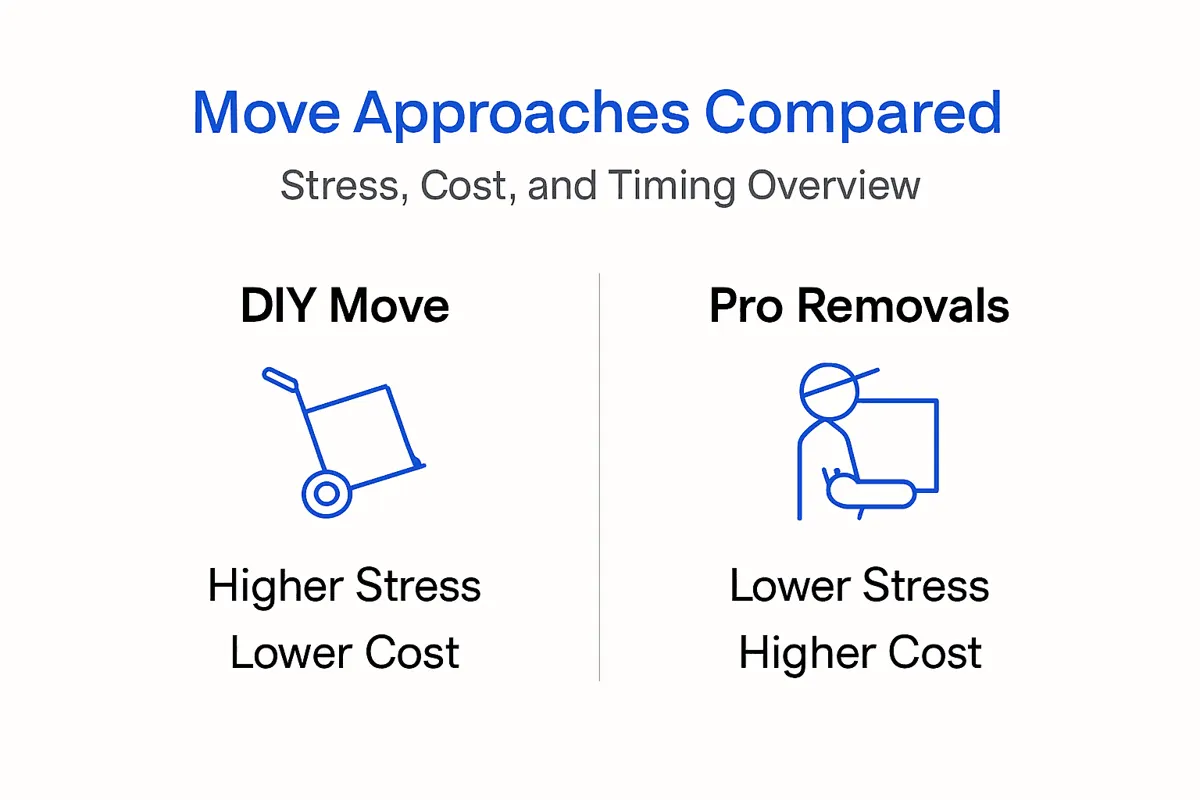
Pro Tip: Book professional removals at least 4 to 6 weeks before your move date, especially during peak summer months when availability tightens. Early booking often secures better rates and preferred time slots.
Practical unpacking and home organisation strategies
Systematic unpacking transforms boxes into a functional home faster than random tackle attempts. Strategic prioritisation reduces overwhelm whilst establishing comfort quickly.
Focus your initial efforts on rooms essential for daily life. Concentrating on essential rooms like kitchen, bedroom, and bathroom speeds comfort and functionality in your new home. These spaces support basic needs: sleeping, eating, and personal hygiene.
Recommended unpacking sequence:
- Set up beds and bedding for proper rest
- Unpack kitchen essentials for meal preparation
- Organise bathroom with toiletries and towels
- Establish a functional living space for relaxation
- Address remaining rooms over subsequent weeks
UK homes often present space constraints compared to previous residences. Vertical storage solutions maximise limited floor area. Consider:
- Wall-mounted shelving for books and decorative items
- Over-door organisers for shoes and accessories
- Under-bed storage containers for seasonal clothing
- Stackable boxes for cupboards and lofts
Phased unpacking prevents the paralysing effect of confronting dozens of boxes simultaneously. Set realistic daily goals, such as completing one room or unpacking five boxes. This approach maintains motivation whilst allowing time for other settling tasks.

Organisation tools accelerate the unpacking process significantly. Using home organisation tools helps categorise items efficiently, making them easily accessible as you establish new storage systems.
Pro Tip: Label boxes with both contents and destination room using clear, large writing. Include a brief list of key items on each box exterior, saving time searching for specific belongings during unpacking.
Addressing common misconceptions about settling in
Several persistent myths about moving create unrealistic expectations that increase stress and disappointment. Correcting these misconceptions enables better preparation and smoother adjustment.
The first major misconception assumes settling means simply unpacking boxes. Social and emotional adaptation account for 50% of successful settling, not just logistics. Building new routines, establishing social connections, and developing familiarity with your area require deliberate effort beyond physical organisation.
Another false belief suggests you should feel immediately comfortable once unpacked. Emotional attachment to a space develops gradually through accumulated experiences and memories. Expecting instant comfort sets you up for frustration when natural adjustment phases occur.
Key misconceptions to avoid:
- Professional moving services are unnecessary luxuries rather than stress-reducing investments
- All family members adjust at the same pace and need identical support
- Focusing solely on house organisation will make you feel settled
- Delaying community engagement until you feel fully comfortable is sensible
- The physical move represents the hardest part of relocation
Many people believe waiting until they feel settled before engaging with their new community makes sense. This reverses the actual process. Community connections actively create feelings of belonging and settlement rather than resulting from them. Isolation prolongs adjustment whilst engagement accelerates it.
The assumption that professional removals merely transport belongings underestimates their stress-reduction value. Quality services handle logistics, prevent damage, and save physical energy, allowing you to focus on emotional and social adaptation. This division of labour significantly improves the overall moving experience.
Understanding these realities helps you allocate time and resources effectively. Balancing practical tasks with social engagement and self-care creates comprehensive settling success rather than fragmented frustration.
Community and cultural integration tips for UK movers
Establishing local connections transforms your new house into a genuine home within the broader community. Active engagement accelerates emotional adjustment more effectively than any unpacking strategy.
Active community involvement helps 65% of families adjust faster, whereas 45% who delay engagement experience slower settling. This substantial difference highlights the psychological importance of social roots beyond physical presence.
Practical steps for community integration:
- Attend local events advertised in community centres and libraries
- Join clubs or groups aligned with your interests or hobbies
- Volunteer for neighbourhood initiatives or charitable organisations
- Visit local shops and cafes regularly to become a familiar face
- Introduce yourself to immediate neighbours within the first week
- Participate in school activities if you have children
Children often integrate faster through school connections, creating family entry points into the broader community. Parent groups, school events, and extracurricular activities provide natural networking opportunities. Use these connections to learn about local resources and customs.
UK communities vary significantly in character from bustling urban centres to quiet rural villages. Research your specific area’s social landscape. Village halls often serve as community hubs in smaller locations, whilst cities offer diverse special-interest groups through apps and websites.
Cultural nuances differ across UK regions. Spending time observing local customs before full participation helps avoid unintentional missteps. Most communities welcome genuine interest and effort, even when you make minor mistakes initially.
Delaying community engagement because you feel like an outsider creates a self-reinforcing cycle. The outsider feeling diminishes through participation, not isolation. Start with low-commitment activities like attending a single event, then gradually increase involvement as comfort grows.
Social connections provide practical benefits beyond emotional support. Local friends offer recommendations for services, share insights about the area, and create the informal support networks that define community life. These relationships develop incrementally through repeated, positive interactions.
Post-move essential tasks checklist
Systematic task completion ensures legal compliance and service continuity whilst reducing the mental burden of remembering everything. Checklists provide external memory that prevents costly oversights.
Using checklists reduces overlooked post-move tasks by 70%, ensuring timely handling of utilities, address changes, and other essentials. This dramatic improvement justifies spending time creating a comprehensive list before your move.
Immediate priorities within first week:
- Register with a local GP surgery for healthcare access
- Update your address with banks, credit cards, and financial institutions
- Notify DVLA of address change for driving licence and vehicle registration
- Transfer or set up utility accounts for gas, electricity, and water
- Arrange internet and phone service installation
- Update electoral register to ensure voting rights
- Inform employers and update payroll records
Phased unpacking benefits from storage solutions that keep non-essential items accessible but separate. This approach works particularly well when downsizing or dealing with limited immediate space.
Medium-term tasks within first month:
- Update address with insurance providers for home, car, and life policies
- Redirect mail through Royal Mail for 6 to 12 months
- Update subscriptions and regular deliveries
- Register for council tax at your new local authority
- Update passport if it lists your previous address
- Notify schools and universities of address changes
| Task Category | Specific Actions | Ideal Timing | Consequence of Delay |
|---|---|---|---|
| Utilities | Set up gas, electric, water | Before move-in | Service interruption, reconnection fees |
| Healthcare | Register with local GP | Within 1 week | Inability to access NHS services |
| Financial | Update banks, credit cards | Within 1 week | Missed statements, security issues |
| Government | DVLA, electoral roll, council tax | Within 2 weeks | Legal penalties, voting exclusion |
| Communications | Internet, phone, mail redirect | Before/immediately after | Missed correspondence, connectivity gaps |
Breaking tasks into manageable daily chunks prevents overwhelming yourself whilst maintaining progress. Dedicating 30 minutes daily to administrative tasks typically completes the essential list within two weeks.
Make your move stress-free with Schott Removals
Transforming relocation theory into smooth reality requires trusted partners who understand both logistics and human needs. Professional support makes the difference between exhausting chaos and manageable transition.
Schott Removals brings over 30 years of family-run expertise to UK relocations, combining reliability with personalised service. Whether you’re moving locally within the North East or nationally across the UK, experienced handling ensures your belongings arrive safely whilst you focus on settling emotionally and socially. Early booking secures your preferred moving date, particularly crucial during busy summer months.
Quality materials simplify every stage of your move. Corrugated cardboard boxes protect belongings during transport and storage, whilst organisers for unpacking streamline the settling process in your new home. Professional packing services further reduce stress by ensuring proper protection for fragile items.
Storage solutions provide flexibility when timing or space presents challenges. Contact Schott Removals today to discuss how tailored moving and storage services can reduce your relocation stress by 40% whilst supporting a smoother transition to feeling genuinely at home.
Frequently asked questions
When can I expect to feel fully settled after my UK move?
Most people require 4 to 12 weeks to feel genuinely settled, though individual experiences vary based on distance moved, support networks, and active engagement efforts. The adjustment timeline includes distinct emotional phases rather than linear progress, so temporary setbacks during the crisis phase are normal and don’t indicate failure.
Should I unpack everything immediately or take my time?
Prioritise essential rooms like kitchen, bedroom, and bathroom within the first week, then adopt a phased approach for remaining spaces. Rushing to unpack everything simultaneously creates overwhelm and often results in poor organisation decisions. Spreading the process over several weeks whilst maintaining daily progress prevents paralysis and allows thoughtful placement.
How important is professional help versus doing everything myself?
Professional removals reduce moving stress by 40% whilst preventing damage and physical injury, making them a valuable investment rather than unnecessary expense. The energy and time saved allow greater focus on emotional adjustment and community integration. Self-moving makes sense only for very local, small-scale relocations with minimal belongings.
What’s the best way to meet people in my new area?
Attend local events, join interest-based clubs, and volunteer for community initiatives to build connections naturally. Families adjust 65% faster with active community involvement compared to those delaying engagement. Start with low-commitment activities to explore options, then increase participation in groups that genuinely interest you.
Which post-move tasks are genuinely urgent versus nice to complete?
Utility setup, GP registration, and financial institution notifications require immediate attention within the first week to ensure service continuity and legal compliance. Council tax registration, electoral roll updates, and mail redirection can follow within the first month. Creating a prioritised checklist based on consequences of delay helps focus efforts effectively.
Recommended
- Felleinlagen Schuhe Schaffelle Einlegesohlen Deals Im Januar 2026 Sport Einlegesohlen