
Moving home in County Durham or across the North East often means making tough choices about how to keep your belongings safe. Families know that the right packing materials offer far more than a basic layer of protection—they deliver effective defence against dust, vibration, and surface abrasion, as well as crucial stability during every stage of transport. Selecting reliable materials tailored to each item’s needs is what turns a stressful move into a confident experience for everyone involved.
Table of Contents
- What Makes Packing Materials Reliable
- Essential Packing Material Types And Uses
- Durability And Protective Qualities Explained
- Cost, Waste, And Environmental Impact
- Avoiding Damage: Mistakes And Solutions
Key Takeaways
| Point | Details |
|---|---|
| Reliability of Packing Materials | Packing materials must be durable, protective, and stable to ensure the safe transportation of belongings. |
| Material Selection | Choose materials based on the specific characteristics and vulnerabilities of the items being transported. |
| Sustainability Considerations | Opt for packing solutions that minimise environmental impact through reuse, recycling, and biodegradability. |
| Avoiding Common Mistakes | Assess potential risks and item vulnerabilities thoroughly to prevent damage during packing and moving. |
What Makes Packing Materials Reliable
Reliable packing materials are essential for ensuring the safety and protection of belongings during transportation, particularly when moving home or office. In the North East of England, where families and businesses frequently relocate, understanding what constitutes dependable packaging becomes critical. Reliable materials must provide comprehensive protection against multiple potential risks.
The key characteristics that define reliable packing materials include several fundamental qualities:
- Durability: Capable of withstanding transportation stress
- Protective Qualities: Cushioning against shocks and vibrations
- Chemical Stability: Preventing reactions with packed items
- Environmental Resistance: Blocking dust, moisture, and temperature variations
Materials deemed reliable must offer more than basic coverage. They need to provide tailored protection that considers the specific characteristics of items being transported. This means evaluating the material’s compatibility with different objects, understanding potential environmental challenges, and selecting packaging that offers precise support.
Professional packing requires strategic material selection that goes beyond simple wrapping – it demands a nuanced understanding of protection mechanisms.
The ideal packing material should adapt to various scenarios, whether you’re moving delicate glassware from a Darlington home or transporting sensitive equipment across County Durham. Cushioning performance becomes paramount, with materials needing to absorb potential impacts and prevent surface abrasion.
Pro tip: Always conduct a brief material compatibility test before extensive packing, ensuring your chosen materials provide optimal protection for your specific items.
Essential Packing Material Types and Uses
When preparing for a move across County Durham or the broader North East region, understanding the diverse range of packing materials becomes crucial for protecting your belongings. Different items require specific packaging approaches to ensure their safe transportation and storage.
The primary types of essential packing materials include:
- Protective Cushioning Materials
- Bubble wrap
- Foam sheets
- Tissue paper
- Structural Support Materials
- Corrugated cardboard boxes
- Custom crates
- Padded envelopes
- Specialised Wrapping Supplies
- Acid-free tissue
- Stretch wrap
- Protective corner guards
Each material serves a unique purpose in safeguarding items during transit. Bubble wrap offers excellent shock absorption for fragile objects, while acid-free tissue paper provides delicate protection for sensitive items like artwork or antiques. Professional movers in Darlington and surrounding areas understand that selecting the right combination of materials is key to preventing damage.

To help you choose the best packing material for different belongings, here is a quick comparison of material performance:
| Packing Material | Best For | Key Benefit | Typical Drawback |
|---|---|---|---|
| Bubble wrap | Fragile glass and ceramics | Superior shock defence | Bulky when reused |
| Foam sheets | Electronics and equipment | Great vibration buffering | Limited moisture resistance |
| Acid-free tissue paper | Artworks and antiques | Prevents chemical damage | Lacks much impact absorption |
| Corrugated cardboard | Most household items | Sturdy structural support | Can deteriorate if damp |
| Stretch wrap | Grouping loose items | Secures and stabilises | Not biodegradable |
Professional packing isn’t just about covering items – it’s about providing strategic, tailored protection for each unique object.
The selection of packing materials depends on several critical factors, including the item’s fragility, weight, shape, and potential environmental challenges during transportation. For instance, electronic equipment might require anti-static bubble wrap, while fine china needs multiple layers of cushioning and careful placement.
Pro tip: Always match your packing material to the specific characteristics of the item being transported, considering its vulnerability and potential stress points during moving.
Durability and Protective Qualities Explained
Understanding the durability of packing materials is crucial for ensuring the safe transportation of belongings, particularly during long-distance moves across County Durham and the North East. The protective qualities of packaging go far beyond simple coverage, encompassing a complex range of mechanical and environmental defence mechanisms.
Key characteristics of durable packing materials include:
- Mechanical Resistance
- Impact absorption
- Vibration dampening
- Compression strength
- Environmental Protection
- Moisture resistance
- Dust prevention
- Temperature stability
- Chemical Stability
- Non-reactive properties
- Preservation of item integrity
- Prevention of material degradation
The structural integrity of packing materials determines their ability to protect items during transportation. Professional movers understand that different items require specific protective qualities. A delicate porcelain vase from a Darlington antique shop will need different protection compared to robust industrial equipment being transported across the region.
Durability in packing is not about creating an impenetrable shield, but about intelligent design that adapts to the unique vulnerabilities of each item.
Material selection involves carefully considering factors like density, resilience, and compatibility with the item being transported. Electronic equipment might require anti-static materials, while artwork demands acid-free, archival-quality packaging that prevents chemical interactions and environmental damage.
Pro tip: Conduct a thorough assessment of your items’ specific vulnerabilities before selecting packing materials, treating each object as a unique packaging challenge.
Cost, Waste, and Environmental Impact
In the modern moving landscape, understanding the environmental implications of packing material choices has become increasingly important for environmentally conscious families across County Durham and the North East.
Key considerations for sustainable packing include:
- Cost Factors
- Initial material expenses
- Long-term environmental cost
- Recycling potential
- Waste Reduction Strategies
- Reusable packaging options
- Biodegradable material selection
- Minimising single-use plastics
- Environmental Impact
- Carbon footprint
- Recyclability
- Sustainable sourcing
The environmental footprint of packing materials extends beyond immediate transportation needs. Professional moving companies in Darlington and surrounding areas are increasingly adopting eco-friendly practices that balance protection, cost-effectiveness, and sustainability. This means selecting materials that offer robust protection while minimising waste and environmental degradation.
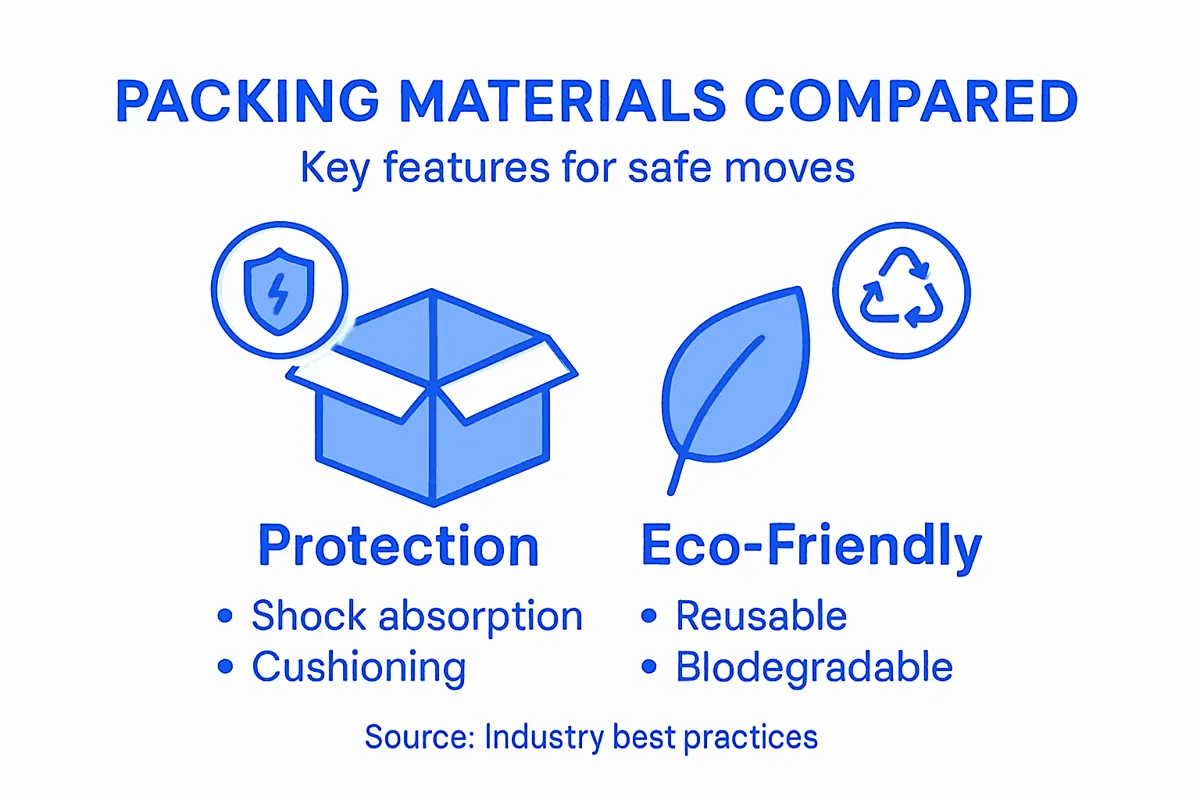
Below is a summary of sustainable packing approaches for modern moves:
| Strategy | Environmental Benefit | Common Example |
|---|---|---|
| Reusable packaging | Reduces total waste produced | Plastic moving crates |
| Biodegradable materials | Decomposes quickly after disposal | Seaweed-based packaging |
| Minimising plastics | Lowers fossil fuel dependency | Paper-based fillers |
| High recyclability | Ensures less landfill contribution | Cardboard boxes |
Sustainable packing is not about perfect solutions, but about making progressively better choices that reduce environmental impact.
Material selection now involves complex calculations beyond simple cost considerations. Biodegradable options like seaweed-based packaging demonstrate innovative approaches to reducing plastic waste, showing that environmental responsibility can coexist with effective protection strategies.
Pro tip: Prioritise packaging materials that offer multiple uses, can be recycled, or are made from sustainable sources to reduce your overall environmental footprint during relocation.
Avoiding Damage: Mistakes and Solutions
Navigating the complexities of packing requires understanding the most common packing mistakes and prevention strategies that can compromise the safety of your belongings during relocation across County Durham and the broader North East region.
Common packing mistakes include:
- Material Selection Errors
- Using inappropriate cushioning
- Selecting chemically reactive materials
- Ignoring item-specific protection needs
- Structural Packing Problems
- Insufficient padding
- Overcrowding containers
- Improper weight distribution
- Handling and Environment Issues
- Repeated unnecessary handling
- Neglecting temperature variations
- Inadequate moisture protection
Professional movers in Darlington understand that damage prevention is not just about materials, but about a holistic approach to item protection. Each object requires careful assessment, from delicate antiques to robust industrial equipment, demanding tailored packaging strategies that consider individual vulnerability and transportation conditions.
Effective packing is an art of anticipation – predicting potential risks before they become costly damages.
Prevention involves meticulous planning, selecting chemically inert and suitable materials, and ensuring adequate cushioning. The goal is not just to pack, but to create a protective environment that minimises the risk of damage during every stage of transportation.
Pro tip: Always conduct a detailed vulnerability assessment of each item before packing, treating each object as a unique challenge with specific protection requirements.
Protect Your Move with Trusted Packing Solutions from Schott Removals
Choosing the right packing materials is a critical step to prevent damage and stress during your relocation. This article highlights common challenges such as durability, environmental impact, and item-specific protection. At Schott Removals, we understand these concerns and offer expert packing services using reliable, tailored materials designed to safeguard your valuables throughout your move in Darlington and beyond.
Whether you are preparing for a local house removal or international shipping, our professional team prioritises careful material selection and strategic packing techniques to minimise risks like impact, moisture, and chemical damage. Experience peace of mind knowing your belongings receive the precise care they deserve with our comprehensive service.
Discover how our experienced movers combine protective cushioning and sustainable packing options to create a safe, environmentally responsible moving experience. Visit our Uncategorised Archives – Schott Removals for helpful guides and insights.
Ready to safeguard your most valuable possessions with proven packing expertise? Contact Schott Removals today to start planning your move with confidence. Learn more about our range of specialised services at Schott Removals and get a free quote now. Your worry-free move begins here.
Frequently Asked Questions
What are the key characteristics of reliable packing materials?
Reliable packing materials should have durability, protective qualities such as shock absorption and cushioning, chemical stability to prevent reactions with the items packed, and environmental resistance against dust, moisture, and temperature variations.
How do I choose the right packing material for fragile items?
When selecting packing materials for fragile items, opt for protective cushioning materials like bubble wrap or foam sheets, ensuring multiple layers of padding and careful placement within boxes to prevent damage during transportation.
What are the advantages of biodegradable packing materials?
Biodegradable packing materials offer environmental benefits by decomposing quickly after disposal, reducing waste and lowering the carbon footprint associated with traditional plastic packaging options.
How can I avoid common packing mistakes when moving?
To avoid common packing mistakes, ensure proper material selection tailored to each item’s needs, provide sufficient padding and avoid overcrowding boxes, and assess the environmental conditions to protect against temperature changes and moisture.
Recommended
- Managing Moving Day Logistics: Expert Tips for UK Moves 2025 | Schott Removals
- Top Benefits of Professional Packers for UK & International Moves 2025 | Schott Removals
- Secure Removal Services Explained: Expert Guide for UK and North East Moves 2025 | Schott Removals
- Stress-Free Moving Checklist 2025: UK, International & Business Moves | Schott Removals
- Commercial Packing Services: Ensuring Seamless Moves