
Moving home is one of life’s biggest stressors, with surveys showing nearly 60 percent of people rank it above starting a new job or planning a wedding. Yet a smooth move is possible with the right preparation and smart strategies. By breaking down the process into manageable steps, you can reduce last minute anxiety, save money, and keep priceless belongings safe from start to finish.
Table of Contents
- Step 1: Assess And Sort Your Belongings
- Step 2: Create Your Moving Day Checklist
- Step 3: Organise Essential Packing Materials
- Step 4: Coordinate With Your Removal Company
- Step 5: Pack Methodically And Label Boxes
- Step 6: Conduct A Final Walk-Through And Confirm Details
Quick Summary
| Key Point | Explanation |
|---|---|
| 1. Start sorting 8-10 weeks ahead | Begin decluttering early to reduce moving volume and stress by 30-40%. |
| 2. Create a detailed moving checklist | Organize important documents and essential contacts to streamline your moving day experience. |
| 3. Gather quality packing materials | Use appropriate boxes and protective materials to ensure your belongings are safe during the move. |
| 4. Communicate with your removal company | Obtain quotes and discuss special handling needs to ensure a smooth moving process. |
| 5. Conduct a thorough final walk-through | Check each room for forgotten items and confirm moving logistics before departure. |
Step 1: Assess and sort your belongings
Moving day success starts with a strategic approach to sorting your possessions. According to homemove, systematic decluttering can reduce moving volumes by 30-40%, significantly decreasing removal costs and making your relocation smoother.
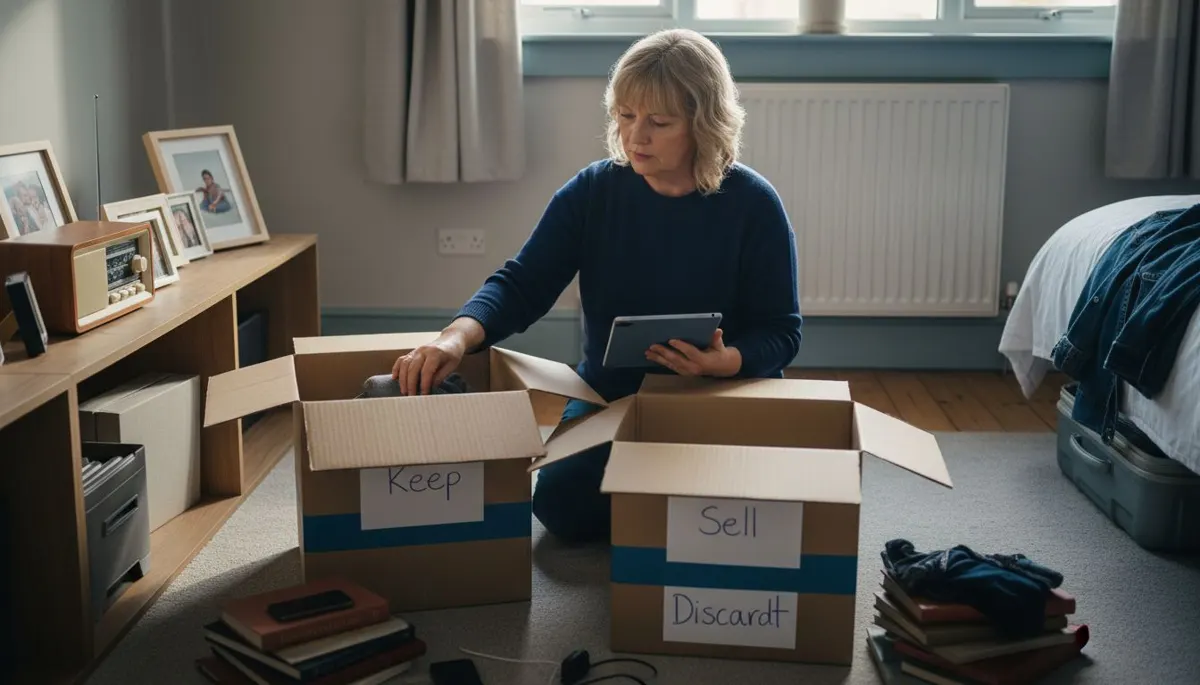
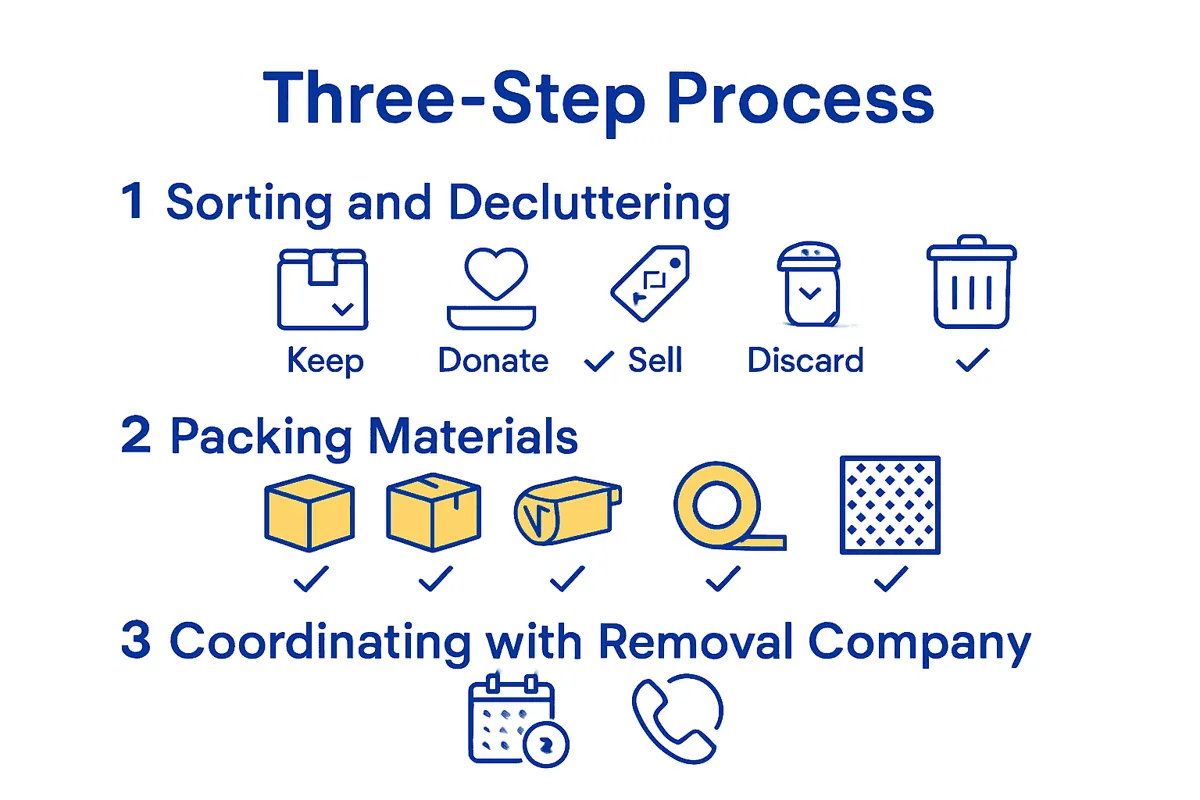
Begin by creating four distinct categories for your belongings: keep, sell, donate, and discard. Start in one room and work methodically through your home. Pull everything out of cupboards, drawers, and storage spaces. Ask yourself critical questions about each item: Have I used this in the past year? Does it hold genuine sentimental value? Will it fit or be useful in my new space?
Professional organizers recommend starting this process 8-10 weeks before moving. This timeline allows you to sell valuable items, arrange proper disposal for unwanted goods, and prevent last minute stress. For expensive or sentimental items, consider professional valuation or careful preservation strategies. By taking a room-by-room approach, you will prevent feeling overwhelmed and ensure a comprehensive assessment of your possessions.
For your next steps, prepare boxes and packing materials to start organizing the items you plan to keep and transport to your new home.
Step 2: Create your moving day checklist
A comprehensive moving day checklist transforms potential chaos into a smooth, organized relocation experience. According to Independent Age, the first critical step is creating a dedicated folder to store all important documents related to your move.
Start by gathering essential contact information, including removal companies, utilities, and key personal contacts. As recommended by the source, contact multiple removal firms and compare their quotes carefully. Look for professional memberships such as the National Guild of Removers and Storers to ensure quality service. Your checklist should include specific sections like document tracking, contact information, and a timeline of key moving activities.
As moving day approaches, Microsoft suggests setting an early alarm and preparing last-minute items. Pack a separate bag with essentials like toiletries, a change of clothes, and your coffeemaker to ensure a smooth transition. Pro tip: create digital and physical copies of your checklist to stay organized and reduce stress.
With your checklist prepared, you are now ready to move on to the next crucial stage of your moving preparations.
Step 3: Organise essential packing materials
Successful moving starts with gathering the right packing materials to protect your belongings and streamline the moving process. When preparing for your move, you will need a comprehensive collection of supplies that ensure your items arrive safely at your new home.
Begin by collecting sturdy cardboard boxes in various sizes to accommodate different household items. You will want small boxes for heavy objects like books, medium boxes for kitchen items and electronics, and larger boxes for lighter items such as bedding and clothing. Invest in quality packing tape to securely seal your boxes, ensuring they can withstand transportation. Bubble wrap, packing paper, and protective padding materials are crucial for wrapping fragile items like glassware, picture frames, and delicate electronics.
For your most valuable and breakable possessions, consider professional packing materials and techniques that provide extra protection. Pro tip: colour code or label your boxes by room to make unpacking more efficient. Keep a separate box for essential items you will need immediately upon arrival such as toiletries, basic kitchen supplies, and a change of clothes.
With your packing materials organised, you are now ready to start the careful process of preparing your belongings for the big move.
Step 4: Coordinate with your removal company
Effective communication with your removal company can transform a potentially stressful moving experience into a smooth transition. According to Independent Age, the key is to carefully research and select a reputable removal company that meets your specific needs.
Begin by obtaining multiple quotes from different removal companies. As recommended, request at least three written quotes with comprehensive cost breakdowns. Look for companies that are members of professional bodies such as the National Guild of Removers and Storers. During initial consultations, provide detailed information about your move including the number of rooms, any special items requiring extra care, potential access challenges at both your current and new property, and your preferred moving date.
Understand the details of a removal survey to ensure a comprehensive assessment of your moving requirements. Pro tip: confirm insurance coverage and ask about their procedure for handling fragile or valuable items. Create a clear communication plan with your removal company including contact numbers, alternative contact methods, and a step-by-step timeline for moving day.
With your removal company coordinated, you are now ready to move forward with confidence and clarity.
Step 5: Pack methodically and label boxes
Packing for a move is an art that requires strategic planning and careful organisation. According to Ealing Storage, the key to successful packing lies in creating a clear labelling system and maintaining a detailed inventory of your possessions.
Begin by gathering sturdy boxes and packing materials for each room in your home. Pack items systematically room by room, starting with least used spaces like guest rooms or storage areas. Group similar items together and use bubble wrap or packing paper to protect fragile belongings. Clearly mark each box with its contents and the specific room it belongs to in your new home. For added organisation, create a simple spreadsheet tracking your packed items, which can help you keep track of your belongings and identify opportunities for further decluttering.
To make unpacking smoother, plan your moving day logistics by colour coding or numbering your boxes. Pro tip: pack an essential box with items you will need immediately upon arrival such as toiletries, a change of clothes, basic kitchen supplies, and important documents. This will save you from rummaging through multiple boxes during your first day in your new home.
With your boxes carefully packed and labelled, you are now prepared for a smooth and organised moving experience.
Step 6: Conduct a final walk-through and confirm details
The final walk-through is your last opportunity to ensure everything is perfectly prepared for your move. As recommended by University of Bristol, it is crucial to thoroughly clean and document the condition of your current space before departing.
Start by systematically checking each room to confirm nothing has been left behind. Verify that all utilities are disconnected, windows are closed, and electrical items are unplugged. Take dated photographs of each room as documentary evidence of its condition. Pay special attention to areas that might incur additional charges such as walls, carpets, and fixtures.
 Ensure all personal items are removed and the space is left in a clean and tidy state.
Confirm final details with your removal company, including exact moving times, access arrangements, and any special handling requirements for valuable items. Verify the complete logistics of your moving day to prevent last minute complications. Pro tip: create a final checklist of tasks to complete before leaving, including returning keys, cancelling local services, and forwarding your postal address.
With your final walk-through complete, you are now ready to embark on your moving adventure.
Make Your Moving Day Truly Stress-Free with Expert Support
Preparing for moving day can feel overwhelming with so many tasks like sorting, packing and coordinating a removal company. This article highlights common pain points such as managing packing materials, labelling boxes clearly and ensuring a smooth final walk-through. If you want to avoid last-minute chaos and protect your valuable belongings, professional help is the key to peace of mind.

Discover how Schott Removals, a family-run business with over 30 years of experience, can transform your relocation into a seamless, organised process. From local removals to international shipping and secure storage, their expertise means your move is handled with care and reliability. Ready to stop stressing and start planning with confidence Get instant quotes and expert advice right here at Schott Removals. Browse honest feedback from happy customers in the Testimonial Showcase and explore helpful tips in our Uncategorised Archives. Take the next step towards moving day success today.
Frequently Asked Questions
How can I effectively declutter before moving day?
To effectively declutter before moving day, create four categories: keep, sell, donate, and discard. Start this process at least 8-10 weeks in advance to significantly reduce your moving volume by 30-40%.
What should I include in my moving day checklist?
Your moving day checklist should include essential contact information, a timeline of key activities, and document tracking. Create a separate section for last-minute items to ensure you don’t forget necessities like toiletries and a change of clothes.
What types of packing materials do I need for my move?
Gather sturdy cardboard boxes in various sizes, packing tape, bubble wrap, and packing paper to protect your belongings. Organize these materials well in advance of your move to streamline the packing process and safeguard fragile items.
How do I select a removal company for my move?
Select a removal company by obtaining multiple quotes and looking for comprehensive cost breakdowns. Communicate your specific needs during initial consultations to ensure the company can accommodate any special requirements you may have.
What should I do during the final walk-through before moving out?
During your final walk-through, check every room for forgotten items, ensure utilities are disconnected, and document the condition of the space with photos. Make a final checklist of tasks, including returning keys and forwarding your postal address, to ensure a smooth departure.
How can I make packing and labelling more efficient?
Make packing and labelling efficient by packing room by room and grouping similar items together. Clearly label each box with its contents and the room it belongs to in your new home for easier unpacking later.
Recommended
- What to Expect on Moving Day in the UK: Key Steps in 2025 | Schott Removals
- Stress-Free Moving Checklist 2025: UK, International & Business Moves | Schott Removals
- Managing Moving Day Logistics: Expert Tips for UK Moves 2025 | Schott Removals
- House Removal Process Explained: Step-by-Step Guide for 2025 | Schott Removals