
When a business decides to move office, the stakes can feel sky-high. One wrong step and operations could grind to a halt, costing far more than just moving fees. Yet surprisingly, companies that dedicate time to thorough planning can cut disruption by up to 40 percent. This means moving might actually be the perfect moment to spark new excitement and bring your whole team closer together.
Table of Contents
- Planning A Successful Office Move
- Supporting Employees During Relocation
- Choosing A Secure And Insured Removal Company
- Packing Tips For Valuable And Sensitive Items
Quick Summary
| Takeaway | Explanation |
|---|---|
| Start planning early | Conduct a thorough initial assessment of space and employee needs well ahead of the move. |
| Communicate clearly with employees | Maintain transparency and seek feedback to ease anxiety and build excitement about the relocation process. |
| Choose a reputable removal company | Select a company with comprehensive insurance and professional credentials to ensure the protection of your assets during the move. |
| Pack valuable items carefully | Use appropriate materials and methods to secure high-value equipment and sensitive documents to prevent damage or loss during the transition. |
| Support employees emotionally and practically | Provide practical assistance and emotional support to help ease the stress of relocation and ensure a smooth transition for everyone involved. |
Planning a Successful Office Move
Moving an office is far more complex than relocating a household. It requires meticulous strategic planning, precise coordination, and a comprehensive understanding of potential challenges that can disrupt business operations. The success of an office move hinges on careful preparation and proactive management.
Strategic Preparation and Initial Assessment
Before embarking on an office relocation, businesses must conduct a thorough initial assessment. This involves evaluating current workspace utilisation, understanding employee needs, and determining the specific requirements of the new location. According to CIPD Workplace Research, companies that invest time in comprehensive planning can reduce potential disruptions by up to 40%.
Key considerations during this phase include:
- Space Requirements: Accurately measure current and projected workforce space needs
- Technology Infrastructure: Ensure seamless IT and communication system transitions
- Budget Constraints: Develop a detailed financial plan accounting for direct and indirect moving expenses
Companies in the North East, particularly around Darlington and County Durham, should also factor in regional logistics and potential local infrastructure challenges when planning their office move.
Effective Employee Communication and Engagement
Successful office relocations are fundamentally about managing human dynamics. Chartered Management Institute research emphasises that transparent, early communication is critical to maintaining employee morale and productivity during transitions.
Effective communication strategies include:
- Hosting town hall meetings to discuss relocation plans
- Providing regular updates through multiple communication channels
- Creating opportunities for employee feedback and concerns
By involving employees in the moving process, businesses can transform a potentially stressful experience into a collaborative organisational journey. This approach not only mitigates anxiety but also helps build collective excitement about the new workspace.
Logistics and Technical Coordination
The technical aspects of moving an office require military-like precision. This involves coordinating multiple stakeholders including IT departments, facilities management, removals professionals, and external vendors. British Chambers of Commerce recommends creating a detailed project timeline that breaks down each stage of the move.
Critical logistical considerations include:
- Developing a comprehensive inventory of office equipment
- Planning equipment dismantling and reinstallation
- Scheduling moves during minimal business disruption periods
Businesses can also explore our comprehensive office removals process for more detailed insights into managing complex office relocations.
Ultimately, a successful office move is not just about changing physical location but creating an opportunity for organisational renewal, improved workplace dynamics, and strategic repositioning. Careful planning, empathetic employee management, and precise logistical execution are the cornerstones of a smooth transition.
Supporting Employees During Relocation
Moving an office is not just a logistical challenge but a significant emotional and professional transition for employees. The success of an office relocation fundamentally depends on how well organisations support their workforce through this complex process. Understanding and addressing employee concerns can transform a potentially stressful experience into an opportunity for team building and organisational growth.
To simplify your planning, this table lists practical strategies for supporting employees before and during the office move, from emotional support to logistical assistance.
| Support Area | Practical Actions |
|---|---|
| Emotional Support | Offer individual consultations and address job security concerns |
| Communication | Provide clear, consistent updates and gather employee feedback |
| Flexible Working | Allow remote work or staggered schedules during the move |
| Commute Assistance | Support with transportation or travel expense compensation |
| Orientation | Organise sessions to familiarise staff with the new workspace |
| Involvement in Planning | Include employees in relocation decisions and solicit their suggestions |
| Professional Development | Highlight new collaboration and growth opportunities in the new location |
Psychological Impact and Emotional Support
An office move represents more than a physical location change. Chartered Institute of Personnel and Development research indicates that workplace relocations can trigger significant psychological stress. Employees often experience anxiety about changes in commute, workspace dynamics, and potential disruptions to their established routines.
Key psychological considerations include:
- Uncertainty Management: Proactively addressing potential fears about job security
- Communication Transparency: Providing clear, consistent information about move details
- Individual Consultation: Offering personalised support for employees with specific concerns
Businesses in regions like Darlington and County Durham must be particularly sensitive to local workforce dynamics and potential geographical challenges during relocation.
Practical Support and Transition Assistance
Effective employee support goes beyond emotional reassurance and requires concrete, practical assistance. Workplace Mobility Association recommends a comprehensive approach to managing employee transitions.
Practical support strategies include:
- Offering flexible working arrangements during the moving period
- Providing transportation or commute assistance to the new location
- Organising orientation sessions for the new workspace
- Compensating for potential increased travel expenses
Businesses can explore detailed guidance on employee relocation to develop a robust support framework.
Professional Development and Opportunity Framing
Successful organisations view office relocation as more than a logistical exercise. By positioning the move as a professional development opportunity, companies can generate positive momentum and employee engagement.
Strategies for positive framing include:
- Highlighting potential improvements in workspace design
- Discussing potential networking and collaboration opportunities
- Demonstrating how the new location aligns with broader company growth strategies
Additionally, involving employees in the relocation planning can help mitigate resistance and build collective excitement. Team members who feel consulted and valued are more likely to approach the transition with a constructive mindset.
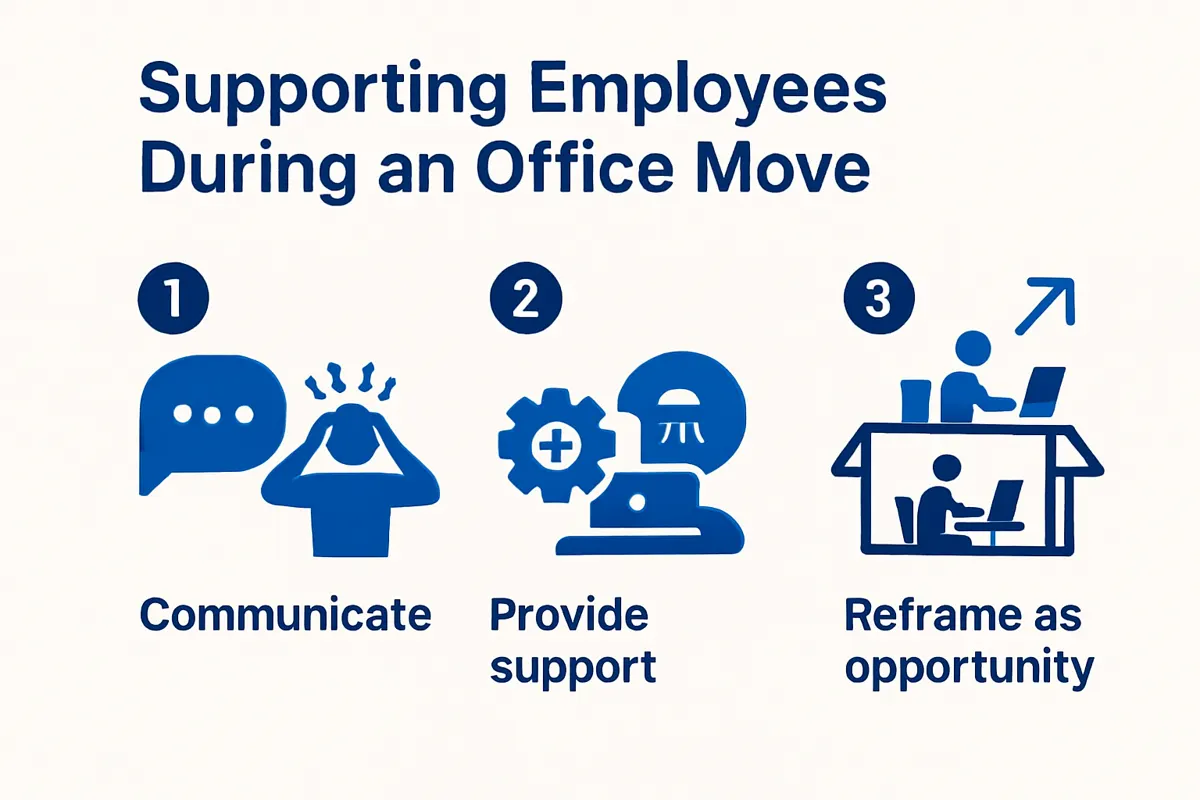
Ultimately, supporting employees during office relocation requires a holistic approach that balances emotional intelligence, practical support, and strategic communication. By prioritising employee well-being and perspective, organisations can turn a potentially disruptive event into a positive transformative experience.
Choosing a Secure and Insured Removal Company
Selecting the right removal company is a critical decision that can significantly impact the success and smoothness of an office relocation. Beyond simple transportation, businesses need a partner that offers comprehensive security, professional expertise, and robust insurance protection.
To help businesses ensure they select the right removal partner, the following table summarises the key verification steps and insurance coverage to look for when choosing a removal company.
| Factor | What to Look For |
|---|---|
| Full Replacement Insurance | Covers all office equipment for damage or loss |
| Public Liability Insurance | Protects against accidents during the moving process |
| Transit Insurance | Provides coverage for items during transportation |
| Professional Accreditations | Membership of recognised removals organisations |
| Years of Experience | Demonstrated expertise in office relocations |
| Customer Testimonials | Positive independent reviews and references |
| Transparent Pricing | Detailed, written estimates with clear breakdown of costs |
Comprehensive Insurance and Risk Management
Insurance is not merely a optional extra but a fundamental requirement for professional office moves. UK Parliament’s Business, Energy and Industrial Strategy Committee emphasises the importance of statutory protections and comprehensive insurance coverage for removal services.
Key insurance considerations include:
- Full Replacement Value Coverage: Ensuring all office equipment is protected against potential damage or loss
- Public Liability Insurance: Protecting against potential accidents during the moving process
- Transit Insurance: Comprehensive coverage for items during transportation
Businesses in the North East, particularly around Darlington and County Durham, should pay special attention to regional insurers who understand local moving dynamics.
Professional Credentials and Verification
Credibility and professional standing are crucial when selecting a removal company. British Association of Removers recommends thorough verification of a company’s professional credentials.
Essential verification steps include:
- Checking professional memberships and accreditations
- Reviewing independent customer testimonials
- Verifying years of operational experience
- Examining specialised expertise in office relocations
Businesses can explore our comprehensive guide to selecting secure removal services for more detailed insights into professional selection criteria.
Transparent Pricing and Service Scope
A reputable removal company provides clear, comprehensive pricing without hidden costs. Which? Consumer Research highlights the importance of detailed, transparent quotations that outline exact services and potential additional expenses.
Important pricing and service considerations include:
- Detailed written estimates
- Breakdown of all potential additional charges
- Clear explanation of service limitations
- Flexible package options
- Transparent cancellation and rescheduling policies
Ultimately, choosing a secure and insured removal company requires a holistic approach. Businesses must balance technical expertise, comprehensive insurance, professional credentials, and transparent pricing. The right removal partner transforms a potentially stressful relocation into a smooth, professionally managed transition that protects both the company’s assets and operational continuity.
Packing Tips for Valuable and Sensitive Items
Packing valuable and sensitive office items requires precision, strategic planning, and specialised knowledge. The process goes far beyond simply placing items into boxes. It demands a nuanced approach that considers the unique characteristics of different equipment, technological assets, and confidential materials.
Strategic Handling of High-Value Equipment
Office relocations involve transporting sophisticated technological and financial assets that demand meticulous preparation. Yale University’s Moving Guidelines emphasises the critical importance of using sturdy, appropriately sized cartons and ensuring comprehensive protection.
Key strategies for protecting high-value equipment include:
- Custom Packaging: Using specialised containers designed for specific technological devices
- Anti-Static Protection: Implementing protective measures for electronic components
- Detailed Inventory Documentation: Creating comprehensive records of all valuable items
Businesses in regions like Darlington and County Durham should pay extra attention to potential environmental factors that might impact sensitive equipment during transportation.
Securing Confidential and Sensitive Documents
Confidential documentation requires extraordinary care during office relocations. Federal Maritime Commission recommends personal transportation of critical documents rather than standard shipping methods.
Essential document protection strategies include:
- Using sealed, tamper-evident containers
- Implementing strict chain of custody protocols
- Creating digital backups of critical documentation
- Restricting access to sensitive materials during moving processes
Learn more about professional packing techniques to ensure maximum protection for your valuable assets.
Material Selection and Preservation Techniques
National Museums Scotland provides expert insights into material selection for preserving delicate items. Their research highlights the importance of understanding each item’s specific preservation requirements.
Critical considerations for material preservation include:
- Avoiding materials that can cause chemical degradation
- Using acid-free packaging for archival documents
- Implementing temperature and humidity-controlled transportation
- Selecting packaging materials that provide shock absorption
Professional packers understand that each item requires a tailored approach. Delicate scientific equipment, artistic assets, and precision instruments demand specialised handling techniques that go beyond standard moving practices.
Ultimately, successful packing of valuable and sensitive items requires a combination of technical knowledge, meticulous planning, and professional expertise. By adopting comprehensive protection strategies, businesses can ensure their most critical assets remain secure and undamaged throughout the relocation process.

Frequently Asked Questions
What are the key steps in planning a successful office move?
To plan a successful office move, conduct a thorough initial assessment, evaluate space requirements, coordinate technology infrastructure, and create a comprehensive budget. Early planning can reduce disruptions by up to 40%.
How can I effectively communicate with employees during the relocation process?
Effective communication involves hosting town hall meetings, providing regular updates through various channels, and creating opportunities for employee feedback. This approach helps to ease anxiety and build excitement about the move.
What should I consider when choosing a removal company for an office move?
When choosing a removal company, look for comprehensive insurance coverage, professional credentials, transparent pricing, and positive customer testimonials. It’s crucial to ensure that the company has experience in office relocations.
What are the best practices for packing valuable and sensitive items during a move?
For packing valuable and sensitive items, use custom packaging designed for specific equipment, implement anti-static protections for electronics, and maintain detailed inventory documentation. Ensure that confidential documents are securely sealed and transported personally whenever possible.
Take the Stress Out of Your Office Move with Trusted Specialist Support
Office relocations can quickly become overwhelming. Many businesses worry about workplace disruption, safeguarding sensitive equipment, and ensuring staff feel supported during the transition. The article highlights how strategic planning, clear communication, and professional expertise are key to reducing upheaval and anxiety when moving your team and valuable assets. Yet, turning these recommendations into a seamless experience often requires a dedicated partner who understands both the organisational and human side of moving.
Why risk setbacks or leave your relocation to chance? At Schott Removals, we bring over 30 years of experience specifically in office and commercial moves. Our family-run team uses proven methods for packing specialist equipment and safeguarding confidential material. We also provide dedicated guidance and support for employees during every phase of your office move. Discover how you can ensure a smooth transition for your workplace and your people. Visit our main site or learn more about our expert packing services to get a fast, no-obligation quote and start planning a move that inspires confidence. Act now to avoid unnecessary downtime and unlock the benefits of a truly stress-free office relocation.
Recommended
- How to Relocate Employees: Expert Guidance for 2025 Moves – Schott Removals
- The Complete Office Removals Process Guide for 2025 | Schott Removals
- What to Expect on Moving Day in the UK: Key Steps in 2025 | Schott Removals
- Managing Moving Day Logistics: Expert Tips for UK Moves 2025 | Schott Removals
- Office Relocation Planning 2025: Guide For California Moves | USPL – US Pro Logistics
- 2025 Office Furniture Budget Tips: Smart Savings Guide – Office Furniture Dubai | Buy Modern Office Furniture Dubai – SAGTCO