
Moving house is never just about shifting boxes and hanging up curtains. Every year, over 400,000 UK households experience delays or unexpected costs simply due to mishandled utility transfers. Most people think remembering their kettle is the hardest part of moving. The real stress comes from a missed meter reading or forgotten disconnection, which can end up costing hundreds. There is a smarter route that saves time, money, and your sanity.
Table of Contents
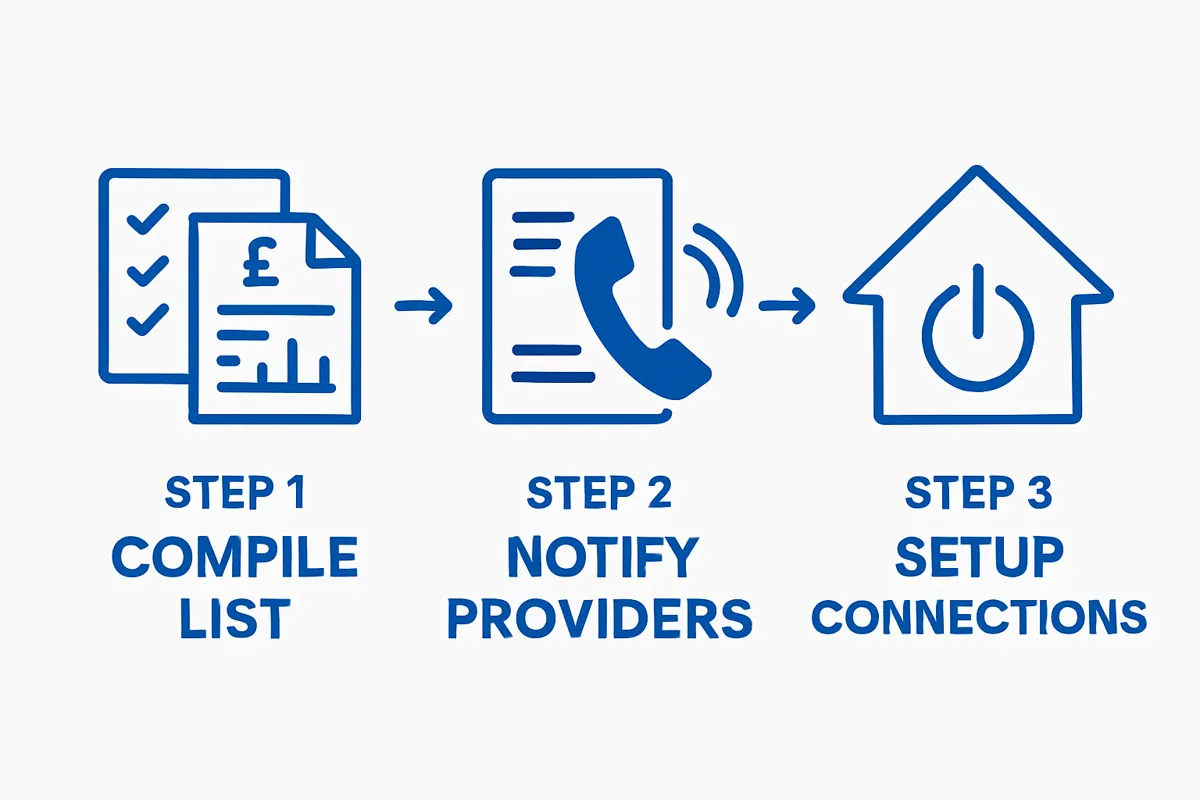
- Step 1: Compile A List Of All Utility Providers
- Step 2: Contact Utility Providers To Notify Them Of Your Move
- Step 3: Set Up Utility Connections At Your New Address
- Step 4: Schedule Final Readings And Disconnects For Current Utilities
- Step 5: Verify Utility Connections At Your New Home
- Step 6: Keep A Record Of All Utility Agreements And Contact Information
Quick Summary
| Key Point | Explanation |
|---|---|
| 1. Compile a detailed utility list | Gather all existing provider accounts to ensure a seamless transition when moving. Include all essential services in your tracking. |
| 2. Notify providers 4-6 weeks ahead | Reach out to each utility provider early to schedule disconnection and reconnection requests, ensuring service continuity. |
| 3. Schedule connections 48 hours prior | Arrange utility connections at your new home at least 48 hours before moving to allow for any technical installations. |
| 4. Document final meter readings | On moving day, take and photograph final meter readings for each utility to verify billing and avoid future disputes. |
| 5. Maintain organized utility records | Create a digital folder for all utility agreements and contacts, ensuring ongoing access to important information throughout your tenancy. |
Step 1: Compile a List of All Utility Providers
Compiling a comprehensive list of utility providers is the critical first step in ensuring a seamless transition when moving house. This foundational task sets the stage for efficiently managing your essential services and avoiding potential disruptions during relocation.
Start by gathering all existing utility account documentation from your current residence. This includes electricity, gas, water, internet, phone, and waste management bills. Review these documents carefully to identify the specific providers and contact information for each service. If you cannot locate physical bills, access online account portals or contact your current providers directly to obtain the necessary details.
Next, create a detailed spreadsheet or dedicated notebook specifically for tracking your utility providers. For each service, record critical information such as:
- Provider name and contact number
- Account number
- Current billing address
- Customer service contact details
- Existing contract terms
According to the National Energy Action, obtaining your Meter Point Reference Number (MPRN) is crucial when transferring or setting up new energy services. For gas and electricity providers, contact the Meter Number Helpline to verify this essential identifier.
Do not overlook less obvious utility services like cable television, streaming subscriptions, home security systems, or landline phone connections. These services often require advance notice for disconnection or transfer. Research potential new providers in your destination area to compare rates and service packages, ensuring continuous coverage during your move.
Verify the completeness of your utility provider list by cross-referencing it with bank statements and online account records. Double-check that you have not missed any recurring services that might require notification or transfer. By methodically documenting all utility providers, you create a robust blueprint for managing your essential services throughout the moving process.
Step 2: Contact Utility Providers to Notify Them of Your Move
Contacting utility providers is a critical phase in your moving process that requires strategic communication and precise timing. This step ensures continuous service and prevents unnecessary billing complications during your transition.
Begin by systematically reaching out to each utility provider from your comprehensive list. Prioritize communication at least 4-6 weeks before your moving date, which provides sufficient time for processing disconnection and reconnection requests. For electricity and gas services, learn more about seamless moving day preparations, as timing can significantly impact your service continuity.
According to Citizens Advice, it is crucial to provide final meter readings on your moving day. When contacting each provider, have the following information readily available:
- Your current account details
- New property address
- Proposed moving date
- Final meter reading for current property
- Initial meter reading for new property
For each utility service, request specific documentation confirming your account closure and any final balance. This includes electricity, gas, water, internet, and telephone providers. Some companies might require a formal written notice or online form submission, so check their individual requirements.
During these conversations, discuss potential transfer options or new service installations at your destination property. Some providers offer seamless relocation services where they can transfer your existing plan to the new address. Confirm installation dates, potential connection fees, and any equipment transfer requirements.
Verify the completion of this step by collecting written confirmations from each utility provider. These documents should clearly state your account closure date, final meter readings, and any outstanding balances. Store these records securely for future reference, ensuring a smooth and transparent transition between your old and new residential utilities.
Step 3: Set Up Utility Connections at Your New Address
Establishing utility connections at your new property is a pivotal step that ensures immediate comfort and functionality upon moving in. This process requires proactive planning and systematic execution to guarantee seamless service transitions.
Begin by scheduling utility connection appointments well in advance of your moving date. Ideally, arrange for connections to be activated 48 hours before your actual move-in date, allowing time for potential technical installations or unexpected delays. Explore our comprehensive moving day preparation guide for additional insights into coordinating these critical logistics.
According to Citizens Advice, connecting your new home requires specific preparation. Contact each utility provider with your new property details, including:
- Complete address
- Proposed move-in date
- Property type
- Meter location details
- Previous occupant information (if available)
Prioritize essential utilities like electricity, gas, and water. For each service, confirm the exact connection process. Some providers might require an engineer visit to activate services or verify meter functionality. Request written confirmation of connection dates and any associated installation fees.
Research alternative providers for each utility service, comparing rates and service packages. This is an excellent opportunity to potentially negotiate better terms or switch to more cost-effective providers. Some companies offer special relocation packages or introductory rates for new customers.
Verify your utility connections by conducting a comprehensive check immediately after moving in. Test electrical outlets, run water taps, check heating and cooling systems, and confirm internet connectivity. Keep all connection confirmation documents readily accessible, and save provider contact information in an easily accessible location. By meticulously managing these connections, you transform your new house into a fully functional home from the moment you arrive.
Step 4: Schedule Final Readings and Disconnects for Current Utilities
Scheduling final utility readings and disconnections is a critical financial and administrative task that prevents unexpected charges and ensures a clean break from your current property. This step requires meticulous attention to detail and proactive communication with your existing utility providers.
Timing is paramount when managing utility disconnections. Learn more about coordinating your moving logistics to synchronize your utility management effectively. Plan to schedule final readings approximately two weeks before your moving date, allowing ample time for processing and final billing preparations.
According to Citizens Advice, you should provide at least 48 hours’ notice to utility providers about your upcoming move. Prepare a comprehensive checklist of all utilities requiring disconnection:
- Electricity provider
- Gas supplier
- Water utility
- Internet and telephone services
- Cable or satellite television
- Waste management services
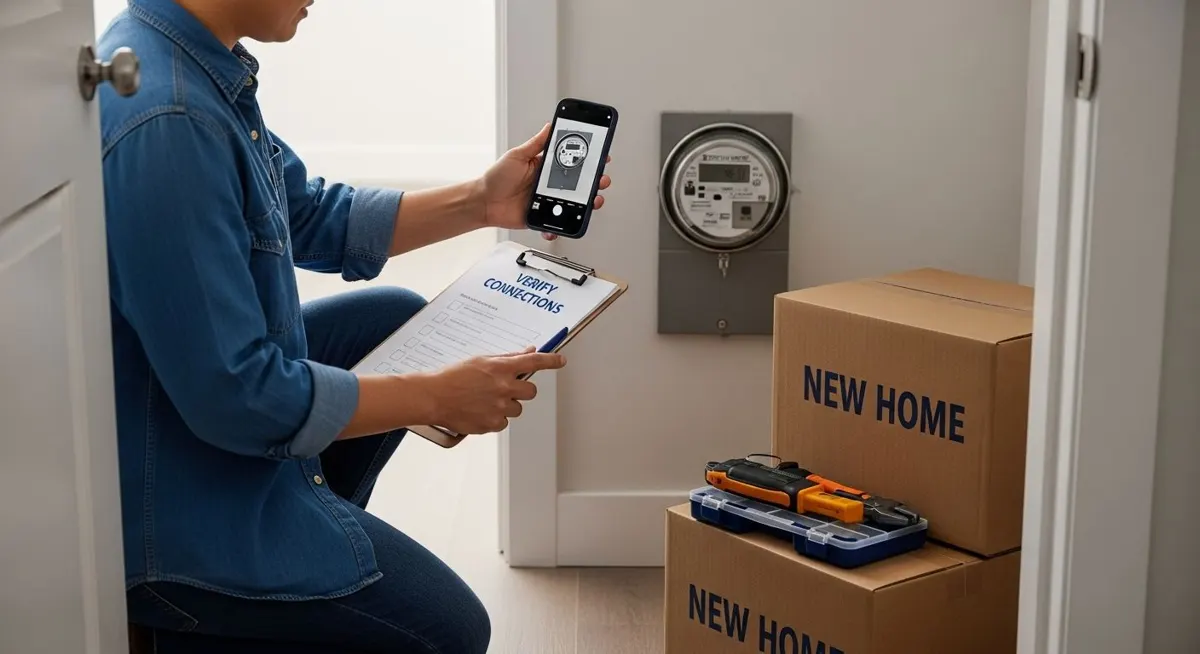
When contacting each provider, request a precise final meter reading appointment. Critically, take photographs of meter readings on your moving day as independent proof of consumption. During these conversations, confirm the exact process for final billing and request that all final statements be sent to your new forwarding address.
Each utility provider will have slightly different disconnection protocols. Some may require written notice, while others accept online or telephone cancellations. Maintain a dedicated folder containing confirmation emails, reference numbers, and communication logs documenting your disconnection requests.
Verify the completion of this step by collecting written confirmations from each utility provider. These documents should specify your account closure date, final meter readings, and any outstanding balances. Retain these records for at least 12 months after moving, ensuring you can resolve any potential billing discrepancies that might arise post-move.
Step 5: Verify Utility Connections at Your New Home
Verifying utility connections at your new home is a crucial final step in your moving process that ensures immediate comfort and functionality. This comprehensive check prevents potential disruptions and identifies any immediate technical issues that might require prompt attention.
Learn more about smooth moving day preparations to complement your utility verification process. Immediately upon arriving at your new property, conduct a systematic evaluation of all essential utility connections. Begin with electrical systems, testing every power outlet, light switch, and hardwired appliance to confirm proper functionality.
According to UK Government guidelines, movers should meticulously verify utility connections and report any interruptions immediately. Prepare a comprehensive verification checklist that includes:
- Electrical system functionality
- Gas connection and safety
- Water pressure and temperature
- Internet and telephone connectivity
- Heating and cooling systems
- Waste disposal mechanisms
For electrical systems, use a multimeter or plug in multiple devices to confirm consistent power supply across different rooms. Check that circuit breakers are accessible and functioning correctly. Test water systems by running taps in kitchen and bathroom, verifying both hot and cold water supply and checking for any potential leaks.
Gas connections require extra caution. If you smell gas or suspect any irregularities, do not attempt to resolve issues independently. Contact your gas provider immediately and ventilate the space. Some utility providers offer free safety checks for new occupants, so inquire about complimentary inspection services.
Document any discrepancies or connection issues meticulously. Take photographs of problematic areas, record specific concerns, and maintain a written log of your findings. Contact respective utility providers promptly with detailed information about any discovered problems. Retain all communication records and reference numbers for potential follow-up discussions.
To help you keep on top of all essential utility transfers, the following checklist summarises the required verification steps and recommended actions during the moving process.
| Utility Service | Verification Step | Action on Moving Day |
|---|---|---|
| Electricity | Test all outlets and light switches | Record meter readings, photograph and note any issues |
| Gas | Confirm supply is active, check for leaks or odours | Record gas meter reading, contact provider if needed |
| Water | Run all taps, check pressure and temperature | Record meter reading, inspect for leaks |
| Internet/Telephone | Test connectivity and signal strength | Verify contract, run speed test |
| Heating/Cooling | Check central heating and cooling are operational | Turn on systems, look for faults |
| Waste Management | Confirm collection schedule and bin availability | Ensure provider informed, bins clearly labelled |
| TV/Streaming/Cable | Check all packages transferred or cancelled | Confirm access, test service where applicable |
Step 6: Keep a Record of All Utility Agreements and Contact Information
Maintaining a comprehensive and organised record of utility agreements is the final cornerstone of a successful moving process. This critical step provides a robust reference point for future communications, billing disputes, and administrative tracking.
Digital documentation is your strongest ally in this process. Explore our comprehensive moving day preparation strategies to understand how meticulous record-keeping can simplify your transition. Create a dedicated digital folder on your computer or cloud storage platform specifically for utility documentation, ensuring all critical information remains easily accessible.
According to Warwick District Council, tenants should maintain detailed records of their utility interactions. Compile a comprehensive utility information portfolio that includes:
- Full provider contact details
- Account numbers
- Contract start and end dates
- Initial and final meter readings
- Confirmation of connection and disconnection dates
- Written correspondence and reference numbers
Organise physical and digital copies systematically. Scan all paper documents and store them in multiple locations digital cloud storage, external hard drive, and a secure email folder. Consider creating a spreadsheet that tracks each utility provider, including columns for account details, contact information, billing cycles, and any specific notes about your agreements.
Ensure your records include contact information for emergency utility services. This should encompass not just billing departments, but also technical support and emergency repair lines for electricity, gas, water, and internet providers. Store these contact details in both digital and physical formats, ensuring you can quickly access critical information during unexpected situations.
Verify the completeness of your utility documentation by conducting a final review. Cross-reference your digital records with original contracts, confirm all necessary documents are included, and ensure contact information remains current. By maintaining this comprehensive utility archive, you create a valuable resource that will serve you throughout your tenancy and potentially simplify future moves.
For an organised move, the table below lists the key details to record for each utility provider as recommended in the article, aiding future reference and issue resolution.
| Information to Record | Description |
|---|---|
| Provider Name and Contact Details | Full name, customer service and emergency numbers |
| Account Number | Your allocated utility account reference |
| Contract Start and End Dates | Dates marking the beginning and end of your agreement |
| Meter Readings (Initial/Final) | Readings at move-in and move-out, with supporting photos |
| Connection and Disconnection Dates | Dates when utilities are set up or closed |
| Written Correspondence & Reference Nos | Confirmation emails, service tickets, letters |
| Emergency Contact Numbers | Rapid response lines for technical or billing problems |
Take the Stress Out of Your Utilities Checklist and Move with Confidence
When you are managing all the details from your utilities checklist, it is easy to feel overwhelmed by the risk of missed steps and unexpected disruptions. Notifying every provider, arranging final readings, and keeping track of meter numbers can quickly steal your peace of mind. Our years of experience at Schott Removals mean we know how critical it is to get every utility connection right, especially when you are aiming for a smooth transition into your new home. Discover real stories from those who have faced the same challenges by visiting our Testimonials page and see how we have helped put their fears to rest.

Stop letting utility worries complicate your move. Trust Schott Removals to provide clear guidance throughout your journey, from expert checklists to secure storage and professional removals. Ready to achieve a seamless move and avoid hidden surprises on your next bill? Visit Schott Removals now and let us help you plan every step, right down to the smallest detail.
Frequently Asked Questions
What utilities should I consider when moving house?
You should consider electricity, gas, water, internet, phone services, and waste management. Don’t forget additional services like cable TV and home security systems as well.
How far in advance should I contact utility providers before my move?
It’s advisable to contact your utility providers at least 4-6 weeks before your moving date to ensure sufficient time for disconnection and reconnection requests.
What information do I need to provide to my utility providers when I move?
You will need to provide your current account details, new address, proposed moving date, final meter readings, and any relevant information about the new property.
How can I verify that utility services are connected at my new home?
Once you arrive at your new property, systematically check each utility: test electrical outlets, water pressure, gas connections, and internet service to confirm everything is functioning correctly.