
Moving house is one of the most stressful events in life and can easily turn into a muddle if you are not careful. Yet most people have no idea that organising your move just eight weeks in advance can dramatically shrink stress levels and nearly double your chances of a smooth relocation. What surprises many is that the real secret to a hassle-free move is not about lifting boxes or hiring the biggest van but about the simple power of clear planning and clever communication from day one.
Table of Contents
- Step 1: Organise Your Moving Checklist
- Step 2: Communicate with Movers and Service Providers
- Step 3: Create a Packing Schedule
- Step 4: Pack Efficiently and Label Boxes
- Step 5: Verify Arrangements and Confirm Details
- Step 6: Manage Your Wellbeing on Moving Day
Quick Summary
| Key Point | Explanation |
|---|---|
| 1. Create a detailed moving checklist | A comprehensive checklist helps manage tasks efficiently, reducing stress during the moving process. |
| 2. Communicate with service providers early | Engage with movers and utility providers well in advance to ensure smooth logistics and avoid last-minute issues. |
| 3. Develop an organised packing schedule | An effective packing schedule breaks down tasks and minimises chaos, leading to a more manageable moving experience. |
| 4. Label boxes clearly and systematically | Proper labelling prevents confusion during unpacking, ensuring essential items are easily accessible first. |
| 5. Focus on wellbeing on moving day | Manage stress through preparation, nutrition, and mindful strategies to maintain a calm and positive mindset during the move. |
Step 1: Organise Your Moving Checklist
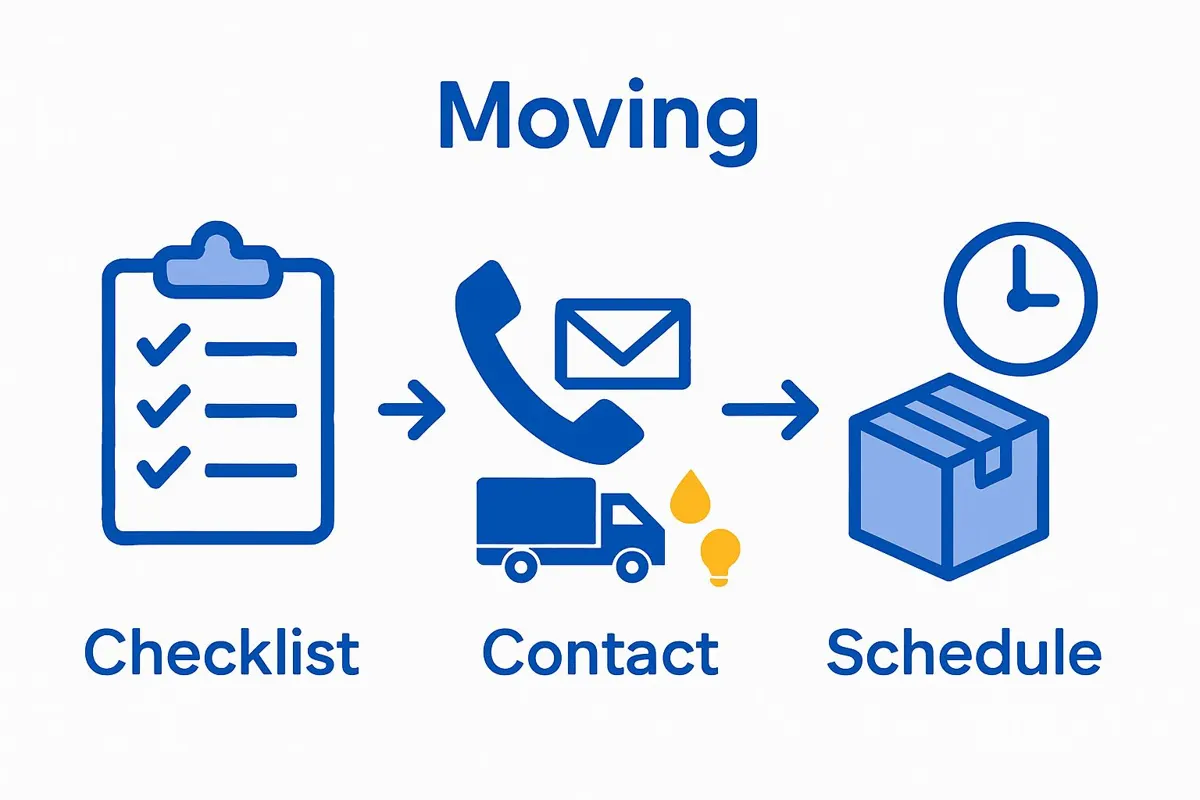
Creating a comprehensive moving checklist transforms potential chaos into a manageable, strategic process. This initial step sets the foundation for a smooth relocation, whether you’re moving within Darlington, across County Durham, or undertaking an international move.
Begin by establishing a central planning document that becomes your roadmap through the entire moving journey. This could be a digital spreadsheet or a physical notebook where you meticulously track every aspect of your move. Break down your checklist into clear, actionable timeframes starting approximately eight weeks before moving day. This allows sufficient time for methodical preparation without feeling overwhelmed.
Your initial checklist should prioritise critical tasks such as researching removal companies, initiating change of address notifications, and scheduling utility transfers. Consider creating separate sections for administrative tasks, packing requirements, and logistical arrangements. In the North East, where local moves can be particularly complex due to varied housing stock, detailed planning becomes even more crucial.
For comprehensive guidance through this process, review our detailed moving checklist which provides a structured approach tailored to different move types. Digital tools can significantly streamline this organisational process, with many removal companies offering specialised moving apps or downloadable checklists.
Key verification points for completing this step include:
- Having a comprehensive, dated checklist covering all move preparation aspects
- Clear allocation of tasks with assigned responsibilities
- Realistic timelines for each moving preparation activity
Remember, a well-organised checklist is not just about listing tasks but creating a strategic blueprint that reduces stress and ensures nothing critical is overlooked during your relocation.
The following table summarises key verification points to ensure your moving checklist is thorough and effective.
| Verification Point | Description |
|---|---|
| Comprehensive, dated checklist | Ensure all move preparation aspects are included and organised by date |
| Task allocation | Assign responsibilities to specific individuals for each task |
| Realistic timelines | Set achievable deadlines for all preparatory activities |
| Sectioned checklist | Divide checklist into administrative, packing, and logistical categories |
| Local considerations | Adapt plan to local complexities, such as unique housing stock in the North East |
| Use of digital tools | Consider moving apps or digital checklists for improved organisation |
| Reference external guides | Supplement with detailed external checklists for additional structure |
Step 2: Communicate with Movers and Service Providers
Effective communication forms the backbone of a successful move, transforming potential logistical challenges into a streamlined, stress-free experience. This crucial step involves proactively engaging with removal companies, utility providers, and other essential service providers to ensure a smooth transition between your current and future properties.
Initial contact with your chosen removal company should happen at least four to six weeks before moving day. This conversation goes beyond a simple booking confirmation. Discuss specific requirements, potential challenges, and unique aspects of your move. For residents in Darlington and County Durham, where property layouts can vary significantly, providing detailed information about access points, parking restrictions, and any potential narrow streets becomes critical.
Explore our comprehensive guide on managing moving logistics to understand the nuanced communication strategies that can prevent potential moving day complications. Prepare a comprehensive information packet for your movers that includes floor plans, special item handling instructions, and any access restrictions at both your current and future properties.
Parallel to coordinating with removal professionals, you must systematically notify service providers about your upcoming move. According to Shelter UK, this includes critical utilities such as electricity, gas, water, internet, and council tax departments. Create a structured communication plan that involves:
- Scheduling disconnection at your current property
- Arranging connection at your new address
- Transferring or establishing new accounts
- Updating contact information
Verification of this step involves confirming written confirmations from all service providers, having a documented communication trail with your removal company, and ensuring all parties have accurate address and contact information for your move. By meticulously managing these communications, you significantly reduce the potential for last-minute surprises and ensure a more predictable moving experience.
Step 3: Create a Packing Schedule
A strategic packing schedule transforms the overwhelming task of preparing for a move into a systematic, manageable process. This critical step requires thoughtful planning, particularly for households in complex environments like terraced homes in Darlington or multi-level properties across County Durham.
Begin by categorising your belongings into clear, logical groups that reflect both their fragility and frequency of use. Start with rooms and spaces that are least essential to daily living, such as guest rooms, storage areas, and seasonal spaces. This approach allows you to make steady progress without disrupting your daily routine. Allocate specific time blocks for packing, typically one to two hours per day, which prevents burnout and maintains your regular household functions.
Check out our comprehensive international shipping preparation guide for additional insights into efficient packing techniques that can be adapted to moves of all scales. Professional movers recommend creating a dedicated packing zone in your home where supplies are centralised and items can be systematically prepared for transport.
According to NHS stress reduction guidelines, breaking large tasks into smaller, consistent goals can significantly reduce moving-related anxiety. Develop a colour-coded or numbered system that tracks your progress and helps prioritise items. Essential packing verification points include:
- All non-essential items packed at least one week before moving day
- Clearly labelled boxes with contents and destination room
- Separate box for immediate essentials to be unpacked first
By implementing a structured packing schedule, you convert a potentially chaotic process into a controlled, methodical approach that minimises stress and maximises efficiency during your relocation journey.
This table provides a quick reference for essential packing verification steps before moving day to keep your relocation organised and efficient.
| Packing Verification Step | Details |
|---|---|
| Pack non-essentials early | All non-essential items to be packed at least one week before moving day |
| Label boxes clearly | Each box should indicate contents and its destination room |
| Prepare essentials box | Set aside a separate box with immediate necessities for first unpacking |
| Packing progress tracking | Use colour-coded or numbered systems to monitor completion |
| Centralise packing supplies | Designate a packing zone for supplies and packed boxes |
| Prioritise by room | Start with least-used rooms or areas that do not disrupt daily life |
| Fragile items precautions | Special care and materials used for delicate possessions |
Step 4: Pack Efficiently and Label Boxes
Packing efficiently transforms a potentially chaotic moving experience into a streamlined, organised process. This step requires strategic approach, particularly for households in diverse living environments across the North East, from compact terraced homes in Darlington to spacious properties in County Durham.
Invest in high-quality packing materials that provide genuine protection for your belongings. Professional movers recommend using sturdy boxes of uniform sizes, which stack more efficiently and reduce the risk of damage during transit. Begin with specialised packing techniques for fragile items, using bubble wrap, packing paper, and cushioning materials to create protective layers. Clothing can be efficiently packed by using vacuum storage bags, which dramatically reduce volume and protect against moisture and dust.
Learn more about our comprehensive moving preparation strategies to understand professional packing techniques that can save time and prevent potential damage. According to University of Bristol’s moving guidelines, precise labelling is crucial for maintaining order during your move.
Develop a comprehensive labelling system that goes beyond simple room identification. Use a colour-coded or numbered approach that tracks box contents, fragility, and unpacking priority. Your labelling should include:
- Destination room in the new property
- Brief inventory of contents
- Handling instructions (e.g., “Fragile” or “Handle with Care”)
- Arrows indicating correct box orientation
Verification of successful packing involves ensuring all boxes are sealed securely, labelled clearly, and grouped logically. Pack a separate “first night” box containing essential items you’ll need immediately upon arrival, such as toiletries, basic kitchenware, and a change of clothes. By approaching packing with methodical precision, you transform a potentially stressful task into a controlled, efficient process.

Step 5: Verify Arrangements and Confirm Details
The final preparatory stage of managing moving day stress involves meticulous verification of all arrangements, transforming potential logistical uncertainties into a predictable, controlled transition. This critical step serves as your comprehensive safety net, ensuring every detail is precisely aligned before the actual moving day.
Begin by conducting a comprehensive final review of all moving documentation, cross-referencing your original moving checklist with current confirmations. This involves carefully examining removal company contracts, utility transfer paperwork, and address change notifications. For residents in Darlington and broader County Durham, where local moving regulations can be nuanced, paying extra attention to specific regional requirements becomes paramount.
Explore our detailed guide on moving day preparations to understand the intricate details professional movers recommend confirming before relocation. Your verification process should encompass multiple communication channels, including direct phone conversations, email confirmations, and written documentation.
According to GOV.UK’s official moving guidance, creating a centralised document folder containing all critical moving-related paperwork helps prevent last-minute confusion. This folder should include:
- Removal company contract and insurance documents
- Utility transfer confirmations
- New property lease or ownership documents
- Identification and address change proof
- Emergency contact information
Conduct a final walkthrough of both your current and future properties, noting any specific access requirements, potential challenges, or special instructions for removal teams. This includes measuring doorways, checking parking restrictions, and identifying potential obstacles that might impact the moving process. Successful verification means having a clear, documented understanding of every aspect of your move, with all parties informed and aligned on expectations.
Step 6: Manage Your Wellbeing on Moving Day
Moving day represents the culmination of weeks of preparation, and managing your physical and mental wellbeing becomes paramount to ensuring a smooth transition. This step focuses on maintaining your personal resilience during what can be an emotionally and physically demanding experience, particularly for residents navigating complex moves in areas like Darlington and County Durham.
Start your moving day with a structured, calm approach. Wake up earlier than necessary to provide yourself adequate time for preparation and mental grounding. Prepare a nutritious breakfast that provides sustained energy, and pack a dedicated personal survival kit containing essential items like water, light snacks, medications, phone chargers, and a change of comfortable clothing. This preparedness helps mitigate unexpected stressors and maintains your personal comfort throughout the moving process.
Learn more about our comprehensive moving support strategies to understand professional approaches to maintaining composure during relocation. According to the Mental Health Foundation, recognising and managing stress triggers is crucial during significant life transitions.
Establish clear communication boundaries and expectations with your removal team and family members. Designate a primary point of contact who can manage logistical queries, allowing you to focus on your emotional wellbeing. Practice short mindfulness techniques such as deep breathing or brief meditation to centre yourself during potentially overwhelming moments.
Key strategies for maintaining wellbeing include:
- Taking regular short breaks
- Staying hydrated throughout the day
- Maintaining a positive, solution-focused mindset
- Acknowledging and accepting that some unpredictability is normal
Successful wellbeing management means concluding your moving day feeling physically comfortable and emotionally balanced, ready to begin the next chapter of your life with resilience and optimism.
Turn Moving Day Stress into a Smooth Success with Trusted Movers
Have you ever felt overwhelmed by managing moving checklists, coordinating with multiple service providers, or worrying about efficient packing and last-minute surprises? As highlighted throughout our guide, moving house can quickly become stressful without the right support or expertise. Our family-run team at Schott Removals understands how crucial it is to have a meticulous plan, responsive communication, and reliable hands on moving day. We believe your move deserves the confidence and peace of mind shared by so many satisfied clients in our customer testimonials.

Let our decades of removals experience work for you right now. Discover how our tailored solutions for local, national, and even international moves take the uncertainty out of your relocation. Visit Schott Removals to request your free quote or read first-hand client experiences on our testimonials page. Move forward with less stress and greater confidence today.
Frequently Asked Questions
How can I create an effective moving checklist to manage moving day stress?
Creating an effective moving checklist starts by listing all tasks needed for your move, ideally beginning eight weeks prior. Break your list into timeframes and categories, such as administrative tasks and packing requirements, to streamline your preparation.
What steps should I take to communicate with my movers and service providers effectively?
To communicate effectively, contact your removal company four to six weeks before the move to discuss specific needs and potential challenges. Prepare a detailed information packet for your movers, including access instructions and utility transfer requirements, to avoid last-minute issues.
How can I establish a packing schedule that reduces stress on moving day?
Establish a packing schedule by categorising your belongings and allocating specific time blocks for packing over the weeks leading up to your move. Aim to pack non-essential items at least one week before the moving day to prevent last-minute packing rushes.
What are efficient packing techniques to help me stay organised on moving day?
Use high-quality packing materials and develop a comprehensive labelling system that includes contents, destination room, and handling instructions. This will help increase efficiency and reduce stress by ensuring each box is easily identifiable and well-protected.
How can I verify that all arrangements are in place before moving day?
Before moving day, conduct a comprehensive review of all moving documentation, cross-referencing your original checklist with current confirmations. Make a folder with all critical documents, such as contracts and utility transfer confirmations, to ensure everything is clear and organised.
What self-care strategies can I implement to manage my wellbeing on moving day?
Focus on your wellbeing by starting your moving day with a nutritious breakfast and preparing a personal survival kit with essentials like water and snacks. Take regular breaks throughout the day to stay calm and maintain a positive mindset, recognising that some unpredictability is normal.
Recommended
- Stress-Free Moving Checklist 2025: UK, International & Business Moves | Schott Removals
- What to Expect on Moving Day in the UK: Key Steps in 2025 | Schott Removals
- Managing Moving Day Logistics: Expert Tips for UK Moves 2025 | Schott Removals
- Moving Day Organization Tips for North East Moves 2025 | Schott Removals