
Packing up your life for a move in County Durham or anywhere in the North East can feel overwhelming when boxes pile up and labels blur together. Clear labelling is the difference between arriving to organised calm or sorting through confusion. With the right supplies and a straightforward system, you can keep track of your belongings and make unpacking in your new home much simpler. This guide gives you practical steps and tips for creating easy-to-read, consistent labels that keep your move stress-free.
Table of Contents
- Step 1: Gather Essential Labelling Supplies
- Step 2: Sort Items By Room And Priority
- Step 3: Create Clear And Consistent Labels
- Step 4: Apply Labels Visibly To Each Box
- Step 5: Double-Check Boxes Before Moving Day
Quick Summary
| Essential Insight | Explanation |
|---|---|
| 1. Gather quality labelling supplies | Obtain durable adhesive labels, markers, and packing tape to ensure effective box labelling. Standard supplies ease your packing process significantly. |
| 2. Sort items by room and importance | Categorise belongings based on their location and necessity to streamline packing and facilitate quick unpacking in your new home. |
| 3. Create clear and consistent labels | Use large, readable labels with room destinations and contents to ensure easy identification and organisation during your move. |
| 4. Apply labels visibly and consistently | Position labels on multiple sides of boxes, maintaining height and orientation uniformity for optimal visibility and identification during transport. |
| 5. Double-check all boxes before moving | Conduct a thorough verification of packed boxes to confirm labelling accuracy and that no essential items are left behind before the move day. |
Step 1: Gather essential labelling supplies
Getting your packing materials organised is the first crucial step in preparing for a smooth move across County Durham or anywhere in the North East. You will want to collect a comprehensive set of supplies that will make labelling your boxes straightforward and efficient.
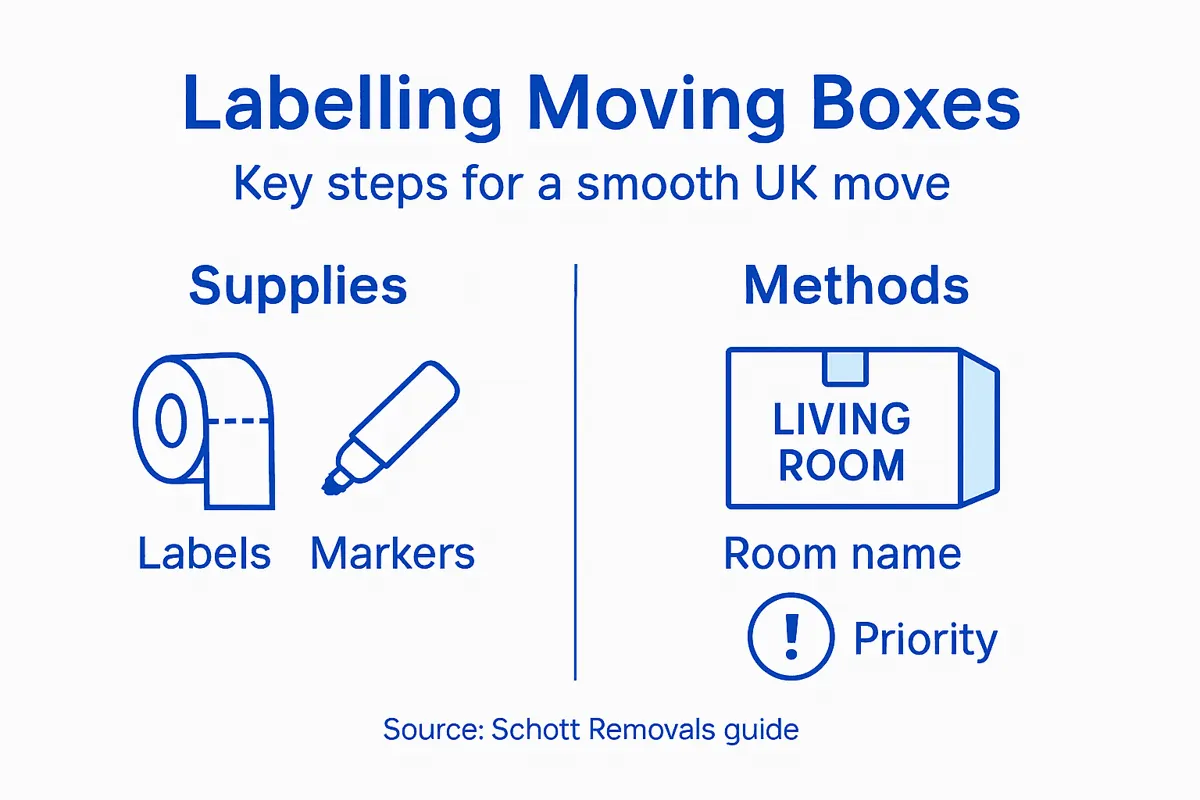
Start by purchasing high-quality supplies from local stationery shops in Darlington or online retailers specialising in moving equipment. Your essential toolkit should include durable adhesive labels with ample writing space. Grab a selection of permanent markers in different colours to help categorise and quickly identify box contents. Look for markers with water-resistant ink that will remain legible throughout your moving journey. You will also want robust packing tape to secure your labels firmly and prevent them from peeling during transit.
Consider purchasing a labelling kit that includes multiple tools for consistent application. Archival-quality labels work exceptionally well for delicate items and provide extra durability. Having a dedicated box of labelling supplies will streamline your packing process and reduce last-minute stress.
Here’s a quick reference comparing common labelling materials and their ideal uses:
| Labelling Material | Best For | Durability Level | Notes |
|---|---|---|---|
| Adhesive labels | Everyday cartons | High | Ample space for writing |
| Archival-quality labels | Delicate, valuable items | Maximum | Non-damaging, long-lasting |
| Packing tape | Securing labels | Very High | Prevents peeling in transit |
| Permanent marker | Creating readable text | Medium-High | Use water-resistant ink |
| Coloured stickers | Priority categorisation | Medium | Visual quick sorting aid |
Top tip: Keep your labelling supplies in a designated box or bag so you can easily access them throughout your packing process and move.
Step 2: Sort items by room and priority
Sorting your belongings efficiently will transform your moving experience from chaotic to controlled. By strategically categorising items by room and importance, you will create a systematic approach that simplifies packing and unpacking across County Durham and beyond.
Begin by developing a systematic room sorting strategy. Walk through each room in your home and create separate staging areas for different categories: essential items you will need immediately, items for storage, donations, and things to be packed. Use different coloured stickers or markers to distinguish priority levels. Kitchen items, bathroom essentials, and bedroom necessities should be packed last and marked clearly for quick access in your new home. Safe handling principles suggest grouping items by weight and fragility to ensure smooth transportation.
Consider creating a detailed inventory spreadsheet to track your sorted items, noting which boxes contain critical belongings and their designated rooms. This approach will help you stay organised during the move and make unpacking in Darlington or your new location much more straightforward.
Top tip: Create a “first night” box with essential items like toiletries, a change of clothes, and basic kitchen supplies to help you settle in quickly.
The following table summarises typical box priorities for an easy move:
| Box Priority | Typical Contents | Packing Order | Labelling Tip |
|---|---|---|---|
| Essential | Toiletries, clothing | Last | Use bright colours and clear text |
| Storage | Seasonal, infrequent use | Early | List contents and location |
| Donation | Unwanted, usable items | As sorted | Mark boldly for removal team |
| Fragile | Glass, electronics | As packed | Mark with warning symbols |
Step 3: Create clear and consistent labels
Labelling your moving boxes effectively is more than just scribbling contents on cardboard. It is about creating a systematic approach that will save you time and stress during your move across County Durham and beyond.
Start by developing a consistent labelling strategy that includes key information for each box. Use a permanent marker and create labels that clearly state the room destination, contents, and any special handling instructions. Consider using a colour coding system where each room gets a specific colour marker or sticker. For instance, blue might represent kitchen items, green for bedroom belongings, and red for fragile objects. When writing your labels, use block capitals and ensure the writing is large enough to read from a distance. Systematic labelling techniques recommend including additional details like box number and total number of boxes for that room to help track your inventory.
Make your labels as informative as possible without overcrowding the box. Include arrows indicating which way up the box should be carried and mark any boxes containing delicate items with clear fragile warnings. This approach will help your removal team in Darlington handle your belongings with the utmost care and precision.
Top tip: Create a digital spreadsheet that mirrors your physical box labels to keep a comprehensive digital inventory of your move.
Step 4: Apply labels visibly to each box
Properly positioning your labels is crucial for a smooth moving experience across County Durham and ensuring your belongings arrive safely at their destination. The right label placement can make all the difference between a chaotic move and a well-organised transition.

Strategically place labels on boxes by choosing the largest, most visible surface on each box. Apply labels on at least two sides to guarantee visibility from multiple angles during loading and unloading. Ensure the labels are placed flat and smooth, with no bubbles or creases that might make them difficult to read. Use clear packing tape to secure the edges of your labels, preventing them from peeling off during transit. Proper label attachment techniques recommend avoiding placement over box seams or folds that might obscure critical information.
When labelling boxes for your move from Darlington or anywhere in the North East, be consistent in your approach. Place labels at the same height and orientation on each box to create a uniform look that helps removal teams quickly understand and handle your belongings. If you are using a colour coding system, ensure the colour is bright and the writing is large enough to be read from a distance.
Top tip: Take a quick photo of your labelled boxes before the move as a backup reference for your inventory.
Step 5: Double-check boxes before moving day
The final review of your packed boxes is your last opportunity to prevent potential moving day mishaps. Thorough box verification can save you significant stress and ensure nothing important gets left behind during your relocation across County Durham.
Walk through each room methodically and cross reference your boxes with the inventory spreadsheet you created earlier. Check that every box is correctly labelled, sealed properly, and matches your original sorting system. Careful inventory cross-checking helps confirm all belongings are accounted for. Pay special attention to boxes containing valuable or fragile items, ensuring they are marked appropriately and positioned correctly for safe transport.
If you discover any discrepancies during this final review, address them immediately. Reorganise misplaced items, add missing labels, or consolidate boxes as needed. This last check provides peace of mind and helps your removal team in Darlington understand exactly what they are handling.
Top tip: Create a quick digital photo record of your packed boxes and their labels as a backup reference for your personal inventory.
Make Your Move Effortless with Expert Guidance and Support
Labelling moving boxes clearly and consistently can be a challenging part of any relocation across County Durham or the wider UK. You want to avoid confusion, misplaced items, and last-minute stress by following effective sorting strategies and clear labelling techniques outlined in this article. At Schott Removals, we understand these pain points and offer professional solutions that allow you to focus on what matters most during your move.
From expert packing services to secure storage options and reliable transport, our family-run company with over 30 years of experience ensures each stage is handled with care and precision. Avoid the common frustrations of rushed packing and unclear labelling by partnering with a team dedicated to making your move smooth and stress-free. Discover how we have helped countless customers by reading their experiences in our Testimonials and Testimonial Showcase.
Ready to turn your well-labelled boxes into a flawless relocation? Visit Schott Removals today for easy online quotes and tailored moving packages designed to support your unique needs. Make this your best move yet by letting professionals take care of the heavy lifting while you enjoy peace of mind.
Frequently Asked Questions
How can I effectively label my moving boxes?
Start by using a consistent labelling strategy that includes key details like the room destination, contents, and any special handling instructions. Write clearly using block capitals and ensure labels are placed on multiple sides of the box for visibility.
What supplies do I need for labelling moving boxes?
Gather durable adhesive labels, permanent markers in various colours, and robust packing tape. These supplies will help you categorise and identify box contents efficiently while ensuring labels stay secure during transport.
How should I sort items before labelling my boxes?
Sort items by room and priority, creating separate areas for essential, storage, donation, and fragile items. Use coloured markers or stickers to easily distinguish priority levels, ensuring that essential items are packed last for quick access.
What details should I include on my labels?
Include the room destination, a brief description of contents, and any important handling instructions, such as “fragile.” This information will help you and your removal team handle boxes appropriately and make the unpacking process smoother.
How can I ensure my labels remain readable during the move?
Apply labels flat and smooth on the box surfaces and secure the edges with clear packing tape to prevent them from peeling. Position labels on the largest surfaces and at least two sides of each box to ensure visibility from different angles.
What should I do on moving day to prepare for my relocation?
Conduct a final check of all boxes by reviewing your inventory list and confirming that each box is properly labelled and sealed. This last step can help prevent oversights and ensure that everything you need is ready to go.
Recommended
- Managing Moving Day Logistics: Expert Tips for UK Moves 2025 | Schott Removals
- Stress-Free Moving Checklist 2025: UK, International & Business Moves | Schott Removals
- Darlington Removals: Trusted Services for House and Office Moves 2025 | Schott Removals
- Moving Day Organization Tips for North East Moves 2025 | Schott Removals