
Moving house is already one of life’s biggest headaches and it becomes even more challenging as we get older. Planning ahead often sounds simple but research shows that starting the process just 8 to 12 weeks early can cut stress in half for seniors. Most people only worry about packing boxes and hiring a van yet forgetting the right support or proper timeline can turn a move into utter chaos. Discover how a step-by-step checklist built for seniors can transform a daunting move into a calm and organised experience.
Table of Contents
- Preparing For Your House Move Step-By-Step
- Packing Tips For Seniors And High-Value Items
- Choosing Reliable Removal And Storage Services
- Exclusive Guidance For Moves In North East England
Quick Summary
| Takeaway | Explanation |
|---|---|
| Start planning 8-12 weeks ahead | Early planning minimizes stress and allows for efficient organization during the moving process. |
| Sort belongings into three categories | Organize items to keep, donate, or discard to simplify the downsizing process before moving day. |
| Prepare a moving day essentials box | Include critical items and documents to ensure easy access during the move, focusing on healthcare needs and personal items. |
| Choose a removal company with experience | Select reputable movers who specialize in senior relocations to ensure safety and support during your move. |
| Understand local administrative requirements | Notify relevant authorities and transfer utility services well in advance to avoid disruptions in the new location. |
Preparing for Your House Move Step-by-Step
Moving house presents unique challenges for seniors, requiring meticulous planning and strategic preparation. A systematic approach transforms what could be an overwhelming process into a manageable and even enjoyable transition.
Creating a Comprehensive Moving Timeline
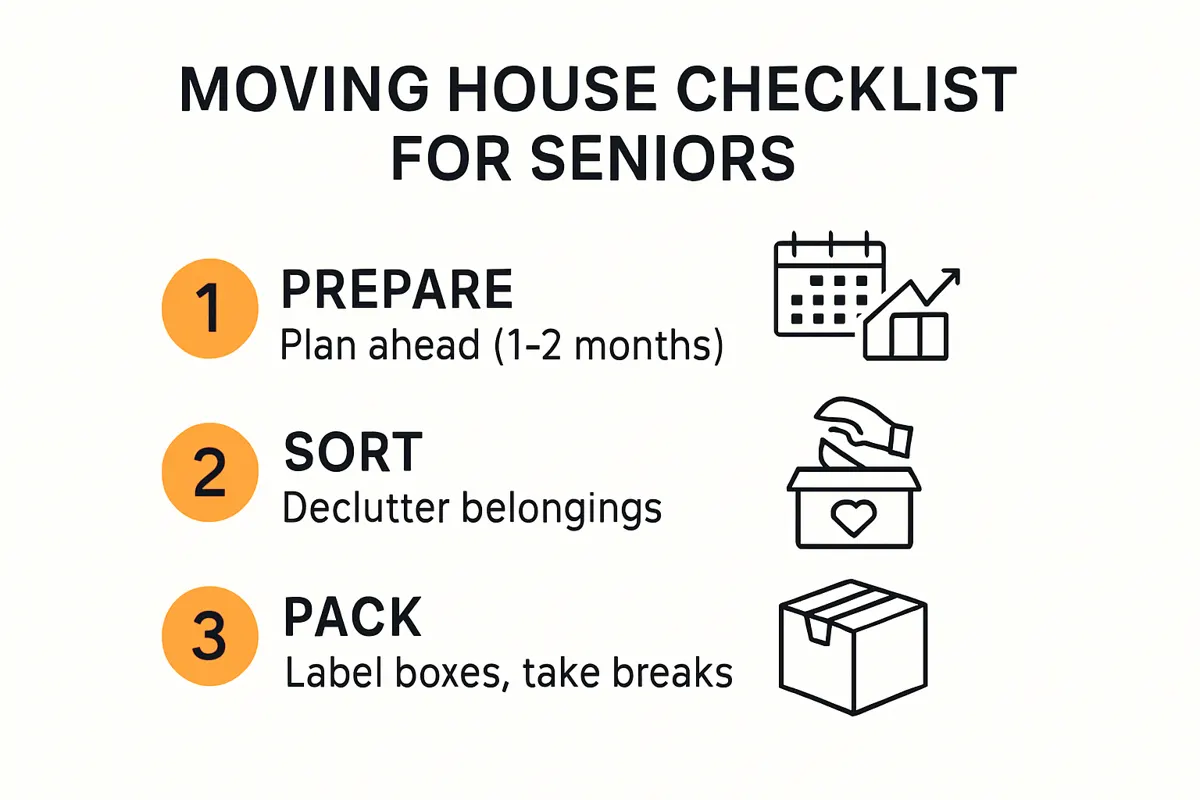
Successful house moves demand precise scheduling and thoughtful organization. Seniors should start planning at least 8-12 weeks before their moving date, allowing ample time to manage complex logistics without unnecessary stress. Our comprehensive guide on house removal processes offers detailed insights into creating an effective moving strategy.
Breaking down the moving process into manageable weekly tasks helps prevent last-minute panic. Begin by creating a dedicated moving folder where you can store important documents, checklists, and contact information. This centralized approach ensures critical information remains accessible throughout the relocation journey.
Sorting and Downsizing Personal Belongings
Reducing household items is a crucial step for seniors preparing to move. According to USA.gov moving guidelines, organizing and disposing of unnecessary items significantly simplifies the moving process. Start by categorizing possessions into three primary groups: items to keep, items to donate, and items to discard.
Consider enlisting family members or professional assistance to help with sorting. Professional organisers specialising in senior relocations can provide invaluable support during this emotional and physical process. They understand the sentimental attachments seniors have to personal belongings and can offer compassionate guidance on making difficult decisions.
Below is a table to help organise the downsizing process by categorising items and the recommended actions:
| Category of Item | Recommended Action | Helpful Support |
|---|---|---|
| Items to Keep | Pack and label for moving | Family/professional organiser |
| Items to Donate | Arrange donation collection | Family/charity services |
| Items to Discard | Dispose or recycle | Waste collection services |
Essential Preparation for Moving Day
Preparing a dedicated moving day essentials box is fundamental for seniors. This box should contain critical items like medications, important documents, a change of clothes, basic toiletries, and necessary medical supplies. Keep this box with you during the move to ensure immediate access to crucial personal items.
Healthcare considerations are paramount. Inform your healthcare providers about your upcoming move and arrange medical record transfers. If you require specialized transportation or moving assistance due to mobility challenges, communicate these requirements with your chosen removal company well in advance.
By following a structured approach and remaining organized, seniors can transform their house move from a potentially stressful experience into a smooth, manageable transition. Careful planning, early preparation, and seeking appropriate support are key to ensuring a successful relocation that prioritizes comfort, safety, and peace of mind.
Packing Tips for Seniors and High-Value Items
Packing for a move requires strategic planning, particularly for seniors managing valuable possessions and delicate items. Understanding the nuanced approach to packing can prevent damage, reduce stress, and ensure a smooth relocation experience.
Strategic Packing Techniques for Delicate Possessions
Seniors often possess cherished items with significant sentimental and monetary value that demand extra care during relocation. According to Allegro Living’s moving guidelines, seeking assistance from family and friends can make the packing process more manageable and safer.
When handling fragile items like antique china, crystal glassware, or family heirlooms, invest in high-quality packing materials. Use bubble wrap, packing paper, and sturdy cardboard boxes specifically designed for delicate objects. Wrap each item individually, providing cushioning between pieces to prevent scratching or breakage. Professional packing services can offer expert assistance for complex or high-value item protection.

Consider creating an inventory list of valuable items, including photographs and estimated values. This documentation proves crucial for insurance purposes and provides peace of mind during the moving process.
Efficient Packing Strategies for Senior Relocations
GoHealth recommends starting the packing process well in advance, which allows seniors to approach the task methodically without overwhelming physical or emotional strain. Begin by sorting items room by room, using clearly labeled boxes that indicate contents and designated rooms.
Utilize medium-sized boxes to prevent overloading, which can make lifting difficult. Pack heavier items like books in smaller boxes and lighter items like linens in larger containers. Ensure each box remains under 10 kilograms to maintain manageable weight for handling.
Medication, important documents, and essential personal items should be packed separately in a clearly marked “essentials” box. This box should remain with you during the move, ensuring immediate access to critical supplies.
Below is a table outlining efficient packing strategies and corresponding tips for seniors:
| Packing Strategy | Tip for Seniors |
|---|---|
| Start packing early | Reduce last-minute stress |
| Sort room by room | Maintain organisation and manage workload |
| Use medium-sized boxes | Prevent overloading and ease lifting |
| Pack heavier items in small boxes | Avoid strain |
| Label boxes clearly | Simplifies unpacking at new home |
| Keep essentials box with you | Immediate access to medication and documents |
Protecting Valuable and Sentimental Items
Special consideration must be given to irreplaceable items such as photographs, jewellery, and important legal documents. These should be personally transported rather than placed in moving vehicles. Consider using fireproof and waterproof document bags for critical paperwork.
For high-value items like artwork, antiques, or collectibles, professional assessment and specialized packing might be necessary. Some items may require custom crating or specific environmental conditions during transportation. Consulting with professional movers who specialize in handling valuable items can provide tailored advice and protection strategies.
By implementing these comprehensive packing techniques, seniors can approach their move with confidence, knowing their cherished possessions are protected. Careful preparation, strategic organization, and seeking appropriate support are key to a successful and stress-free relocation experience.
Choosing Reliable Removal and Storage Services
Selecting the right removal and storage services is a critical decision for seniors planning a move. The complexity of relocating requires careful consideration of multiple factors to ensure a smooth, stress-free transition.
Evaluating Removal Company Credentials
When searching for a reliable removal service, seniors must prioritize companies with comprehensive experience and proven track records. Secure removal services demand thorough background checks and verification of professional credentials.
Key factors to consider include the company’s years of operation, professional accreditations, and insurance coverage. Look for removal companies that specialize in senior relocations and understand the unique challenges older adults face during moving. Seek testimonials from previous clients, particularly those in similar age groups or with comparable moving requirements.
Verify the company’s insurance policies carefully. Comprehensive coverage should protect valuable items during transportation and provide clear protocols for potential damage or loss. Request detailed documentation of their insurance terms and ask explicit questions about claims processes.
Understanding Storage and Special Handling Requirements
Seniors often require flexible storage solutions that accommodate their specific needs. Detailed guides on removals processes highlight the importance of understanding storage options, including climate-controlled units, short-term and long-term storage, and specialized handling for delicate or high-value items.
Consider storage facilities that offer:
- Secure access with monitored entry systems
- Climate-controlled environments for sensitive items
- Flexible rental terms
- Easy accessibility for seniors with mobility challenges
Discuss your specific requirements with potential storage providers. Some seniors might need temporary storage during downsizing or while transitioning between residences. Ensure the storage facility can accommodate medical equipment, family heirlooms, and other specialized items.
Navigating Quotes and Service Agreements
Obtaining multiple quotes is crucial for making an informed decision. Request comprehensive estimates that break down all potential costs, including packing services, transportation, storage, and additional handling fees. Be wary of quotes that seem unusually low, as they might indicate hidden charges or substandard services.
Pay close attention to the service agreement. Look for transparent terms that clearly outline:
- Exact services provided
- Pricing structure
- Liability and insurance coverage
- Cancellation and refund policies
- Estimated timelines for moving and storage
Do not hesitate to ask for clarification on any unclear points. Reputable removal companies will gladly explain their services and address your concerns. Consider requesting a personal consultation to discuss your specific moving requirements and assess the company’s communication and professionalism.
Choosing the right removal and storage service requires thorough research, careful comparison, and a focus on your unique needs. By taking a methodical approach and prioritizing reliability, seniors can ensure a smooth, secure, and stress-free relocation experience.
Exclusive Guidance for Moves in North East England
Moving within the North East of England presents unique challenges and opportunities for seniors seeking a seamless relocation experience. Understanding the regional nuances and specific local considerations can significantly enhance the moving process.
Regional Planning and Logistics
The North East offers diverse housing options and communities that require specialized moving strategies. When planning your move timing, consider the region’s distinctive seasonal variations and local transportation infrastructure.
According to Independent Age’s moving guidelines, early planning is crucial. In the North East, this means understanding local council regulations, potential weather constraints, and regional housing market dynamics. Darlington, Newcastle, Durham, and surrounding areas each present unique logistical considerations that impact moving strategies.
Research local support networks and senior relocation services specific to North East communities. Many local organizations offer specialized assistance for seniors transitioning between homes, providing valuable resources and community connections.
Administrative and Utility Transitions
bpha’s moving home checklist emphasizes the importance of comprehensive administrative preparations. For North East residents, this involves several critical steps:
- Notify local councils in your current and destination areas
- Update address with regional healthcare providers
- Transfer utility services across North East infrastructure
- Redirect postal services through local Royal Mail branches
- Update bank and financial institutions with new regional address
Special consideration should be given to healthcare transitions. The North East has a complex healthcare network, including NHS trusts in Newcastle, Durham, and Darlington. Ensure medical records are seamlessly transferred and new local healthcare providers are identified in advance.
Below is a checklist table for key administrative tasks to be completed when moving within the North East:
| Task | Status |
|---|---|
| Notify local councils | ☐ |
| Update healthcare provider address | ☐ |
| Transfer utility services | ☐ |
| Redirect postal services | ☐ |
| Notify banks and financial institutions | ☐ |
| Transfer medical records | ☐ |
Financial Considerations and Local Support
Understanding the financial landscape of moving in the North East requires careful planning. Exploring moving cost guides can help seniors budget effectively for regional moving expenses.
As recommended by Barnardo’s moving guidelines, maintain comprehensive documentation. This includes proof of identity, current utility bills, and financial records that may be required during the moving process.
Local North East resources can provide additional support. Many communities offer senior relocation services, housing advice, and transition support specifically designed for older adults moving within the region. Contact local councils, senior centers, and community organizations to explore these specialized services.
By approaching your North East move with detailed preparation, comprehensive research, and an understanding of regional specifics, seniors can transform a potentially stressful transition into an exciting new chapter. The key lies in thorough planning, leveraging local resources, and maintaining flexibility throughout the moving process.
Frequently Asked Questions
What is the best time to start planning a house move for seniors?
Start planning your house move at least 8 to 12 weeks in advance. Early planning significantly reduces stress and allows for better organisation during the moving process.
How should seniors sort their belongings before moving?
Seniors should categorise their belongings into three groups: items to keep, items to donate, and items to discard. This simplification helps in efficient downsizing prior to the move.
What essentials should be included in a moving day box for seniors?
A moving day essentials box should contain critical items such as medications, important documents, a change of clothes, basic toiletries, and necessary medical supplies for easy access during the move.
How can seniors find reliable removal services for their move?
Seniors should look for removal companies with proven experience and positive testimonials, especially those specialising in senior relocations. Verify the company’s credentials, insurance, and ask for references to ensure reliability.
Ready to Make Moving Easier for Seniors?
Feeling overwhelmed by all the planning, sorting and packing that comes with moving as a senior? This article highlights how early preparation, careful organisation and emotional support are key to a smooth transition. Yet, finding a reliable moving partner who truly understands the needs of older adults can be the biggest challenge. You do not have to face this alone. Take confidence from genuine customer experiences at our Testimonials page and see why hundreds trust us for safe and caring removals.

Take the first step towards a stress-free move today. Let Schott Removals help you manage every stage of your move, with personal support and solutions tailored for seniors. Contact us now for expert advice or a no-obligation quote. Do not let another week go by without a clear plan—reach out today and make your move truly worry-free.
Recommended
- Moving House in Retirement: Expert Tips for North East UK 2025 | Schott Removals
- What to Expect on Moving Day in the UK: Key Steps in 2025 | Schott Removals
- Managing Moving Day Logistics: Expert Tips for UK Moves 2025 | Schott Removals
- Stress-Free Moving Checklist 2025: UK, International & Business Moves | Schott Removals