
Relocating a business can seem like an enormous task and every detail counts when the whole company is on the move. But one factor will surprise even the most organised teams. Proper preparation prevents poor performance and is the biggest difference between a seamless transition and a costly, stressful disruption. Most workplace moves stumble not because of the heavy lifting, but because small planning gaps snowball into business downtime that nobody saw coming.
Table of Contents
- Step 1: Assess Your Moving Requirements
- Step 2: Create A Detailed Moving Plan
- Step 3: Organise Packing Supplies Efficiently
- Step 4: Execute Your Packing Strategy
- Step 5: Verify And Confirm All Arrangements
- Step 6: Manage The Unpacking Process
Quick Summary
| Key Point | Explanation |
|---|---|
| 1. Assess moving requirements thoroughly | Review your current and future space needs to identify challenges and allocate resources effectively. |
| 2. Create a comprehensive moving plan | Develop a timeline with milestones and a budget, including quotations from moving services to control costs. |
| 3. Organise packing supplies strategically | Gather high-quality packing materials suited for various items to prevent damage during transport. |
| 4. Execute systematic packing strategy | Prioritise non-essential items first, labelling boxes clearly to facilitate a smooth unpacking process. |
| 5. Verify all arrangements before moving | Confirm logistics, documentation, and communication plans to prevent last-minute complications. |
Step 1: Assess Your Moving Requirements
Successful business relocation begins with a comprehensive and strategic assessment of your moving requirements. This crucial first step determines the foundation of your entire moving process, ensuring you have a clear roadmap for a smooth transition. Understanding the specific needs of your organisation will help you anticipate challenges, allocate resources effectively, and minimise potential disruptions to your business operations.
Starting your assessment requires a detailed examination of your current workspace and future requirements. Take a thorough inventory of all physical assets, including office furniture, electronic equipment, specialised machinery, and confidential documents. Consider the volume and weight of items that need transportation, which will directly impact your moving strategy and associated costs. Size and complexity matter significantly when planning a business move, whether you are relocating a small startup in Darlington or a medium enterprise in County Durham.
Companies should also evaluate their operational constraints and timelines. Determine the optimal moving window that minimises business interruption. Some organisations might require weekend or after-hours moves to prevent significant workflow disruption. Assess potential downtime and plan contingencies to maintain essential business functions during the transition. Read our guide on managing moving day logistics for more detailed strategies on minimising operational impact.
As you develop your assessment, consider additional factors such as employee impact, technology infrastructure requirements, and potential storage needs. Will your current IT systems require special handling? Do you need temporary storage solutions during the transition? Mapping out these details provides a comprehensive view of your moving requirements and helps identify potential challenges before they become critical issues. By meticulously planning and documenting every aspect of your move, you create a robust framework that supports a seamless and efficient business relocation.
Step 2: Create a Detailed Moving Plan
Transforming your initial assessment into a comprehensive moving plan represents the critical next phase of your business relocation journey. A meticulously crafted moving plan serves as your strategic blueprint, transforming complex logistical challenges into manageable, actionable steps. The goal is to develop a roadmap that minimises disruption, controls costs, and ensures a seamless transition for your entire organisation.
Begin by establishing a clear timeline with precise milestones and deadlines. Your moving plan must include specific dates for key activities such as packing, equipment disassembly, transportation, and new workspace setup. Consider creating a visual project management chart that tracks each task’s progress, allowing team members and stakeholders to understand their responsibilities and deadlines. Assign specific team members to manage different aspects of the move, ensuring clear accountability and reducing potential communication gaps.
Financial planning forms another crucial component of your moving strategy. Develop a detailed budget that accounts for all potential expenses, including professional moving services, transportation costs, potential equipment replacement, temporary storage, and any necessary workplace modifications. Explore our comprehensive moving checklist to ensure you don’t overlook critical financial considerations. Obtain multiple quotes from professional moving services, comparing not just prices but also their expertise in handling business relocations. Factor in potential contingency funds to address unexpected challenges that might arise during the move.
Your moving plan should also incorporate robust communication strategies. Develop a clear communication protocol that keeps all stakeholders informed about the relocation process. This includes detailed briefings for employees, clients, suppliers, and other key partners about potential service interruptions, new contact information, and expected transition periods. By creating a transparent and comprehensive moving plan, you transform a potentially stressful business relocation into a structured, manageable process that minimises disruption and maintains operational continuity.
Step 3: Organise Packing Supplies Efficiently
Effective packing supplies organisation represents a pivotal moment in your business relocation strategy, transforming potential chaos into a streamlined moving process. Proper preparation prevents poor performance, and this principle holds particularly true when gathering materials for a comprehensive business move. Your objective is to secure high-quality, appropriate packing materials that protect your valuable equipment, documents, and technological infrastructure during transportation.
Start by conducting a comprehensive inventory of items requiring specialised packing. Different equipment demands different protective approaches. Sensitive electronic devices need anti-static bubble wrap, while fragile scientific instruments might require custom-fitted protective cases. Professional moving companies recommend acquiring sturdy double-walled cardboard boxes in multiple sizes to accommodate various office equipment. Consider purchasing specialised containers for servers, computer monitors, and delicate machinery. Mark each box clearly with its contents and designated destination in your new workspace, using robust labelling systems that prevent misplacement during transit.
Explore our expert moving preparation guide for additional insights into efficient packing strategies. Professional-grade packing materials represent a critical investment in your relocation process. Allocate sufficient budget for high-quality packing tape, protective wrapping, cushioning materials, and label makers. Consider purchasing standardised packing kits designed specifically for office relocations, which often include professionally engineered protective solutions. Key considerations include selecting materials that are moisture-resistant, capable of withstanding transportation vibrations, and appropriate for your specific equipment types. By approaching packing supplies with strategic precision, you minimise the risk of damage, reduce potential downtime, and ensure a smoother transition for your business infrastructure during the moving process.
The following table summarises essential packing supplies for a business move, detailing their recommended use and purpose to help safeguard your equipment and documents.
| Packing Supply | Recommended Use | Purpose |
|---|---|---|
| Double-walled cardboard boxes | General office equipment, books | Provides sturdy, stackable protection |
| Anti-static bubble wrap | Electronic devices | Prevents static damage and cushions impact |
| Custom-fitted protective cases | Fragile scientific instruments | Offers tailored protection for specialised items |
| Specialised containers | Servers, computer monitors | Safeguards delicate electronics during transit |
| Moisture-resistant wrapping | Valuable documents, sensitive equipment | Protects against damp and humidity |
| High-quality packing tape | Sealing all boxes | Secures box contents and prevents tampering |
| Label makers | All packed items | Ensures clear labelling for easier unpacking |
Step 4: Execute Your Packing Strategy
Executing your packing strategy represents the most critical phase of your business relocation, transforming carefully laid plans into tangible action. Systematic and methodical packing prevents potential operational disruptions and ensures that every piece of equipment, document, and resource reaches its new destination safely and efficiently. Begin by creating a comprehensive packing timeline that allocates specific days and responsibilities to different departments or office sections.
Prioritise packing non-essential items first, allowing your organisation to maintain core operational capabilities during the transition. Start with archive materials, rarely used equipment, and decorative elements that do not impact daily workflow. Implement a colour-coded labelling system that clearly identifies each box’s contents, destination, and handling requirements. This approach minimises confusion during unpacking and helps removal teams understand the fragility and importance of each container. Use high-quality, tamper-evident seals on boxes containing sensitive documents or valuable equipment to maintain security throughout the moving process.
Explore our comprehensive moving day logistics guide for additional insights into executing a seamless packing strategy. Professional movers recommend creating a detailed inventory spreadsheet that tracks every item being moved. This document should include serial numbers for electronic equipment, approximate value, and specific packing instructions. Assign team members to oversee the packing of their respective departmental areas, ensuring that individuals most familiar with the equipment handle their delicate and specialised items. Conduct a final walkthrough of your existing workspace to confirm nothing has been overlooked, and maintain clear communication channels with your moving team to address any last-minute challenges or requirements. By approaching your packing strategy with precision and care, you transform a potentially stressful relocation into a controlled, efficient transition.
Step 5: Verify and Confirm All Arrangements
Verifying and confirming all arrangements represents the final checkpoint in your business relocation journey, transforming meticulous planning into a foolproof moving strategy. Precision during this stage can prevent last-minute complications and ensure a seamless transition for your entire organisation. This critical step involves comprehensive cross-checking of every detail, from logistical arrangements to administrative requirements, creating a safety net that protects your business interests.
Begin by conducting a comprehensive review of your moving documentation, confirming that all contracts with removal services, storage facilities, and transportation providers are correctly executed. Verify the specific details of your moving day, including precise timelines, vehicle specifications, and assigned personnel. Create a master checklist that encompasses every aspect of your move, from equipment inventory to utility transfer arrangements. Reach out to each service provider 48 hours before the move to confirm their commitment and clarify any potential outstanding questions or requirements.
Explore our stress-free moving checklist for additional verification strategies. Communication becomes paramount during this verification phase. Schedule a final briefing with all key stakeholders, including department heads, IT managers, and facilities coordinators. Ensure everyone understands their responsibilities and has a clear understanding of the moving day protocol. Confirm that critical business systems can be temporarily suspended and reconnected with minimal disruption. Prepare contingency plans for potential unexpected scenarios, such as equipment malfunction or transportation delays. By approaching your final verification with thoroughness and strategic thinking, you transform potential moving day challenges into a well-orchestrated, smooth transition that minimises operational interruptions and maintains your business’s professional momentum.
Step 6: Manage the Unpacking Process
The unpacking process represents the final critical stage of your business relocation, transforming an empty workspace into a fully functional operational environment. Strategic unpacking minimises downtime and ensures immediate business continuity, requiring a methodical approach that prioritises essential equipment and maintains organisational efficiency. Your goal is to recreate your working infrastructure with precision and minimal disruption.
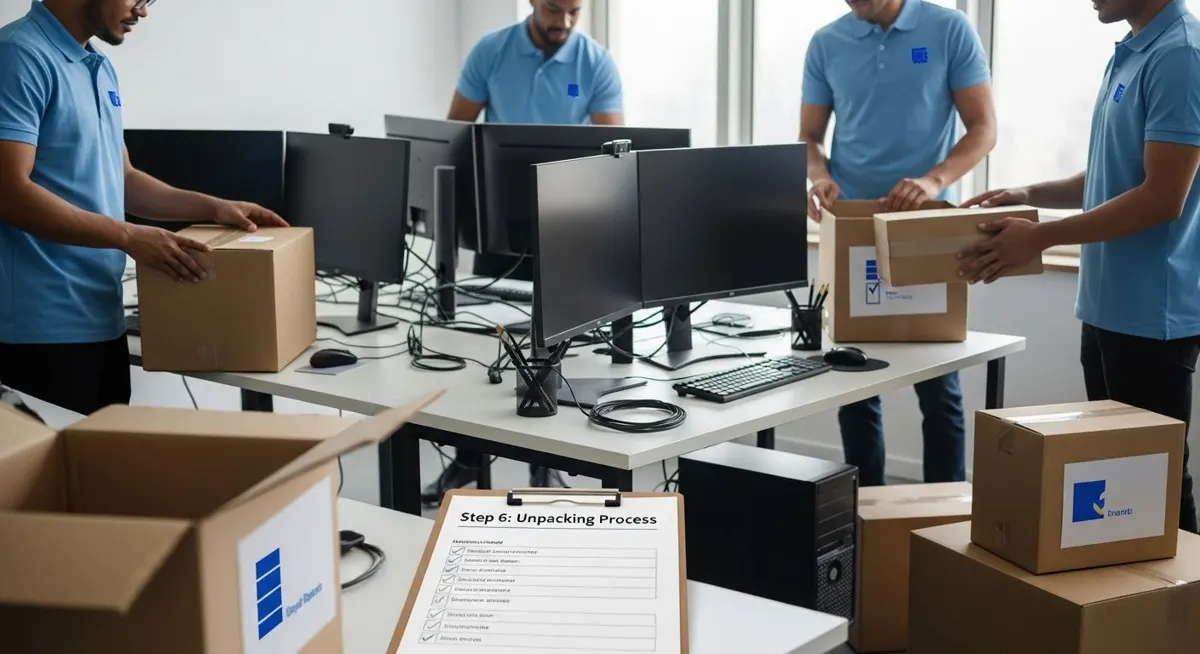
Initiate the unpacking process by strategically positioning critical infrastructure first. Begin with technology systems that drive your core business operations, such as servers, network equipment, and primary communication systems. Arrange for IT specialists to be present during this phase, ensuring immediate setup and testing of complex technological components. Prioritise departments that are most crucial to maintaining business momentum, typically including customer service, sales, and core administrative functions. Create a designated staging area where equipment can be systematically unpacked, checked, and prepared for installation, preventing potential chaos and allowing for methodical integration of your business systems.
Explore our comprehensive house removal process guide for additional insights into efficient unpacking strategies. Professional movers recommend maintaining your detailed inventory spreadsheet during unpacking, cross-referencing each item as it is removed and positioned in its new location. This approach allows you to quickly identify any missing or damaged items and provides immediate documentation for potential insurance claims. Establish clear communication channels among team members, ensuring everyone understands their specific unpacking responsibilities and the overall timeline for workspace restoration.
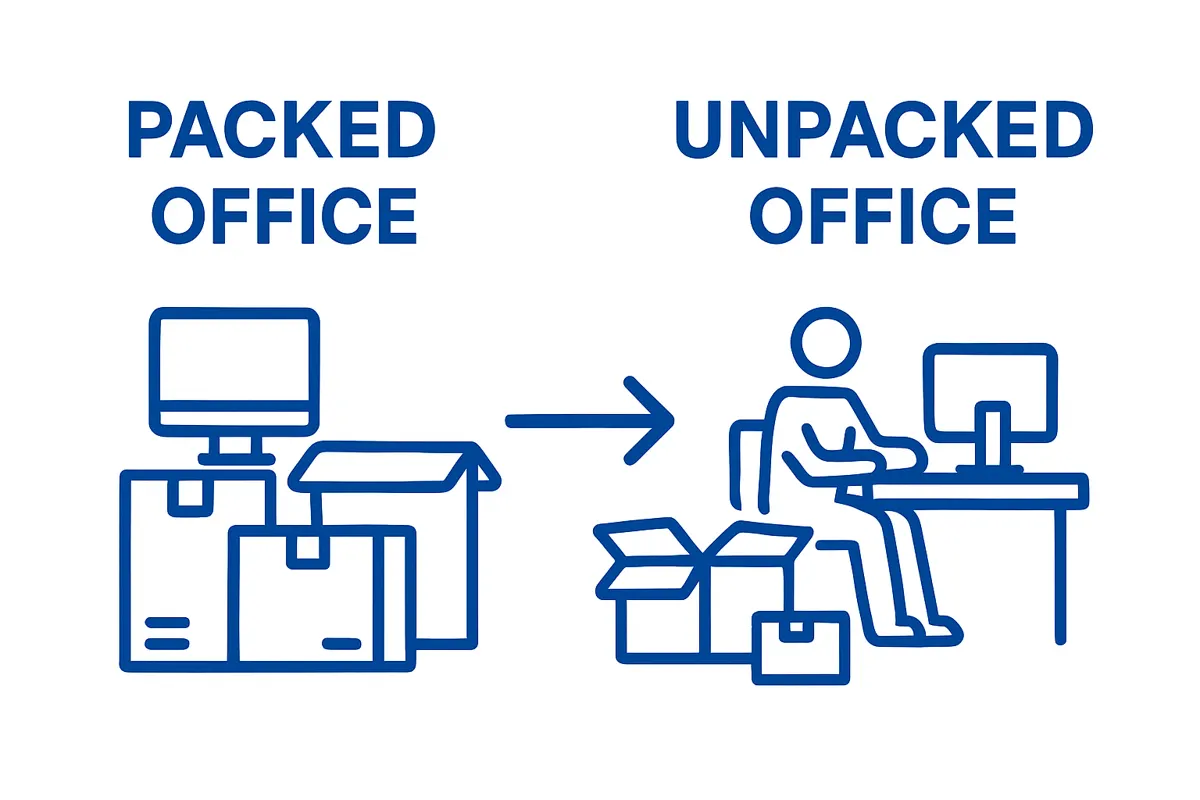 By approaching the unpacking process with a structured, systematic methodology, you transform a potentially chaotic transition into a smooth, efficient relocation that minimises operational interruptions and maintains your business’s professional momentum.
This table provides an overview of each main step in the business moving process, with its primary objective and a key action involved, helping you visualise the overall workflow.
| Step | Objective | Key Action |
|---|---|---|
| Assess moving requirements | Identify challenges and resource needs | Conduct thorough asset inventory |
| Create a detailed moving plan | Minimise disruption and control costs | Develop timeline and assign responsibilities |
| Organise packing supplies efficiently | Ensure items are well-protected | Select and source appropriate materials |
| Execute your packing strategy | Pack safely and maintain operational flow | Prioritise non-essentials and label boxes |
| Verify and confirm all arrangements | Prevent last-minute complications | Cross-check logistics and contracts |
| Manage the unpacking process | Restore operational efficiency | Unpack critical systems and check inventory |
Make Your Business Move Seamless with Professional Support
Planning a business relocation often feels overwhelming. You worry about downtime, safe transport of equipment, and the risk of missing important steps. The article highlights these exact pain points, from inventory management to organising packing and keeping every detail on track. At Schott Removals, we understand how much is at stake during a business move and provide solutions designed to relieve your stress at every stage.
Ready to avoid unnecessary disruption and ensure your business move runs smoothly? Trust our specialist removal and packing services for expert help with planning, packing and logistics. We also provide secure storage solutions if your timeline requires flexibility. Schott Removals brings over 30 years of experience as a family-run business in Darlington dedicated to keeping your workflow intact during any relocation. Get your tailored quote by visiting Schott Removals today and take the first step towards a truly seamless transition.
Frequently Asked Questions
What should I include in my assessment before moving my business?
A comprehensive assessment should include an inventory of physical assets, consideration of operational constraints and timelines, and evaluation of employee impact. Understanding your specific needs will help anticipate challenges.
How can I create an effective moving plan for my business relocation?
An effective moving plan should include a clear timeline with milestones, a detailed budget, and robust communication strategies. Assign responsibilities to team members to ensure accountability throughout the process.
What type of packing supplies do I need for relocating my business?
You will need sturdy cardboard boxes, specialised containers for electronics, protective wrapping materials, and labelling equipment. Different items require different packing materials, so it’s essential to choose those that will adequately protect your assets during transit.
How can I ensure a smooth unpacking process after relocation?
Start by unpacking essential items and technology first, and create a staging area for orderly setup. Maintain an inventory checklist to confirm that all items are accounted for, and establish clear communication among team members regarding unpacking duties.