
Moving home within the North East of England often means making tough choices about what to keep at hand and what needs a safe place for the short term. As compact British properties rarely offer abundant space, the need for smart, affordable storage grows urgent when your house move doesn’t go exactly as planned. This guide highlights flexible and secure storage practices, explaining how the right system can relieve family stress, protect your belongings, and suit your budget throughout any transition.
Table of Contents
- Defining Household Storage Solutions In The UK
- Main Types Of Domestic Storage Options
- Key Features: Access, Security And Flexibility
- Typical Costs, Contracts And Insurance Requirements
- Common Risks, Mistakes And How To Avoid Them
Key Takeaways
| Point | Details |
|---|---|
| Understanding Storage Types | Households in the UK should assess their storage needs across built-in, portable, and external solutions to ensure they choose the best option. |
| Evaluate Costs and Contracts | Be aware of the costs associated with different storage options and carefully review contracts to avoid unexpected fees and commitments. |
| Prioritise Access and Security | Choose storage services with appropriate access and robust security features to protect your belongings and ensure ease of retrieval. |
| Avoid Common Mistakes | Measure your belongings accurately and pack wisely to prevent damages and inefficiencies in your storage solution. |
Defining Household Storage Solutions in the UK
Household storage solutions refer to any system, space, or service designed to help you organise and keep your belongings safely when you don’t have room for them in your home. In the UK, where living spaces tend to be more compact than in many other countries, storage has become a practical necessity rather than a luxury. Whether you’re moving house, decluttering, or simply need extra space for seasonal items, understanding what storage solutions actually are helps you choose the right option for your situation.
The challenge many families face isn’t just about having “somewhere to put things.” Residential storage reflects deeper housing design concerns, as storage practices in housing design have become central to how modern homes support wellbeing and daily living. Think of storage solutions across three main categories. First, there’s built-in storage within your home, such as loft conversions, under-stair cupboards, or fitted wardrobes. Second, you have portable storage options like shelving units, storage boxes, and furniture with hidden compartments that move with you. Third, and increasingly popular for families in Darlington and across County Durham, external storage services provide secure facilities you can rent on a short-term or long-term basis. Each type serves different purposes depending on your budget, timeframe, and the volume of items you need to store.
For households relocating within the North East, understanding storage becomes even more critical. Perhaps you’re selling your current property but won’t complete on your new home for several weeks. Maybe you’ve downsized and simply need somewhere safe to keep your mother’s china cabinet or the children’s outgrown toys. Storage solutions in the UK market range from affordable self-storage units starting at modest monthly rates to climate-controlled facilities that protect valuable furniture and documents from dampness and temperature fluctuations. When evaluating options, consider whether you need temporary storage during your house move or permanent space for items you can’t fit into your new home. The type of items matters too—delicate belongings might require climate control, whilst seasonal garden equipment can manage in a standard unit. Understanding these distinctions helps you avoid paying for features you don’t need whilst ensuring your possessions receive appropriate care.
Pro tip: Before committing to any storage solution, measure your items and create a detailed inventory, then compare this against the advertised space dimensions—most providers measure storage units in cubic feet, not usable floor space, so a 50 cubic feet unit feels smaller than you’d expect.
Main Types of Domestic Storage Options
When you’re looking for somewhere to store your belongings, you’ll quickly discover that domestic storage comes in several distinct varieties. Each type serves a different purpose, and choosing the wrong one can leave you frustrated, out of pocket, or with damaged possessions. Understanding these options helps you make a decision that actually fits your situation rather than forcing your needs into an unsuitable solution.
Built-in storage is what exists within your home itself. This includes loft space, under-stair cupboards, fitted wardrobes, and wall-mounted shelving. The advantage here is simplicity and convenience. Your belongings stay with you, accessible whenever you need them, and there’s no monthly fee involved. However, built-in storage has obvious limits. If you’re moving house, downsizing significantly, or have more items than your home can reasonably accommodate, you’ll hit a ceiling quickly. Many homes in County Durham and across the North East were built with minimal storage design, a reality that storage practices in housing design continue to challenge modern homeowners with.
Portable storage solutions occupy a middle ground. Think storage boxes, shelving units you can move, vacuum-sealed bags, or standalone cupboards. These are affordable, flexible, and don’t require any external commitment. You can buy them, use them, and sell them on if needed. The drawback is that they still consume space in your home, and they offer limited protection for valuable or sensitive items. If you’re dealing with vintage furniture, important documents, or temperature-sensitive collections, portable solutions might not provide adequate safeguarding.
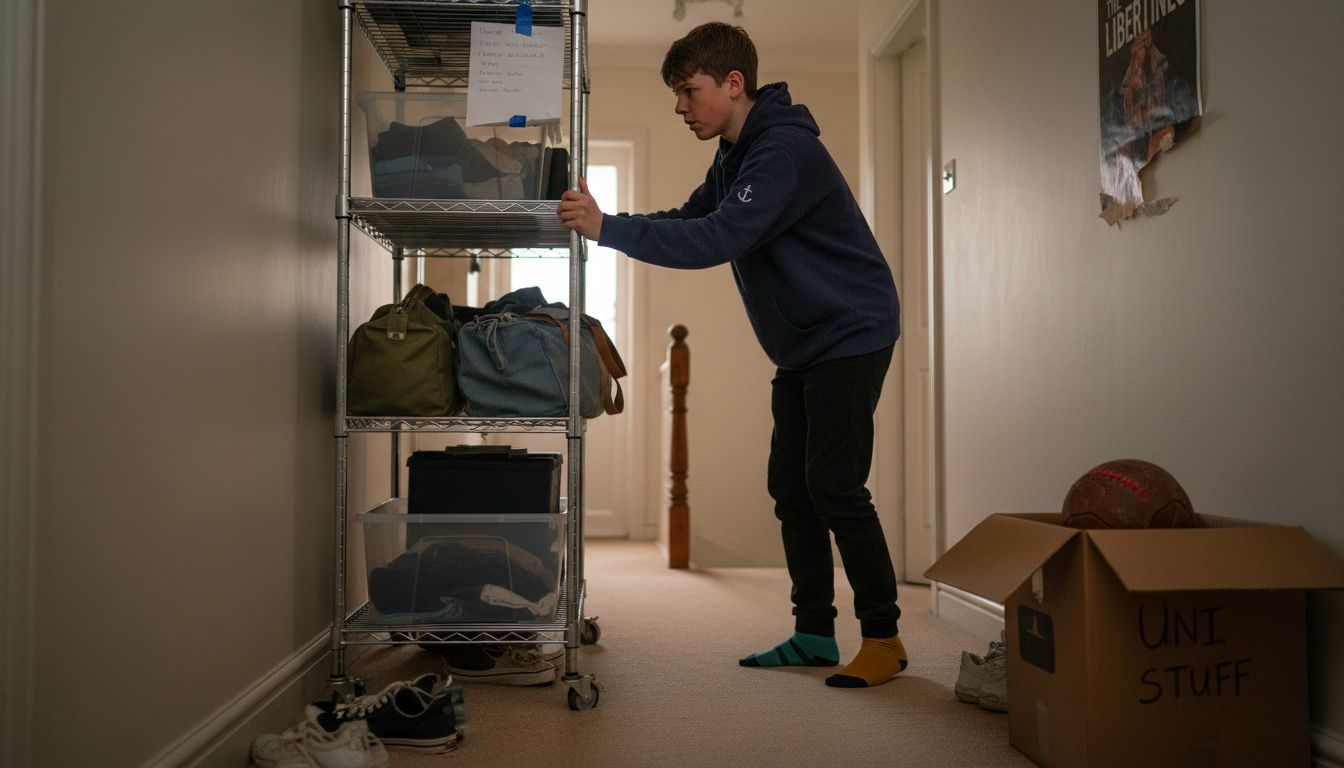
External storage services are purpose-built facilities where you rent space by the month or longer. This is where families in Darlington and surrounding areas increasingly turn when they need genuine breathing room. Self-storage units vary in size and features. Standard units offer basic shelter from weather but no climate control, whilst premium options maintain consistent temperature and humidity levels to protect delicate furniture, paintings, or electronic equipment. Some providers offer security features such as CCTV, individual locks, and restricted access. During house moves, temporary storage becomes invaluable. You might rent space for six weeks whilst waiting for your new property to be ready, then return items directly to your new home. Others rent on a permanent basis, keeping seasonal items out of sight or maintaining overflow space as their family grows.
Another emerging category worth knowing about is energy storage systems, though this applies specifically to managing household electricity and heat rather than physical belongings. Systems like battery storage technology help households store electricity generated from solar panels or manage heat more efficiently. Whilst not traditional household storage, understanding how these systems work can inform broader decisions about your home’s efficiency and space management.
Pro tip: Start by categorising your items into three groups: daily-use essentials that need staying in your home, occasional-use items suitable for portable storage, and long-term storage candidates better suited to external facilities. This clarity prevents you from paying for space you don’t actually need.
Here is a summary table to help you choose the right domestic storage type for your situation:
| Storage Type | Best For | Key Limitation |
|---|---|---|
| Built-in storage | Everyday items and quick access | Limited capacity, fixed location |
| Portable solutions | Occasional items, flexibility | Consumes home space, less secure |
| External facilities | Large or valuable belongings | Monthly costs, access restrictions |
| Energy storage | Solar/heat energy management | Not for storing possessions |
Key Features: Access, Security and Flexibility
When evaluating storage solutions, three characteristics emerge as non-negotiable: how easily you can access your items, how well they’re protected, and whether the solution adapts as your needs change. These aren’t just technical features to tick off a checklist. They directly affect your stress levels, your wallet, and whether you’ll actually use the storage you’ve paid for.
Access refers to how straightforward it is to retrieve your belongings whenever you need them. With built-in home storage, access is typically immediate and convenient. You open your cupboard, grab what you need, and carry on. External storage facilities vary significantly here. Some offer 24-hour access, meaning you can visit at midnight if you suddenly need something. Others operate restricted hours such as 8 a.m. to 6 p.m., which suits occasional users but frustrates those who need frequent retrieval. Climate-controlled facilities sometimes limit access hours to maintain their temperature systems effectively. Consider your realistic usage patterns. If you’re storing winter coats for just three months, restricted hours won’t bother you. But if you’re storing business inventory or items you access weekly, 24-hour access becomes worth paying extra for.
Security encompasses both physical protection and peace of mind. Well-designed storage solutions provide secure yet accessible spaces that shield your possessions from damage and theft. In external facilities, security features typically include individual locks on units, CCTV monitoring, perimeter fencing, and sometimes on-site staff or alarm systems. Premium self-storage providers in the North East often advertise their security credentials prominently because families relocating their entire homes need genuine reassurance. For valuable items like antique furniture or electrical equipment, climate control also serves a security function by preventing moisture damage, rust, and deterioration. Don’t assume all storage facilities offer the same security standards. A budget unit in an unmanned compound differs dramatically from a staffed facility with electronic access logs tracking every entry and exit.
Flexibility means the solution adapts when your circumstances change. Portable storage boxes offer maximum flexibility because you can buy, use, and sell them without commitment. External storage facilities typically allow month-to-month rentals with minimal notice periods for cancellation, though some require longer contracts. If you’re relocating within Darlington or County Durham, flexibility matters enormously. Your temporary storage needs during a house move might evolve unexpectedly. Perhaps your purchase completes three weeks early, or surveyors discover structural issues requiring extended possession. A flexible facility lets you adjust your rental period without penalties. Conversely, some permanent storage users deliberately choose longer contracts for slightly reduced monthly rates, trading flexibility for cost savings. Assess what matters more in your specific situation before committing.
Pro tip: Before booking any external storage facility, visit in person, test the access process with your own items, check security features with your own eyes, and ask explicitly about cancellation policies and any hidden costs such as vehicle access fees or insurance requirements.
Typical Costs, Contracts and Insurance Requirements
Storage isn’t free, and understanding what you’ll actually pay before committing to any facility prevents nasty surprises on your bank statement. Costs vary wildly depending on location, unit size, climate control, and security features. A small 5-by-5 foot unit in a basic self-storage facility across the North East might cost between £30 and £50 monthly, whilst a larger 10-by-10 foot climate-controlled space with CCTV could easily reach £100 to £150 per month. London and the South East command significantly higher rates, but families in Darlington and County Durham benefit from more modest pricing. When you’re comparing house removal costs, remember that temporary storage during your move often costs less than you’d expect, sometimes ranging from £100 to £300 for a one-month rental depending on your requirements.
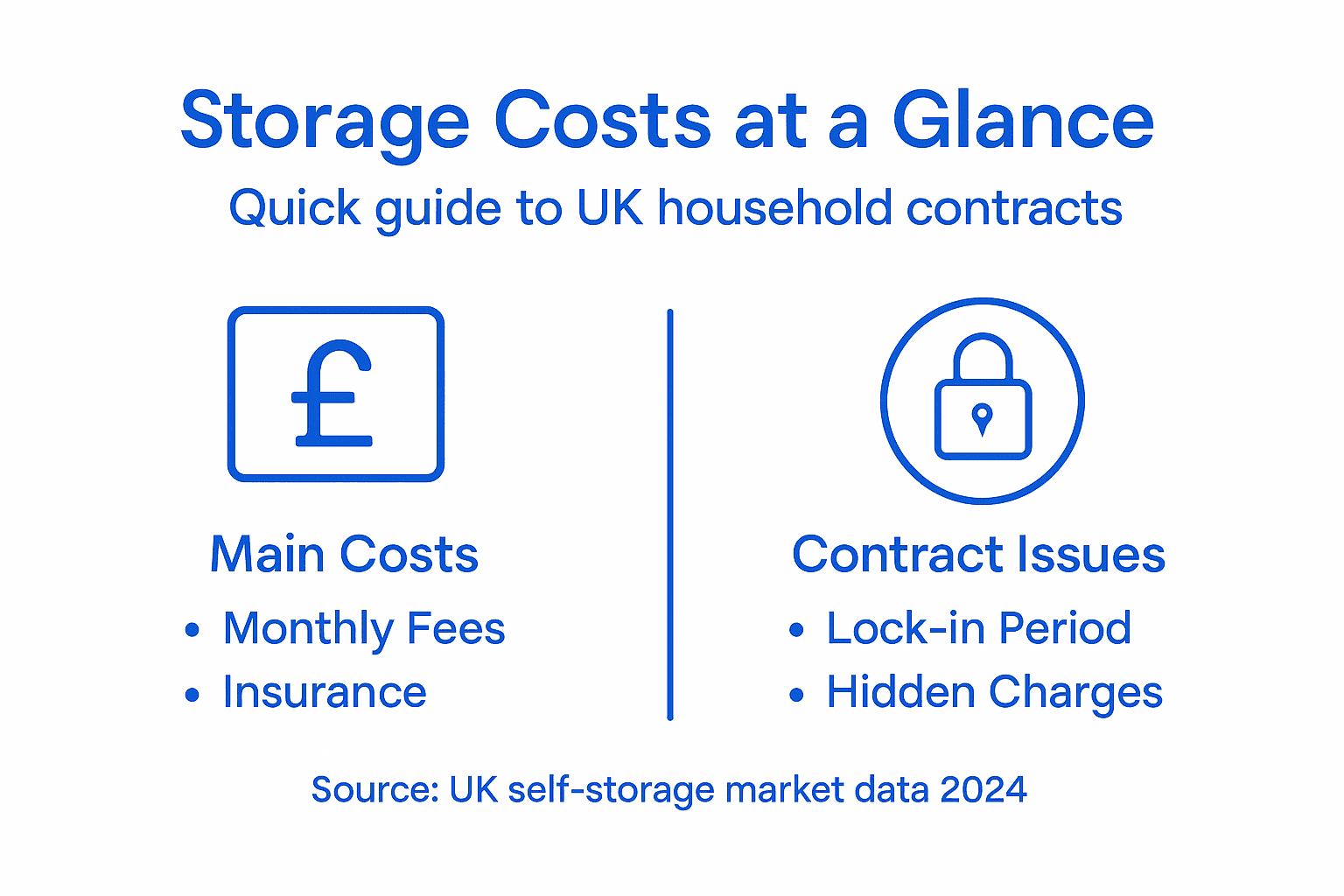
Contracts matter enormously because they determine whether you’re locked in or free to leave. Most self-storage facilities offer flexible month-to-month agreements with just 30 days’ notice to cancel, which suits people relocating during uncertain timescales. Some providers incentivise longer commitments by offering 5 to 10 per cent discounts on annual contracts, but this only makes sense if you’re genuinely confident you’ll need the space for a full year. Read the fine print carefully. Some contracts automatically renew unless you provide written notice 30 days before expiration. Others include sneaky clauses allowing the facility to increase rates annually by a certain percentage. Temporary storage contracts during house moves are typically much shorter, often just 2 to 8 weeks, with clear end dates and no renewal provisions.
Insurance is where most people get caught out. Here’s the critical fact: whilst no UK law mandates that you must insure your stored belongings, virtually every storage facility requires it as a condition of rental. Your standard home contents insurance almost certainly won’t cover items stored off-site in a professional facility. You need specialist storage insurance that specifically covers theft, fire, water damage, and accidental damage whilst your items sit in someone else’s facility. Insurance typically costs between £10 and £30 monthly depending on the value of your contents and the level of cover. Many storage providers offer in-house insurance schemes that bundle into your rental agreement, making it convenient but occasionally more expensive than shopping around independently. Always get an itemised quote asking explicitly whether insurance is included, because many facilities quote their base monthly rate without mentioning insurance costs separately.
Beyond these three pillars, watch for hidden costs. Vehicle access fees, deposit requirements, administration charges for early contract termination, and increased rates after your first year are all common. The cheapest facility you find might become expensive once these extras stack up.
Below is a quick comparison of costs and contract features you might encounter:
| Feature | Typical Self-Storage | Climate-Controlled Unit |
|---|---|---|
| Monthly cost (NE UK) | £30–£50 (small unit) | £100–£150 (large unit) |
| Contract length | Month-to-month option | Annual discounts often |
| Insurance needed | Yes, extra cost | Yes, extra cost |
| Hidden fees | Access/admin fees possible | Added climate control charges |
Pro tip: Request a written quote itemising the monthly unit rental, insurance cost, any vehicle access fees, your exact contract dates, and the notice period required for cancellation, then compare three facilities using the same specifications before deciding.
Common Risks, Mistakes and How to Avoid Them
People make storage decisions in haste, and the consequences ripple through their moves for weeks afterwards. The good news is that most mistakes are entirely preventable once you know what to watch for. Understanding common pitfalls helps you store your belongings safely whilst avoiding unnecessary costs and stress.
The first major mistake is underestimating how much space you actually need. Families look at a 5-by-10 foot unit and think it seems spacious, only to discover midway through loading that they’ve filled it completely with half their belongings still waiting outside. Measure everything you plan to store before booking. Count boxes, photograph larger items, and use an online storage calculator if available. Better still, visit the facility in person and visualise your items inside an empty unit. You’re far better off renting slightly larger than you need for peace of mind than discovering you’ve run out of space whilst moving in. Conversely, renting excessively large units wastes money month after month. Get this calculation right from the start.
Second, people pack poorly. Stacking boxes haphazardly, mixing fragile items with heavy ones, and failing to use protective materials invites damage. Improper packing techniques create broken furniture, crushed ceramics, and ruined fabrics that could have been protected with minimal effort. Use proper packing materials such as bubble wrap, moving blankets, and sturdy boxes. Stack strategically, placing heavier boxes at the bottom and lighter ones higher up. Leave walking space inside your unit so you can access items at the back without dismantling everything in front. Label every single box clearly with contents and which room it belonged to. You might think you’ll remember, but six months later, trying to find your winter boots in an unlabelled box becomes frustrating.
Third, people underestimate moisture damage. The North East’s damp climate creates real risks. Leather furniture, documents, electronics, and wooden pieces are all vulnerable. Choose climate-controlled storage if your belongings include anything valuable, irreplaceable, or sensitive to temperature and humidity fluctuations. Don’t just assume a basic unit will protect them adequately. For items like photographs or important paperwork, moisture damage means permanent loss. Consider silica gel packets or moisture absorbers inside your boxes as an extra precaution.
Fourth, people forget what they’re storing. Without proper organisation and labelling, items get lost inside your own storage unit. You pay rental fees for something you can’t find or forget you own. Create a detailed inventory before storing anything, photographing items and noting their location within the facility. This serves triple duty: it helps you find things later, it supports insurance claims if needed, and it prevents you renting space for items you’ve abandoned mentally.
Pro tip: Invest in a small shelving unit for your storage space, arrange boxes vertically rather than in towering stacks, and keep a written or digital inventory with photos and the precise location of important items.
Effective Storage Solutions to Ease Your Move and Save Space
Managing household storage can be overwhelming, especially when facing common challenges like limited built-in space, protecting delicate items, or needing flexible access during a move. This article highlights the importance of choosing the right storage type—whether built-in, portable, or external facilities—to avoid costly mistakes such as underestimating space needs or risking damage from damp climates.
At Schott Removals, we understand these concerns deeply. As a family-run company with over 30 years in the relocation industry based in Darlington, we offer tailored storage solutions designed to give you peace of mind while saving space and stress. Our secure, flexible external storage options come with expert advice to help you select the perfect unit size and features like climate control when needed. Pairing our trusted house removals services with convenient storage means your belongings stay safe throughout your journey.
Get ahead of storage worries with Schott Removals today. Visit our website to explore how our comprehensive storage and removal services can simplify your move. Contact us now to discuss your exact needs and secure the ideal solution before your next relocation becomes a stressful scramble.
Frequently Asked Questions
What are the main types of household storage solutions?
Household storage solutions primarily include built-in storage (like lofts and fitted wardrobes), portable storage options (such as storage boxes and shelving units), and external storage services (like self-storage facilities). Each type serves different purposes depending on your storage needs.
How do I choose the right storage solution for my belongings?
To select the right storage solution, categorise your items based on their usage: daily essentials should remain in your home, occasional-use items can go in portable storage, and long-term storage candidates should be placed in external facilities. Assess your budget, access needs, and the nature of the items when making your decision.
What should I consider when evaluating external storage facilities?
When evaluating external storage facilities, consider access hours, security features, the flexibility of rental agreements, and whether climate control is available. Ensure you understand the terms of the contract, including cancellation policies and any potential hidden fees.
How can I prevent damage to my belongings while in storage?
To avoid damage, use proper packing materials, label boxes clearly, and stack items strategically to allow for ventilation. For valuable or sensitive items, consider renting a climate-controlled storage unit to protect against moisture and temperature fluctuations.
Recommended
- Stress-Free Moving Checklist 2025: UK, International & Business Moves | Schott Removals
- House Removal Process Explained: Step-by-Step Guide for 2025 | Schott Removals
- Managing Moving Day Logistics: Expert Tips for UK Moves 2025 | Schott Removals
- Essential House Moving Checklist for Seniors in 2025 | Schott Removals
- Household Savings Ratio Drops: Are You Setting Enough Aside? / Naijatipsland
- Elevate Your Home with Natural Stone Flooring