
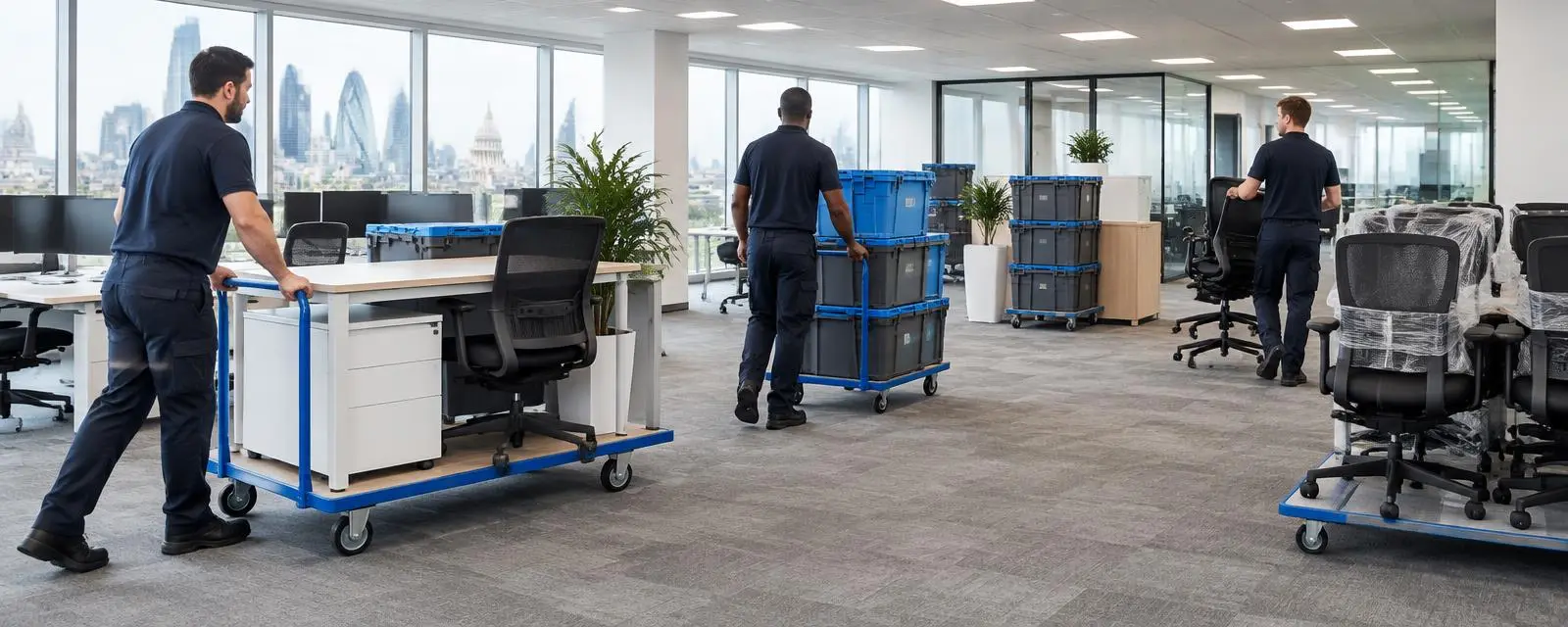
Most UK businesses drastically underestimate office move costs, often by 30% or more, leading to budget overruns and last-minute scrambles. The true expense extends far beyond hiring a van and a few helpers. Hidden charges, unexpected surcharges, and overlooked logistics can transform what seemed like a straightforward relocation into a financial headache. This guide breaks down the core cost factors affecting office moves in 2026, from size and distance to insurance and access challenges, equipping you with the knowledge to budget accurately and avoid costly surprises.
Table of Contents
- Understanding The Main Office Move Cost Factors
- Additional Expenses: Access, Packing, And Insurance Costs
- Unexpected Charges And How To Plan For Them
- Cost-Saving Strategies For Your Office Move
- Plan Your Office Move With Expert Support
- Frequently Asked Questions
Key takeaways
| Point | Details |
|---|---|
| Size and distance drive base costs | Larger offices and longer distances require more resources, increasing transport and labour expenses significantly |
| Hidden fees arise from access issues | Restricted building access, parking challenges, and after-hours requirements frequently add unexpected surcharges |
| Insurance and packing protect assets | Professional packing and comprehensive insurance increase upfront costs but prevent expensive damage claims |
| Strategic planning reduces expenses | Decluttering, flexible timing, and advance estimates help businesses control costs and avoid peak pricing |
| Professional support improves accuracy | Expert removal services provide transparent pricing and prevent costly mistakes during complex relocations |
Understanding the main office move cost factors
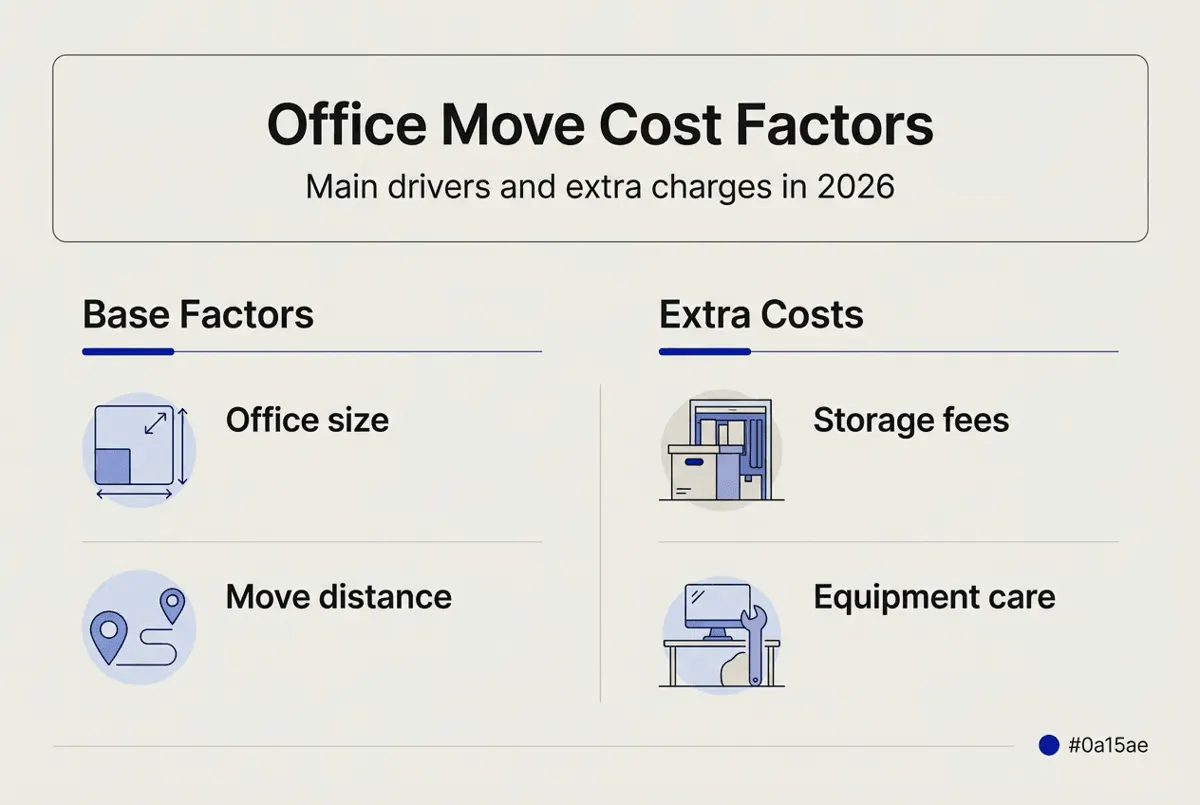
When planning your office relocation, three primary elements determine your baseline budget: the size of your current workspace, the distance to your new location, and the volume of equipment requiring transport. Office size and equipment impact pricing structures directly, with larger spaces demanding additional crew members, more vehicles, and extended labour hours. A 2,000 square foot office typically requires double the resources of a 1,000 square foot space, affecting everything from packing materials to transport logistics.
Distance creates a multiplier effect on costs. Local moves within the same city might charge hourly rates, whilst relocations across regions or to different UK cities often involve fixed pricing based on mileage and fuel consumption. Longer journeys require overnight accommodation for crews, additional vehicle wear, and extended insurance coverage. Your total transport time directly influences labour charges, making distance one of the most significant variables in your final invoice.
The volume and nature of your office contents add another layer of complexity. Standard desks and chairs are straightforward, but servers, specialised equipment, and sensitive electronics demand careful handling and protective packaging. Here’s what typically influences volume-based pricing:
- Number of workstations and individual desk setups
- IT infrastructure including servers, monitors, and cabling
- Filing systems, storage units, and archived documents
- Meeting room furniture and presentation equipment
- Kitchen facilities and breakroom appliances
Storage requirements can substantially affect both timing and cost. If your new office isn’t ready for immediate occupation, you’ll need secure facilities to house your equipment temporarily. This interim storage adds daily or weekly charges to your budget, plus additional loading and unloading fees when items move from storage to your final location.
Pro Tip: Create a detailed inventory three months before your move date, categorising items by fragility and value to help removal companies provide accurate estimates and identify potential cost drivers early.
Additional expenses: access, packing, and insurance costs
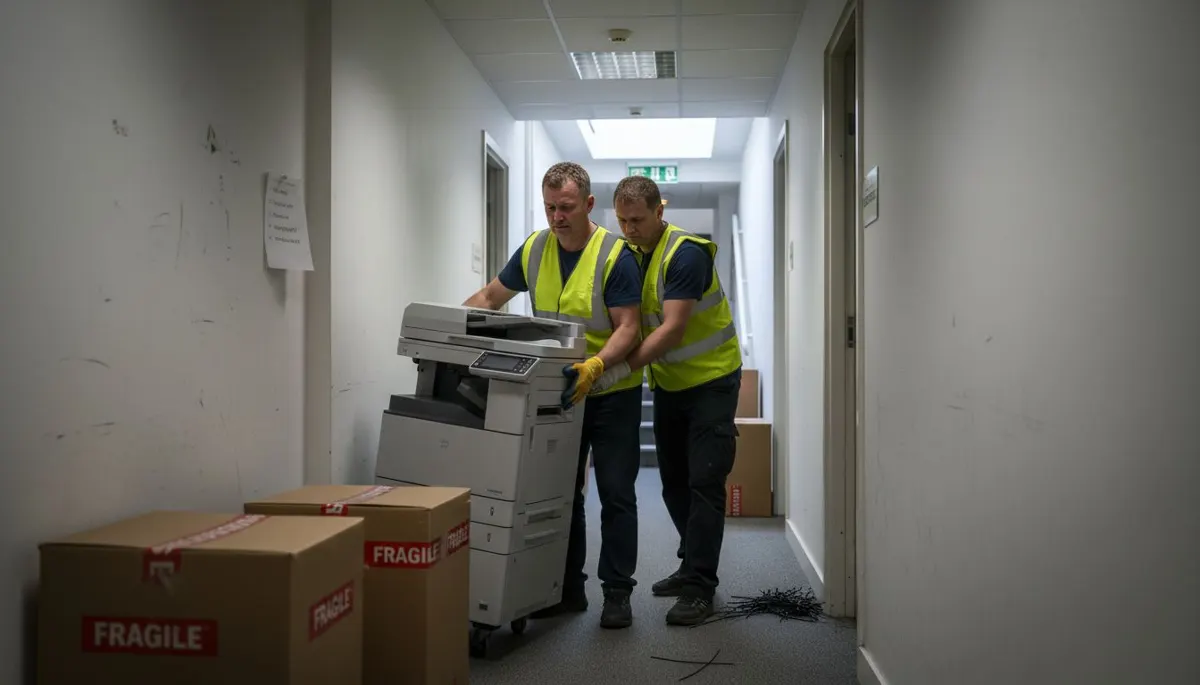
Beyond the baseline factors, several often-overlooked elements can significantly inflate your office move budget. Access difficulties represent one of the most common sources of unexpected charges. Buildings without lifts, narrow staircases, or restricted loading zones force removal teams to use specialised equipment or additional labour. A fourth-floor office in a building without goods lifts might require external hoisting equipment, adding hundreds of pounds to your quote. Parking restrictions in city centres often necessitate permits or double-handling items from vehicles parked streets away.
Professional packing services protect your valuable equipment but come with substantial labour costs. Whilst you might consider having staff pack their own desks, this rarely proves cost-effective. Untrained packing frequently results in damage, and professional removal companies often refuse liability for items they didn’t pack themselves. Consider these packing-related cost factors:
- Specialised materials for electronics and fragile equipment
- Labour hours for systematic packing and labelling
- Disassembly and reassembly of modular furniture
- Crating services for high-value or delicate items
- Unpacking services at your destination
Insurance and handling requirements significantly affect office move charges, yet many businesses underestimate this crucial protection. Basic goods-in-transit insurance typically covers only minimal liability, often just £40 per item regardless of actual value. Comprehensive coverage protecting your full equipment value costs more but prevents catastrophic losses. A single damaged server could cost thousands to replace, far exceeding the premium for proper insurance.
Timing choices dramatically influence your final bill. Weekend moves, evening relocations, and moves during peak business periods (typically end of quarter or financial year) command premium rates. Some removal companies charge 50% surcharges for weekend work, whilst others refuse weekend bookings entirely. Bank holidays create even steeper premiums, sometimes doubling standard rates.
“The difference between a well-planned office move and a chaotic one often comes down to understanding these hidden cost drivers before signing contracts, not discovering them on moving day.”
Specialised equipment handling adds another expense layer. If your office houses medical equipment, laboratory instruments, or manufacturing machinery, you’ll need technicians qualified to disconnect, transport, and reinstall these items safely. Standard removal crews can’t handle specialised equipment, requiring you to hire additional contractors whose fees sit outside your main removal quote.
Pro Tip: Request itemised quotes separating base costs from optional services, allowing you to make informed decisions about which additional services deliver genuine value versus those you can handle internally.
Unexpected charges and how to plan for them
Even with meticulous planning, office moves frequently generate surprise costs that catch businesses off guard. Unexpected fees frequently arise from surcharges and scheduling challenges that weren’t apparent during initial estimates. Parking enforcement represents a prime culprit, with city centre moves sometimes requiring expensive permits or risking substantial fines. Loading zones might be occupied by other vehicles on moving day, forcing crews to park further away and charge extra for the increased carrying distance.
After-hours charges emerge when moves extend beyond quoted timeframes. What seems like a straightforward six-hour relocation can stretch to ten hours when unexpected complications arise. Most removal companies charge overtime rates once you exceed the estimated window, typically 150% of standard hourly rates. Building management restrictions often force evening or weekend moves, automatically triggering premium pricing regardless of your preferred timing.
Delayed timelines create cascading cost effects. If your new office isn’t ready as scheduled, you’ll face storage fees, potential double rent payments, and rescheduling charges from your removal company. Here’s a systematic approach to minimising unexpected costs:
- Conduct a detailed site survey at both locations three weeks before moving
- Confirm building access times, lift availability, and loading zone regulations in writing
- Build a 20% contingency buffer into your budget for unforeseen complications
- Establish clear communication protocols with building management at both sites
- Schedule a backup moving date in case delays occur
- Document all agreed costs and service inclusions before signing contracts
Comparative cost analysis helps illustrate typical surcharge impacts:
| Cost Category | Base Charge | Common Surcharge | Total with Surcharge |
| — | — | — |
| Weekend move | £1,200 | +50% (£600) | £1,800 |
| After-hours overtime | £800 | +150% per extra hour | £1,000+ |
| Restricted access | £1,000 | +£300 equipment hire | £1,300 |
| Storage per week | £150 | Compounding weekly | £600 monthly |
Advance communication with removal firms ensures transparency and prevents disputes. Request detailed written quotes specifying exactly what’s included and what triggers additional charges. Ambiguous contracts create opportunities for unexpected fees, whilst clear documentation protects both parties. Ask specifically about potential surcharges for stairs, long carries, parking difficulties, and timeline extensions.
Proper estimates are essential for budgeting accuracy. Virtual surveys using video calls have become common, but in-person assessments remain more reliable for complex office moves. An experienced estimator can spot potential complications that might not be obvious through a screen, from awkward doorways to challenging furniture pieces. Investing time in a thorough estimate saves substantially more than it costs.
Cost-saving strategies for your office move
Smart planning and strategic decisions can reduce overall relocation costs without compromising quality or safety. Decluttering before your move delivers immediate savings by reducing the volume requiring transport. That filing cabinet full of documents from 2015? Those broken office chairs in storage? Disposing of unnecessary items cuts packing time, reduces vehicle requirements, and lowers labour costs. A thorough declutter can reduce your move volume by 20-30%, translating directly to lower quotes.
Timing flexibility provides substantial cost advantages. Mid-month moves typically cost less than end-of-month relocations when demand peaks. Similarly, mid-week moves often command lower rates than Friday relocations, which businesses prefer to minimise weekend disruption. If your lease allows flexibility, scheduling your move during quieter periods (typically January through March) can yield significant discounts as removal companies compete for business during slower seasons.
Professional removal services prevent damage-related expenses that can dwarf your initial savings from budget options. Whilst hiring the cheapest quote might seem financially prudent, inexperienced crews frequently cause damage requiring costly repairs or replacements. A professional company with proper insurance, trained staff, and appropriate equipment protects your assets and ultimately costs less than dealing with damage claims. Consider these professional service benefits:
- Systematic packing methods that prevent damage during transport
- Appropriate equipment for heavy or awkward items
- Insurance coverage that actually protects your asset values
- Experienced crews who work efficiently, reducing labour hours
- Established processes that minimise downtime and disruption
Storage option comparison requires careful evaluation. Not all storage facilities offer equivalent value, with security features, accessibility, and contract terms varying dramatically. Climate-controlled units cost more but protect sensitive equipment and documents from temperature damage. Flexible contracts allowing early termination prevent paying for unused months if your new office becomes available sooner than expected.
Checklists streamline the process and avoid last-minute fees. Create detailed timelines starting three months before your move date, assigning responsibilities and deadlines for each task. This systematic approach prevents forgotten elements that generate rush charges or require emergency solutions. Your checklist should cover IT infrastructure planning, utility transfers, address updates, and staff communication alongside the physical move logistics.
Pro Tip: Negotiate package deals with removal companies that bundle packing, transport, and storage services, often yielding 15-20% savings compared to purchasing services separately from different providers.
Plan your office move with expert support
Navigating office relocation costs becomes significantly easier with professional guidance tailored to UK business needs. Experienced removal specialists understand the unique challenges facing businesses during transitions, from minimising operational downtime to protecting sensitive equipment. Their expertise helps you avoid the costly mistakes that plague DIY moves whilst ensuring your relocation stays within budget and on schedule.

Using an online move estimate tool improves budget accuracy by providing transparent pricing based on your specific requirements. These digital platforms allow you to input detailed information about your office size, equipment volume, and special requirements, generating realistic cost projections that account for the factors we’ve discussed. Accurate estimates eliminate guesswork and help you secure appropriate funding or approval from stakeholders before committing to moving dates.
Secure storage options add convenience and protection when timing gaps occur between leaving your current office and occupying your new space. Professional storage facilities offer climate control, 24-hour security, and flexible access arrangements that protect your business assets during transition periods. Rather than rushing into an unprepared space or paying premium rates for expedited moves, strategic storage use provides breathing room whilst controlling costs.
Partnering with professional office moving services reduces stress and unexpected costs through systematic planning and execution. Established removal companies bring decades of experience handling complex business relocations, anticipating challenges before they become expensive problems. Their transparent pricing, comprehensive insurance, and proven processes transform what could be a chaotic disruption into a smooth transition that keeps your business operational.
Frequently asked questions
How much does an office move typically cost in the UK?
Office move costs in the UK vary dramatically based on size, distance, and service requirements, typically ranging from £800 for small local moves to £5,000+ for larger relocations with comprehensive services. A standard 10-person office moving within the same city averages £1,500-£2,500, whilst cross-country relocations for 50+ staff can exceed £10,000. Obtaining detailed quotes specific to your circumstances provides the most accurate budgeting foundation.
What unexpected costs should businesses prepare for?
Common unexpected costs include parking permits or fines (£50-£200), after-hours surcharges (50-150% premium), additional packing materials (£100-£300), and equipment hire for access challenges (£200-£500). Timeline delays generate storage fees averaging £150 weekly, whilst overtime labour charges add £40-£60 per hour beyond quoted timeframes. Building a 20% contingency buffer helps absorb these surprises without derailing your budget.
How can insurance affect office move costs?
Comprehensive insurance typically adds 5-10% to your base moving costs but protects against potentially catastrophic losses from damage or theft during relocation. Basic goods-in-transit coverage often limits liability to £40 per item regardless of actual value, whilst full-value protection ensures complete replacement costs for damaged equipment. Evaluating your asset values against premium costs helps determine appropriate insurance options for office moves that balance protection and budget.
What are the best ways to reduce office relocation expenses?
Decluttering before your move reduces volume and associated costs by 20-30%, whilst flexible timing during off-peak periods (mid-week, mid-month, winter months) yields substantial discounts. Comparing multiple detailed quotes ensures competitive pricing, and bundling services with a single provider often generates package discounts. Systematic planning using detailed checklists prevents last-minute rush charges, whilst strategic use of professional services for critical tasks prevents expensive damage that outweighs initial savings. Explore proven ways to save on office moves through expert guidance and transparent pricing structures.