

Many pet owners assume their furry friends must stay with them all day on moving day, but this isn’t always best. Studies show up to 40% of dogs experience less stress when cared for by trusted sitters or kennels during the chaos. This guide covers preparing your pet, meeting legal requirements, creating moving day plans, species-specific advice, and helping your companion settle into their new home.
Table of Contents
- Understanding The Challenges Of Moving With Pets
- Pre-Move Veterinary Checks And Legal Requirements
- Developing A Moving Day Pet Care Plan
- Species-Specific Moving And Transport Advice
- Debunking Common Misconceptions About Moving Pets
- Helping Your Pet Settle Into The New Home
- Plan Your Pet-Friendly Move With Schott Removals
- Frequently Asked Questions
Key Takeaways
| Point | Details |
|---|---|
| Update microchip and ID | Critical for recovering lost pets, must be done before moving day |
| Safe rooms and off-site care | Designated quiet spaces for cats and trusted care for dogs reduce anxiety significantly |
| Maintain routines and use calming aids | Keeping schedules consistent and using pheromones can lower stress by 30% |
| Species-specific transport safety | Proper carriers, temperature control, and ventilation ensure healthy, safe moves |
| Gradual post-move acclimation | Familiar items and controlled exploration help pets adjust faster to new environments |
Understanding the Challenges of Moving with Pets
Relocating disrupts your pet’s familiar environment and routine, triggering anxiety that manifests in various stress behaviours. Dogs may pace, whine, or refuse food. Cats often hide, become aggressive, or eliminate outside litter boxes. Small pets and birds can display repetitive behaviours or increased vocalisation.
These reactions stem from the upheaval of their safe territory and predictable daily patterns. Pets rely heavily on environmental cues for security, so packing boxes, strange voices, and furniture removal create confusion and fear. 59% of UK households own pets, making pet moves a common yet stressful event for families across the country.
Owners themselves face anxieties about pet escape, injury during transport, or poor adjustment to the new home. Recognizing stress signs early allows you to implement calming strategies before behaviours escalate. Common indicators include:
- Excessive grooming or panting
- Loss of appetite or digestive upset
- Withdrawal or clinginess
- Destructive behaviour or aggression
- Changes in sleep patterns
Understanding these challenges helps you plan proactively rather than react to crises on moving day. Early preparation addresses both your pet’s emotional needs and practical safety concerns, setting the foundation for a smoother transition.
Pre-Move Veterinary Checks and Legal Requirements
Schedule a veterinary visit three to four weeks before your move to ensure your pet’s health records are current. Your vet will verify vaccinations are up to date and perform a general health assessment to identify any conditions that might complicate travel or adaptation.
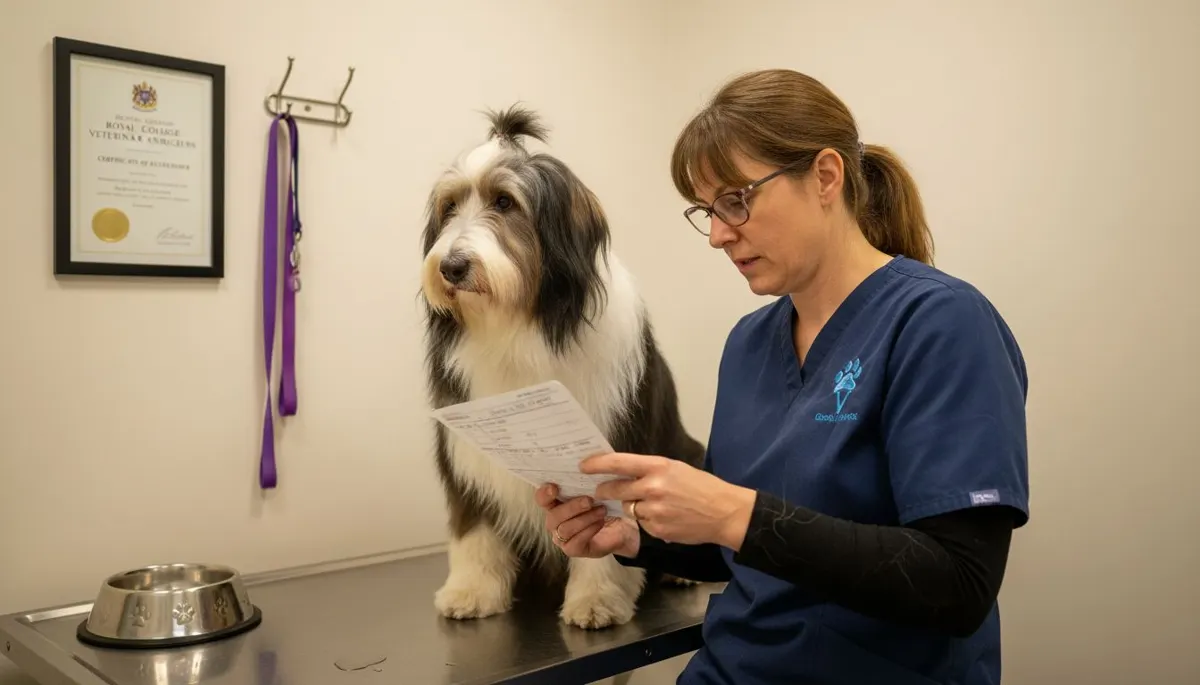
Microchip registration updates and ID tags must be updated at least one week before moving to reunite lost pets quickly. Contact your microchip database provider directly to change your address and phone number. This simple step dramatically improves recovery rates if your pet escapes during the chaos.
Order new ID tags immediately with your new address and current contact details. Attach these to your pet’s collar before moving day so they’re protected throughout the transition. If you’re moving to a region with specific disease risks, discuss additional vaccinations with your vet.
For the rare circumstance of international travel, obtain health certificates and review destination country requirements well in advance. However, most UK domestic moves require only updated identification and standard vaccinations. Your pre-move vet care guide for dogs provides additional species-specific preparation steps.
Essential pre-move tasks include:
- Update microchip registration with new address
- Order and attach new ID tags
- Verify vaccination status and obtain records
- Request sufficient medication refills for transition period
- Obtain copies of medical history for new vet
Pro Tip: Introduce your pet to travel carriers or crates two to three weeks before moving day. Leave carriers open in familiar spaces with treats and bedding inside, allowing your pet to explore voluntarily and build positive associations that reduce transport anxiety.
Developing a Moving Day Pet Care Plan
Create a designated safe room for cats and small pets on moving day, ideally the last room to be packed. Stock this space with familiar bedding, toys, food, water, and litter boxes. Post clear signs on the door warning movers to keep it closed, preventing escapes.
For dogs, decide whether they’ll stay with you or benefit from trusted sitter care or kennel boarding. Many dogs experience less stress in quiet, familiar environments away from the chaos. If keeping your dog with you, assign one person to monitor them constantly and manage feeding, exercise, and bathroom needs.
Pack pet items last to maintain normal routines as long as possible. Keep feeding schedules consistent and provide regular exercise opportunities to burn nervous energy. Maintaining a pet’s routine during moving day reduces stress and behavioural issues significantly.
Pheromone sprays can reduce cat anxiety by up to 30% during moves. Apply Feliway or similar products to carriers and safe rooms 30 minutes before use. For dogs, consider Adaptil diffusers in both old and new homes to create calming environments.
Your moving day pet care essentials should include:
- Easily accessible food, water, bowls, and medications
- Leashes, harnesses, and secure carriers
- Comfort items like favourite toys and blankets
- Waste bags, litter, and cleaning supplies
- Current vet contact information and medical records
Pro Tip: Assign one responsible adult specifically to monitor pets throughout moving day. This person shouldn’t help pack or coordinate movers, but instead focuses entirely on pet welfare, responding immediately to any signs of distress or escape attempts. Learn more stress-free moving tips and managing pets and children on moving day for comprehensive preparation strategies.
Species-Specific Moving and Transport Advice
Different pets require tailored transport approaches to ensure safety and minimize stress. Dogs travel best in well-ventilated crates secured in vehicles or wearing crash-tested harnesses. Schedule exercise breaks before transport to tire them out and reduce nervous energy during the journey.
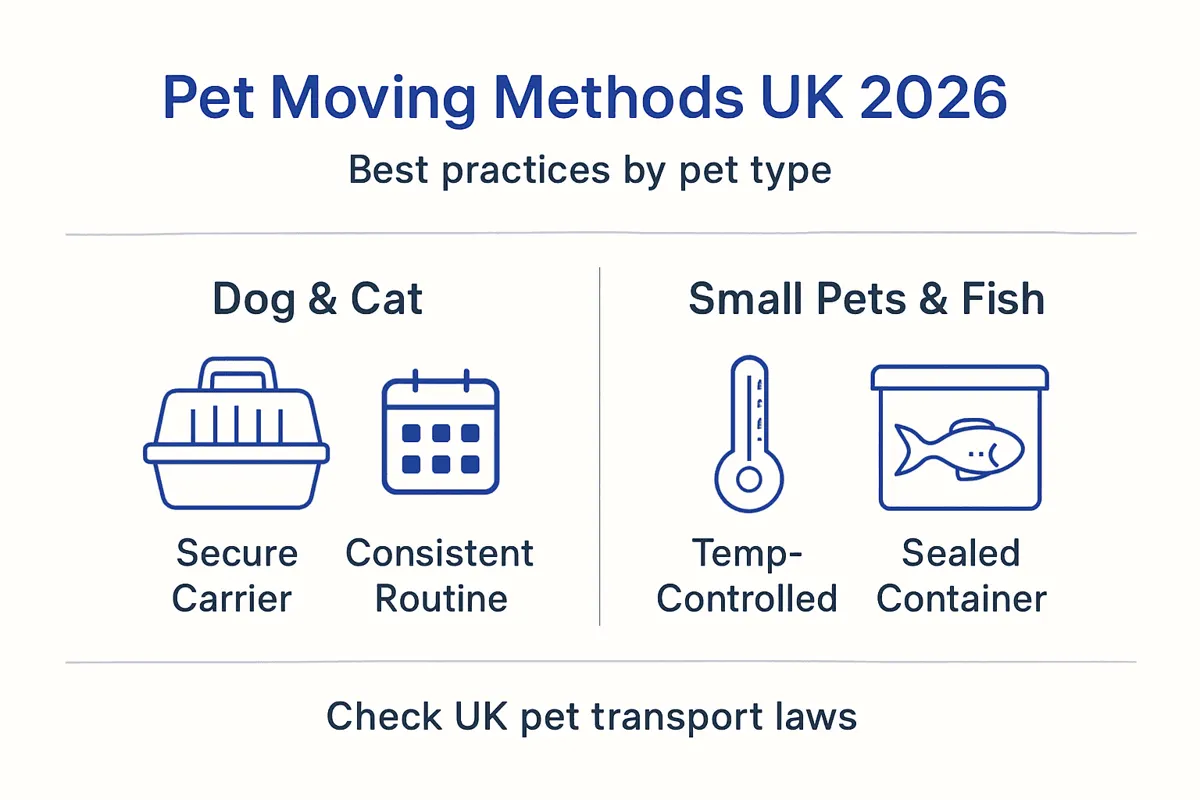
Cats need secure carriers with familiar bedding and should remain in designated safe rooms until the last possible moment. Never transport cats loose in vehicles, as they can interfere with driving or escape when doors open. Cover carriers lightly with breathable fabric to create den-like security.
Small mammals and reptiles require ventilated carriers covered lightly and maintaining 21-29°C temperature to reduce cold stress. Use bedding for small animals that absorbs waste and provides comfort. Avoid sudden temperature changes that can shock sensitive species.
Fish need careful preparation. Transport them in sealed, aerated containers with water from their current tank. Keep aquatic environments stable by maintaining temperature and minimizing movement time. Set up tanks at the new home before introducing fish to reduce shock.
| Species | Transport Method | Stress Reduction Strategy |
|---|---|---|
| Dogs | Secured crates or crash-tested harnesses | Pre-transport exercise and familiar items |
| Cats | Covered secure carriers in quiet vehicle areas | Pheromone spray and minimal handling |
| Small Mammals | Ventilated carriers with bedding | Temperature control and covered containers |
| Reptiles | Insulated containers at 21-29°C | Minimal movement and stable heat |
| Fish | Aerated water containers from home tank | Quick setup and temperature matching |
Species-specific considerations ensure each pet’s unique needs are met. Cat safe room accessories and proper transport equipment prevent injuries and reduce anxiety. Consult species-specific pet moving tips for additional guidance tailored to exotic or special-needs animals.
Debunking Common Misconceptions about Moving Pets
Many pet owners believe their animals must stay with them throughout moving day for emotional support, but evidence suggests otherwise. Dogs exposed to constant chaos, unfamiliar people, and disrupted routines often experience heightened anxiety compared to those in quiet, familiar care environments.
Another misconception holds that medication is the primary solution for moving anxiety. While sedatives have their place, environmental management and behavioural strategies often prove more effective and safer. Overmedication can impair coordination, making transport dangerous and recovery slower.
Cats don’t adjust immediately to new homes despite appearing independent. Expecting instant adaptation leads to premature outdoor access and escape risks. Gradual introduction using safe rooms and controlled exploration reduces stress and establishes security before expanding territory.
Key misconceptions to avoid include:
- Pets always prefer staying with owners during moves
- Sedation is the best anxiety management approach
- Cats adapt faster than dogs to new environments
- Outdoor access should resume immediately after moving
- All pets react identically to relocation stress
Managing expectations helps you plan realistically and implement strategies proven to reduce pet stress. Understanding that temporary separation or confined spaces often benefit anxious pets allows you to make welfare-focused decisions rather than emotional ones.
Helping Your Pet Settle into the New Home
Arrange familiar beds, toys, and feeding stations before allowing your pet full access to the new home. Start with one room containing their comfort items, then gradually expand their territory over several days to prevent overwhelming them.
Maintain feeding and exercise routines consistent with your previous home. Pets rely on predictable schedules for security, so keeping meal times, walk routes, and play sessions similar reduces confusion and anxiety during adaptation.
For cats, control outdoor access for at least two weeks while they bond with indoor spaces. Supervised garden visits on harnesses help them map the new territory safely before independent exploration. Rushing outdoor freedom increases escape and injury risks.
Monitor behavioural changes closely during the first month. Some anxiety is normal, but persistent hiding, aggression, or appetite loss warrants veterinary consultation. Early intervention prevents minor stress from developing into serious behavioural problems.
Post-move settling strategies include:
- Unpacking pet items first and setting up familiar spaces
- Maintaining consistent routines for feeding and exercise
- Allowing gradual exploration room by room
- Using pheromone diffusers in main living areas
- Spending extra quality time reassuring anxious pets
Patience and routine consistency speed adaptation significantly. Most pets adjust within two to four weeks when given proper support and familiar environmental cues.
Plan Your Pet-Friendly Move with Schott Removals
Executing all these pet care strategies while coordinating a household move requires experienced support. Schott Removals offers trained crews who understand pet-friendly moving protocols, working efficiently to minimize disruption to your animals’ routines.

Our flexible scheduling accommodates your pet care plans, whether that means completing moves quickly to reunite families or coordinating around veterinary appointments. With over 30 years of experience, we’ve helped thousands of UK families relocate safely with their beloved companions.
Customers trust Schott Removals for supportive, professional service that prioritizes both belongings and animal welfare. We understand that pets are family members deserving careful consideration throughout the moving process. Review UK removals regulations and explore essential moving tips for comprehensive preparation support. Contact our team for professional UK removals tailored to your pet-friendly needs.
Frequently Asked Questions
When should I update my pet’s microchip before moving?
Update microchip registration at least one week before moving day to ensure databases reflect current contact information if your pet escapes. Order new ID tags simultaneously and attach them to collars before the move begins.
What’s the best way to keep my cat calm on moving day?
Create a designated safe room with familiar items, keep the door closed with clear signage, and apply pheromone spray 30 minutes before use. Many cats experience less stress when kept in quiet spaces away from moving activity rather than exposed to chaos.
Can I medicate my pet to reduce moving anxiety?
Consult your veterinarian before using any sedatives, as overmedication can impair coordination and make transport dangerous. Environmental management, pheromone diffusers, and behavioural strategies often prove safer and more effective for most pets.
How soon can my pet explore the new home?
Start with one room containing familiar items, then gradually expand access over several days. Cats should remain indoors for at least two weeks before supervised outdoor visits, while dogs can explore fenced gardens immediately under close supervision.
Are there pet-friendly moving companies in the UK?
Yes, experienced removals companies like Schott Removals train crews in pet-friendly protocols and offer flexible scheduling to accommodate animal care needs. Professional movers understand the importance of minimizing disruption to pets and can coordinate timing around veterinary appointments or care arrangements.
Recommended
- Hunde Kuschelbett Carefresh Complete Confetti Pet Bedding For Small Animals, 50 L Carefresh Konfetti Einstreu
- Terminkarten Hund Ratgeber: Hund – Pflege, Futter & Lebenserwartung Betreuung Hunde
- Traveling With Dogs Safely: Achieve Stress-Free Journeys – iPupPee