
Every parent faces the reality that moving house with children in the North East is more than just changing a postcode. The challenges pull at every layer of family life, from keeping school routines on track to managing big feelings about leaving friends behind. Understanding the unique mix of emotional and practical hurdles helps you plan each step. This guide focuses on what families from County Durham to Newcastle truly encounter, offering advice that makes uprooting feel less overwhelming and more like a family achievement.
Table of Contents
- What Moving With Children Involves
- Preparing Children For Relocation Changes
- Emotional Wellbeing And Settling In
- Making Move Day Easier For Families
- Common Pitfalls And How To Avoid Them
Key Takeaways
| Point | Details |
|---|---|
| Managing Emotional Support | Children require emotional reassurance throughout the moving process, necessitating open conversations to discuss their feelings and anxieties. |
| Involving Children in Decision-Making | Engaging children in planning the move helps them transition from passive recipients to active participants, thus reducing resistance. |
| Understanding Logistical Challenges | Relocating with children significantly complicates logistics; parents should allocate extra time for packing and school transitions. |
| Utilising Professional Movers | Professional movers can provide valuable support and understanding of family dynamics, making the moving process smoother when informed about children’s needs. |
What Moving With Children Involves
Moving with children transforms a straightforward house relocation into a multi-layered operation with emotional, practical, and logistical dimensions. Your children’s needs touch every decision you make, from timing the move to managing their schooling and emotional wellbeing.
Understanding what’s genuinely involved helps you plan realistically and reduces stress for everyone. Here’s what families in County Durham and across the North East actually face.
The Core Responsibilities
Moving with dependent children means juggling several competing priorities simultaneously:
- School transitions – coordinating new school admissions whilst managing current pupils’ schedules
- Childcare arrangements – securing childcare for moving day itself and handling disruptions beforehand
- Emotional support – helping children process the change whilst managing your own moving stress
- Household organisation – packing efficiently with limited space and constant family activity
- Routine maintenance – keeping normal bedtimes, mealtimes, and activities stable during chaos
Moving with children isn’t just about transporting belongings; it’s about maintaining stability whilst everything around them changes.
Documentation and Specific Requirements
If you’re relocating with dependent children under certain circumstances, particularly if visa or residency matters apply, you’ll need specific documentation in place. This includes proving relationships and providing documentation such as birth certificates and demonstrating financial capacity to support your children during the transition.
For most domestic moves within the UK, your primary concerns are:
- School registration and admission requirements
- Transferring medical and dental records
- Updating child benefits and allowances with HMRC
- Notifying your current school of departure dates
- Obtaining references if moving to a new catchment area
These steps sound straightforward until you’re coordinating them whilst packing boxes and managing children’s anxieties about leaving friends.
The Timing Challenge
Families rarely have the luxury of moving during school holidays. More often, you’re managing the move around school terms, which compresses timescales dramatically. You can’t simply take three weeks to pack methodically; you’re working around pickup times, homework, and after-school activities.
This is precisely why professional movers in Darlington and across the region understand family moves differently. They’ve handled hundreds of relocations where children are still attending school during packing and moving days.
Physical and Emotional Demands
Your children will likely resist the change, even if they won’t admit it directly. Younger children struggle with uncertainty; older children worry about friendships and fitting in at new schools. Simultaneously, you’re managing your own stress about the move itself.
You’re not just moving boxes. You’re managing:
- Multiple emotional conversations with your children
- Packing around active family life
- Planning routes to new schools
- Managing pets’ stress alongside children’s needs
- Maintaining routines in a disrupted environment
This dual responsibility—managing both logistics and emotional support—separates family moves from straightforward relocations.
Pro tip: Start conversations with your children about the move 6-8 weeks beforehand, allowing time for questions and anxieties to surface naturally rather than emerging unexpectedly on moving day.
Here’s a comparison of challenges when moving with children of different ages:
| Age Group | Main Challenge | Typical Reaction | Parental Focus |
|---|---|---|---|
| 3–7 years | Disrupted routines | Anxiety or clinginess | Reassurance and consistency |
| 8–12 years | New school/social circles | Worry or withdrawal | Involvement in choices |
| Teenagers | Loss of independence | Frustration or resistance | Respect and open discussion |
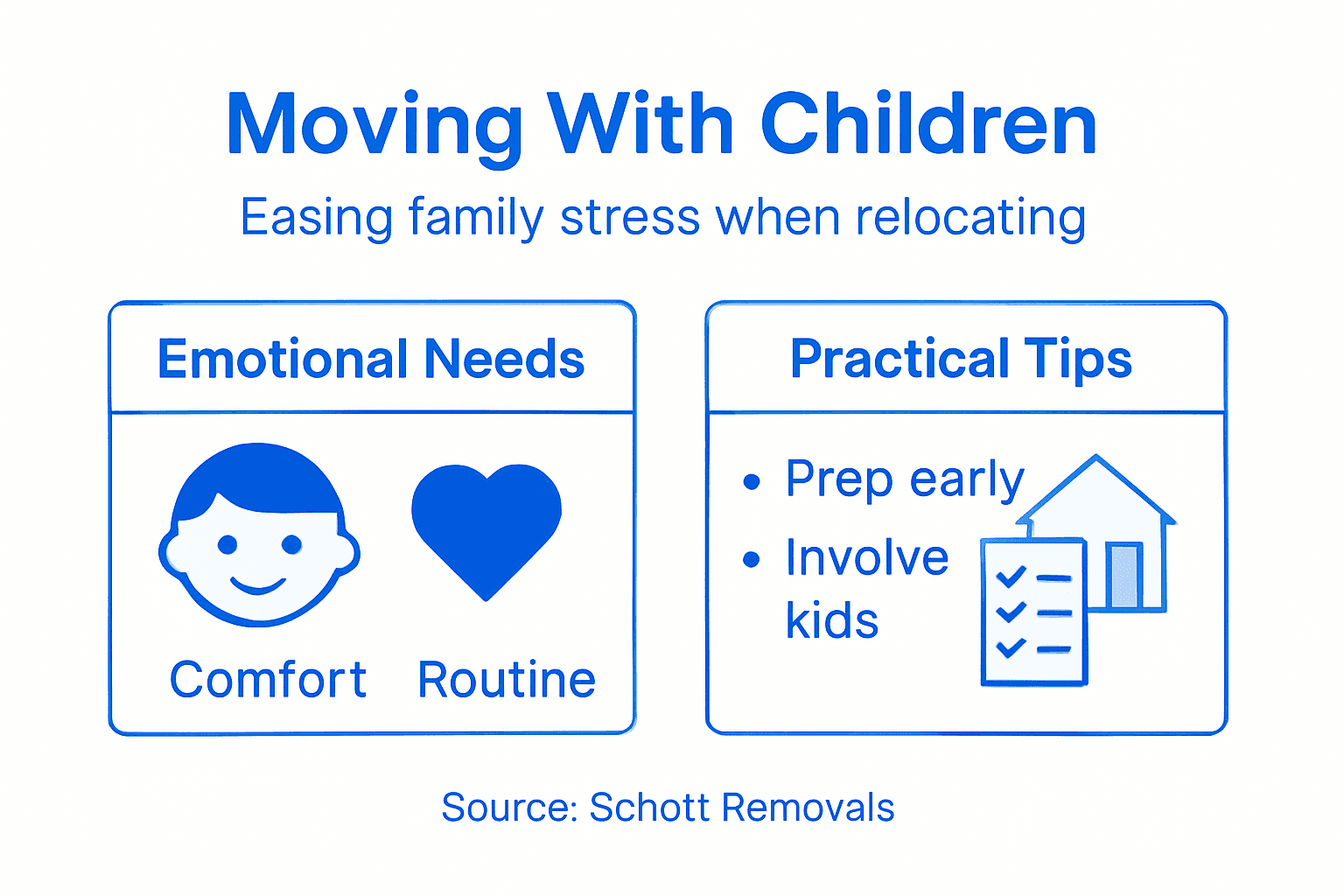
Preparing Children For Relocation Changes
Children respond better to change when they understand what’s happening and feel involved in the process. Preparation isn’t about eliminating their concerns; it’s about helping them process feelings and feel secure throughout the transition.
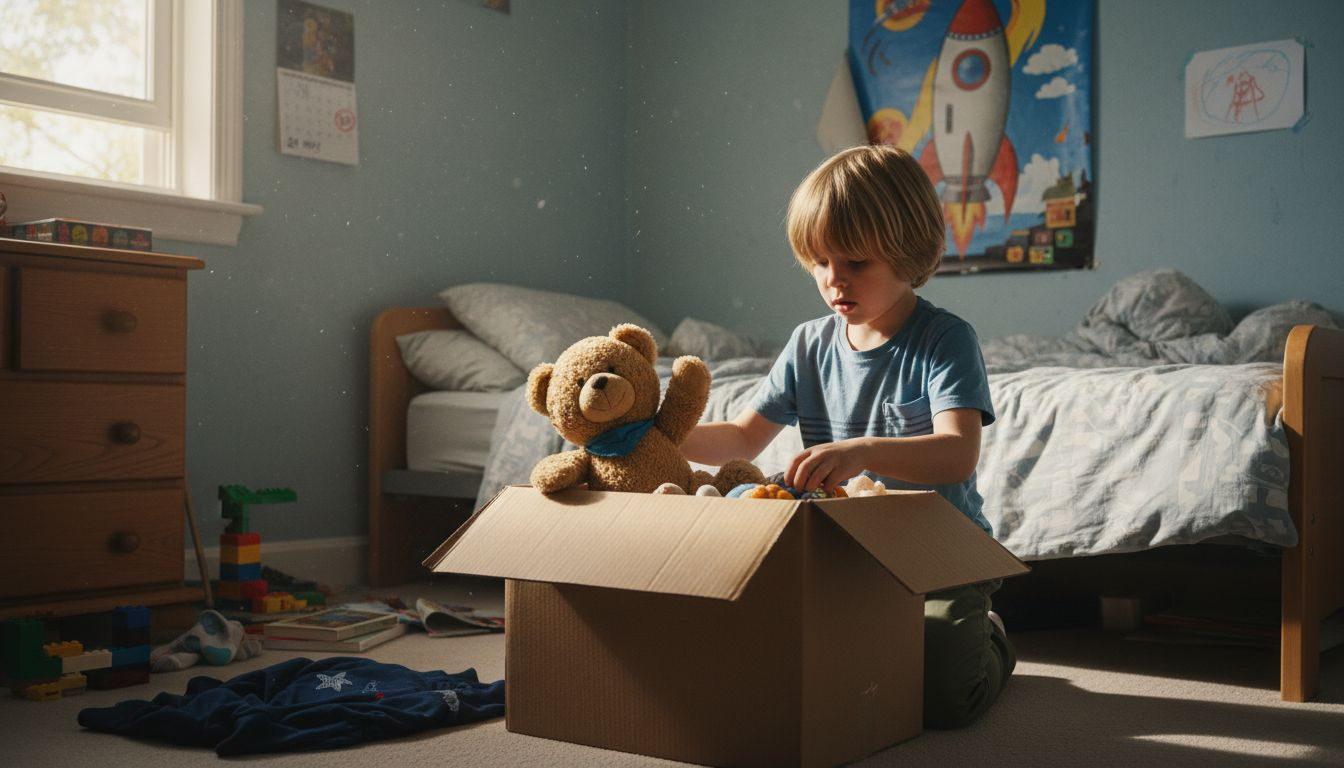
Starting conversations early gives children time to adjust mentally rather than facing shock on moving day. The approach varies significantly depending on your child’s age and personality.
Age-Appropriate Communication
Early, open communication tailored to your child’s developmental stage makes the biggest difference in how they accept the move. What works for a five-year-old won’t resonate with a teenager, and that matters.
Younger children (ages 3-7):
- Use simple, concrete language without overwhelming details
- Focus on what stays the same (you, their toys, routines)
- Read picture books about moving to normalise the concept
- Answer questions honestly but briefly
Older children (ages 8-12):
- Explain practical reasons for the move
- Discuss the new location and what they’ll do there
- Address concerns about schooling and friendships
- Involve them in planning decisions where possible
Teenagers:
- Acknowledge their frustration and independence concerns
- Give them genuine input into bedroom design or location choice
- Discuss opportunities in the new area
- Respect their need to process change differently
Children show positive adaptation when supported properly, and discussing the move openly helps them feel included and secure.
Involve Them in Decision-Making
When children have a say in the move, they shift from passive victims to active participants. This psychological shift reduces resistance dramatically. It doesn’t mean letting them veto the relocation, but rather giving genuine choices within your plan.
Practical ways to involve your children:
- Let them choose their new bedroom colour or layout
- Research the new school together online
- Explore local parks and attractions as a family
- Help them pack their own belongings
- Create a countdown calendar together
- Ask for their input on which items to donate
This involvement transforms the narrative from “we’re moving” to “we’re planning our move together.”
Address Their Specific Concerns
Asking directly what worries them reveals anxieties you might otherwise miss. Many children stay silent about fears rather than burden parents they see as stressed. Creating space for honest conversation prevents these worries from building silently.
Common concerns children raise:
- Leaving current friends behind
- Starting at a new school
- Meeting new people
- Familiar routines disappearing
- Whether the new house feels like home
Take each concern seriously, even if it seems minor to you. Validate their feelings first, then problem-solve together. A child worried about losing friendships needs reassurance about staying in contact, not dismissal of the concern.
Pro tip: Arrange a video call with their new school, ideally meeting their new teacher or form tutor, which transforms an abstract institution into a familiar face and significantly eases transition anxiety.
Emotional Wellbeing And Settling In
Your child’s emotional wellbeing during and after a move directly affects how quickly they settle into their new environment. A child who feels supported emotionally adapts faster to new schools, new friendships, and new routines than one left to process the change alone.
The transition period isn’t just about unpacking boxes. It’s about helping your child feel secure whilst everything familiar changes simultaneously.
The Role Of Emotional Support
Children’s wellbeing in schools is linked to social, emotional, and mental health. Positive wellbeing supports their engagement in learning and reduces behavioural difficulties. Schools foster this through supportive culture and positive relationships, but parents create the foundation at home.
Your role during settling in involves:
- Validating their feelings without trying to “fix” them immediately
- Maintaining familiar routines even in an unfamiliar house
- Creating one comfortable, organised space (usually their bedroom) quickly
- Being visibly calm, even when you’re stressed
- Staying available for conversations at unexpected times
Children often need to talk about their feelings whilst doing something else—walking, drawing, or playing. They won’t sit down for scheduled emotional conversations. Recognise these moments when they happen.
Spotting Signs Of Struggle
Some children hide their distress well, appearing fine whilst struggling internally. Others show clear behavioural changes. Watch for shifts that might indicate your child needs extra support.
Common signs of emotional difficulty include:
- Withdrawal from activities they previously enjoyed
- Sleep changes or nightmares
- Increased irritability or anger
- Clinging behaviour or separation anxiety
- Declining school performance
- Regression to younger behaviours
- Stomach aches or headaches without clear cause
These signs don’t necessarily mean something is seriously wrong, but they do indicate your child needs more emotional support. Don’t dismiss them as typical moving stress.
Building Connection In The New Location
Supporting emotional wellbeing during transitions requires sensitive planning and targeted intervention. Help your child develop new social connections and familiarity with their surroundings deliberately.
Actions that help:
- Attend school events and activities together initially
- Join local clubs or groups matching their interests
- Arrange playdates with classmates early
- Explore the neighbourhood together regularly
- Visit local attractions and establish new “favourite” places
- Connect with other families moving to the area
Building a sense of belonging takes time, typically 6-12 weeks. Don’t expect instant happiness about the move.
A child who feels emotionally secure adapts faster and settles more completely in their new home.
When To Seek Professional Help
Most children adjust naturally with parental support. However, persistent emotional difficulties lasting beyond three months warrant professional assessment. Your GP can refer your child to appropriate services in your area.
Consider professional support if your child shows:
- Severe anxiety or panic symptoms
- Persistent sadness or depression
- Complete social withdrawal
- Significant behavioural changes affecting school or family life
- Self-harm or talk of harming themselves
In County Durham and across the North East, schools have counsellors and pastoral staff trained to support children through transitions. Don’t hesitate to involve them.
Pro tip: Create a “new home memory book” together where your child documents first experiences—their first friend’s name, favourite classroom corner, best lunch they’ve had—which shifts their focus from what they’ve lost to what they’re discovering.
Use this table to quickly reference specialist support options for families relocating in the North East:
| Support Resource | Type of Help | When to Use |
|---|---|---|
| School counsellor | Emotional transition | Prolonged sadness/withdrawal |
| GP referral | Professional mental health | Severe or persistent distress |
| Local parenting group | Peer advice/community | Early post-move period |
| Removals company | Logistical coordination | Children with special needs during the move |
Making Move Day Easier For Families
Move day itself can feel chaotic when children are involved. Unlike relocating alone, you’re managing logistics whilst keeping children safe, entertained, and emotionally regulated. Strategic planning transforms the day from overwhelming to manageable.
The key is removing decision-making from moving day itself. Everything should be planned beforehand so you can focus on your children’s needs when the removals team arrives.
Planning Before The Day
Proper preparation eliminates countless problems on moving day. Think through every scenario involving your children and plan contingencies for each one.
Essential planning steps:
- Arrange childcare for at least part of moving day if possible
- Pack a “children’s moving day” bag with essentials they’ll need immediately
- Prepare a snack and drink station for the removals team and your family
- Plan your children’s meals and stick to regular mealtimes
- Identify a quiet room where children can retreat if overwhelmed
- Brief your removals company about your children’s presence and any access restrictions
If arranging full childcare proves impossible, prepare activities that genuinely occupy their attention. Passive options like screens work during chaotic moments, and that’s acceptable.
The Children’s Moving Day Bag
This isn’t luggage for a holiday. It’s a survival kit containing everything your children need to stay comfortable and regulated whilst removals happen around them.
Include:
- Changes of clothing (accidents happen during stressful days)
- Toiletries and medications
- Comfort items (favourite toy, blanket, or book)
- Snacks and drinks in quantities larger than normal
- Entertainment for various moods (calm activities and engaging ones)
- Phone chargers for older children’s devices
- Their pillow and duvet for the first night
Keep this bag separate from the removals, easily accessible to you throughout the day. Your children knowing they have familiar items nearby reduces anxiety dramatically.
Managing The Physical Environment
Moving day involves strangers in your home, noise, disruption, and loss of privacy. For sensitive children, this feels threatening. Create one protected space where they feel safe.
Actions that help:
- Designate one room (usually their bedroom) as off-limits to the removals team initially
- Set up this room completely with furniture, beds made, and familiar items
- Establish clear boundaries with movers about which areas children can access
- Keep bathroom access clear and private for your children
- Use baby gates if you have younger children to prevent them wandering into danger zones
A safe, familiar space where children can retreat transforms moving day from frightening to manageable.
Managing Your Own Stress
Children are acute observers of parental anxiety. If you appear panicked or overwhelmed, they become anxious too. Your visible composure matters more than perfect organisation on moving day.
Practical stress management:
- Delegate tasks to your partner or a trusted friend so you can prioritise children
- Accept that not everything will go perfectly and that’s acceptable
- Take breaks to sit with your children, even briefly
- Maintain your normal tone and humour, even if forced
- Don’t expect children to “help” with heavy lifting; supervising their safety is your job
Pro tip: Ask your removals company whether they can complete the heaviest moving during a specific window, allowing you to settle children and establish routines once the bulk of disruption concludes rather than having activity continue throughout the evening.
Common Pitfalls And How To Avoid Them
Families moving with children repeat certain mistakes that complicate the transition unnecessarily. Understanding these pitfalls beforehand lets you sidestep problems that others discover too late.
Most of these mistakes stem from underestimating how much children’s needs actually disrupt moving logistics. Planning around this reality transforms your approach entirely.
Underestimating Timeline And Workload
The single biggest pitfall is assuming moving with children takes roughly the same time as moving alone. It doesn’t. Everything takes longer when children need supervision, meals, and emotional support throughout the process.
Common timeline mistakes:
- Starting packing too close to moving day
- Scheduling too many activities alongside packing weeks
- Underestimating how long school transitions take to arrange
- Expecting children to help pack meaningfully
- Not accounting for children becoming overwhelmed and needing extra attention
Add 30-40% extra time to any moving timeline when children are involved. This isn’t pessimism; it’s realistic planning based on how family moves actually function.
Neglecting School Transitions
Parents often focus so heavily on the physical move that school admissions fall behind. Schools have deadlines and processes that don’t accommodate moving schedules. Missing these creates genuine problems for your children’s education and your own stress levels.
Why this matters:
- School places fill up; late applications may not secure preferred schools
- Children starting mid-term face established friendship groups
- Delayed admissions mean children sitting at home whilst peers attend school
- Some schools require entrance assessments with limited availability
Contact your new school before you move. Initiate admissions immediately. This single action prevents cascading problems in your new location.
Over-Packing Or Under-Planning Children’s Needs
Families either pack far too much, treating the move like they’re never going back, or pack too little, assuming they’ll purchase replacements. Children’s needs fall into a tricky middle ground.
What children actually need on moving day and shortly after:
- Enough clothing for at least one week (accidents, spills, and weather changes happen)
- All medications and medical supplies
- School uniforms and pe kits
- Comfort items and favourite toys
- Books and entertainment they’ll actually engage with
- Current sports equipment or musical instruments
Underpreparing for children’s specific needs creates constant scrambling in your new location during the period when you’re most stressed.
Ignoring Children’s Social Needs
Parents focus on logistics and forget that children grieve the loss of friendships, even when they’re excited about the move. Dismissing this grief as unnecessary creates emotional distance precisely when children need support.
Avoid these mistakes:
- Don’t say “You’ll make new friends easily” as dismissal of their concerns
- Don’t cut contact with old friends immediately after moving
- Don’t schedule every moment with new activities, preventing adjustment time
- Don’t expect children to instantly be happy about the move
- Don’t delay joining clubs or groups thinking children need settling time first
Both grieving old friendships and building new ones can happen simultaneously. Your children can miss people they’ve left whilst developing new connections.
Not Communicating With Your Removals Company
Professional movers in Darlington and across the region have moved countless families. They’ve developed systems specifically for family relocations. Yet some families treat removals as purely transactional, providing no context about their children.
Briefly tell your removals company:
- How many children you have and their approximate ages
- If any children have mobility challenges or special needs
- Whether children will be present during moving day
- Any particularly fragile items belonging to children
- Whether you’ve designated any areas as off-limits
This transparency allows professionals to plan their work around your family’s needs rather than discovering complications as they arise.
Pro tip: Schedule a pre-move conversation with your removals team to walk through your new home layout together, ensuring they understand your setup preferences before the truck arrives, which saves significant decision-making stress on the day itself.
Make Moving With Children Smoother With Expert Support
Moving with children involves much more than transporting belongings. From managing school transitions and maintaining routines to providing emotional support during a stressful time, families face challenges that require careful planning and trusted assistance. At Schott Removals, we understand the unique demands of family moves in Darlington and across the UK. Our professional team provides reliable, stress-reducing moving and packing services designed to keep your children’s comfort and wellbeing as a priority on moving day.

Choose Schott Removals to benefit from over 30 years of experience in handling family relocations, including tailored solutions that respect your children’s needs and your schedule. Start planning your smooth move today with our easy online quote and explore how our local and national house removals and expert packing services can make this important transition easier for everyone. Visit Schott Removals to take the next step towards a calm and organised family move.
Frequently Asked Questions
How can I prepare my children for a move?
Starting conversations about the move 6-8 weeks in advance can help children process their feelings. Use age-appropriate communication, involve them in decision-making, and address their specific concerns to make them feel included in the transition.
What should I include in a children’s moving day bag?
Pack essential items such as changes of clothing, toiletries, comfort items (like a favourite toy or blanket), snacks, drinks, entertainment options, and their pillow and duvet to help them feel secure during the moving day chaos.
How can I support my child’s emotional wellbeing during the move?
Validate their feelings and maintain familiar routines as much as possible. Create a comfortable space for them in the new home, stay available for casual conversations, and be mindful of signs of emotional difficulty that may require extra support.
What are common mistakes families make when moving with children?
Families often underestimate the time and emotional support needed. Common pitfalls include neglecting school transition processes, over-packing or under-planning children’s needs, and not communicating effectively with the removals company about children’s presence and specific needs.
Recommended
- Fitzek Bücher Die Einladung Mini Schultüte Einladungskarten Einschulung Erster 1. Schultag Einschulungskarten – Weltraum | Einschulung Zuckertüten Schleife Mit Namen Kartenmachen.de Karten
- Rucksack Kawaii MCUILEE Süß Bär Mini Rucksack Kinder Babyrucksack Kindergartenrucksack Playmobil Rucksack
- Partyspiele Erwachsene 100+ Lustige Partyspiele Für Jedes Alter The Hunger Games Buch
- Lizenz Family: So Funktioniert Das Amazon Abonnement Microsoft 365
- 7 Tips for Stress Free Family Travel in Los Angeles