
When families in the North East of England prepare for a big international move, uncertainty about what belongings can legally enter the United Kingdom often adds extra stress to the journey. Understanding customs regulations is vital, as the United Kingdom government enforces strict guidelines that directly affect which personal items, furniture, and vehicles may cross the border without incurring taxes or facing delays. This guide offers families clear explanations on customs laws, documentation, and exemptions to help ensure secure and compliant transport for their treasured household goods.
| Point | Details |
|---|---|
| Understanding Customs Regulations | Familiarise yourself with UK customs rules to avoid unexpected complications and financial penalties during relocation. |
| Transfer of Residence Relief | Ensure compliance with ToR regulations to potentially reduce taxation on imported household goods. |
| Document Preparation | Maintain accurate documentation for all belongings to facilitate a smoother customs clearance process. |
| Financial Planning | Prepare a budget that accounts for potential duties, VAT, and other unforeseen charges to mitigate financial risks. |
Moving household items internationally requires navigating complex customs regulations that can significantly impact your relocation experience. These regulations determine which personal belongings you can bring into the United Kingdom, potential taxes or duties payable, and the documentation required for a smooth transition.
When relocating from abroad, families must understand the specific guidelines outlined by UK customs authorities. Transfer of Residence (ToR) rules provide important relief mechanisms that can help reduce financial burdens during international moves. Understanding these regulations helps prevent unexpected complications and potential financial penalties.
Key aspects of customs regulations for household moves typically involve:
The UK government maintains strict guidelines about importing personal belongings. Movers must provide comprehensive inventories detailing the nature, quantity, and value of items being transported. Certain goods may attract customs duties, while others might qualify for tax-free import under specific conditions.
Accurate documentation and transparent declaration are crucial for a hassle-free customs clearance process.
Compliance Considerations include preparing detailed item lists, understanding restricted and prohibited items, and anticipating potential customs inspections. Families should research specific requirements based on their country of origin and duration of intended stay in the United Kingdom.
Pro tip: Consult official UK customs resources and consider engaging a professional removals company specialising in international relocations to navigate complex regulatory requirements effectively.
Understanding the specific categories of household goods eligible for customs exemption is crucial for families planning an international move to the United Kingdom. Transfer of Residence (ToR) relief provides important guidelines about which personal belongings can be imported without incurring additional taxes or duties.
The UK customs authorities define several key categories of household goods that may qualify for exemption. These typically include:
To qualify for exemption, items must meet specific criteria. Ownership duration is a critical factor, with most regulations requiring that goods have been owned and used for at least six months prior to relocation. Commercial items, newly purchased goods, and items intended for resale are generally excluded from these exemptions.
Personal belongings must demonstrate genuine personal use and long-term ownership to qualify for customs relief.
Some categories have additional nuanced requirements. Professional instruments, for instance, must be directly related to the individual’s occupation and intended for continued use in the United Kingdom. Vehicles require detailed documentation proving prior ownership and meeting specific age and condition standards.
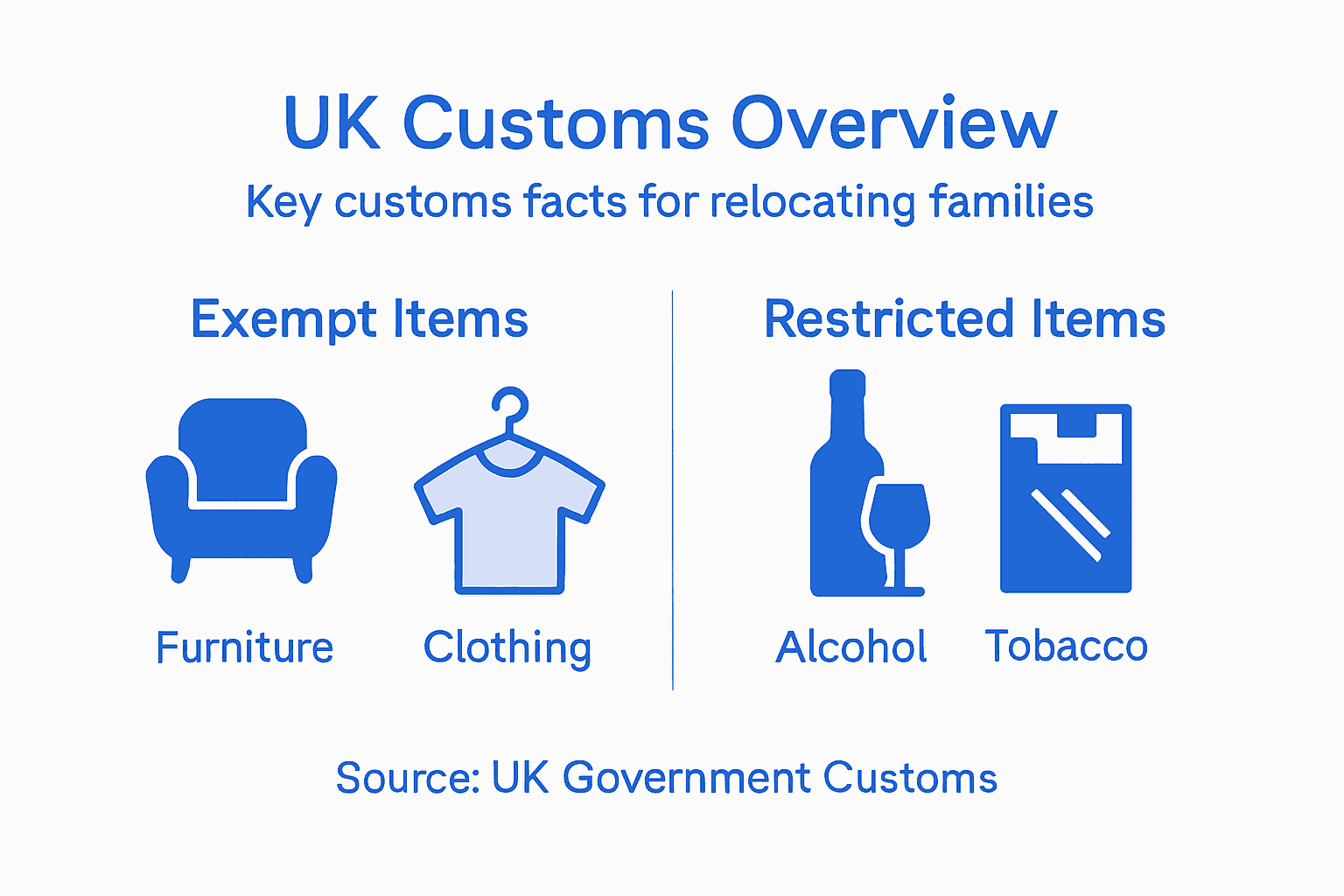
Restricted Categories include alcohol, tobacco products, and commercial merchandise. These items are subject to standard import regulations and may attract significant duties and taxes. Families should carefully inventory their belongings and consult official customs guidelines to understand potential financial implications.
The table below contrasts the main exemption requirements for various household item categories:
| Item Category | Exemption Requirement | Common Issue if Not Met |
|---|---|---|
| Personal electronics | Owned/used for 6+ months | Import duties may apply |
| Vehicles | Proof of prior ownership, standards | Denied entry or additional fees |
| Professional tools | Must relate to occupation | Loss of exemption eligibility |
| Pets | Valid transport documentation | Quarantine or entry refusal |
Pro tip: Maintain comprehensive documentation for all household items, including purchase receipts, ownership records, and detailed inventories to facilitate smoother customs processing.
Navigating the complex process of international relocation requires meticulous preparation and understanding of the UK’s customs documentation requirements. Transfer of Residence (ToR) relief offers a crucial pathway for families to import their household goods with potential tax and duty exemptions.
The documentation process involves several critical steps and supporting evidence that must be carefully compiled:
Residency Requirements play a significant role in qualifying for relief. Applicants must demonstrate they have lived outside the United Kingdom for a minimum of 12 consecutive months prior to their relocation. This requirement ensures that the relief is genuinely intended for individuals permanently returning to or establishing residence in the UK.
Comprehensive and accurate documentation is the cornerstone of a successful Transfer of Residence application.
The application process demands precise attention to detail. Each document must be authenticated and provide clear evidence of personal ownership and intended use. Professional instruments, vehicles, and personal effects require additional specific documentation proving their long-term personal use and direct relevance to the individual’s professional or personal life.

Potential Challenges in the documentation process include incomplete paperwork, insufficient proof of ownership, or discrepancies in residency status. Families should anticipate potential scrutiny and prepare comprehensive supporting evidence to substantiate their Transfer of Residence claim.
Pro tip: Create a dedicated folder with digital and physical copies of all required documents, ensuring multiple backups and easy accessibility during the customs clearance process.
Moving household belongings across international borders requires understanding complex customs procedures and border security protocols. UK customs clearance processes involve rigorous documentation checks and potential inspections designed to ensure legal compliance and national security.
Key steps in navigating border security for international moves include:
Border Inspection Protocols involve multiple layers of verification. Customs officials may conduct random or targeted examinations of shipped household items, checking against submitted documentation to prevent potential smuggling or illegal importation of restricted goods.
Meticulous preparation and transparent documentation are your strongest allies during customs clearance.
Certain categories of household items require additional scrutiny. Professional equipment, vehicles, and items with significant monetary value will typically undergo more comprehensive examination. Families must be prepared to provide extensive provenance documentation, proving ownership and intended personal use.
Potential Risks in the customs process include unexpected duties, potential item seizure, or significant delays if documentation is incomplete or inaccurate. Understanding the precise requirements can help mitigate these potential complications and ensure a smoother relocation experience.
Pro tip: Create a comprehensive digital and physical documentation portfolio, including original purchase receipts, ownership records, and detailed item descriptions to expedite customs processing.
International relocation involves navigating complex financial considerations and potential legal pitfalls when importing household goods into the United Kingdom. Customs duty and VAT regulations can significantly impact the overall cost of moving, making comprehensive understanding crucial for families.
Key financial and compliance factors include:
Duty Assessment involves multiple calculation factors. When Transfer of Residence relief is not granted, movers must pay customs duty based on item type, value, and origin. The standard VAT rate applies to the total value, including shipping and duty costs, potentially creating unexpected financial burdens.
Accurate item valuation and transparent documentation are essential to minimise unexpected financial risks.
Common compliance risks can lead to substantial financial penalties. Incorrect form submissions, incomplete inventories, or attempts to import prohibited items may result in significant fines, item seizure, or even legal prosecution. Professional movers recommend maintaining meticulous records and understanding precise import regulations.
Financial Implications extend beyond immediate duties. Families might encounter additional costs such as storage fees, re-inspection charges, or legal expenses if customs procedures are not followed precisely. Budgeting for potential extra expenses is a critical aspect of international relocation planning.
Here’s a summary of common financial risks and how to prevent them during a household move:
| Risk Type | Typical Cause | Preventive Action |
|---|---|---|
| Unexpected duty charges | Incorrect item valuation | Verify market value before declaration |
| Item seizure | Prohibited or restricted items | Research current UK import restrictions |
| Documentation delays | Missing or incomplete records | Prepare digital and hardcopy portfolios |
| Additional inspection fees | Discrepancies in declarations | Perform cross-checks before shipping |
| Legal penalties | False or misleading submissions | Ensure full honesty and transparency |
Pro tip: Create a detailed financial contingency plan that includes potential customs duties, VAT, and unexpected processing fees to avoid financial surprises during your relocation.
Understanding UK customs regulations and the Transfer of Residence relief can feel overwhelming when relocating abroad. Families often face challenges such as detailed documentation, strict import rules, and potential financial risks. Schott Removals, with over 30 years of experience, specialises in navigating these complexities by offering reliable international shipping and personalised support to make your move worry-free.
Take the first step to a smooth relocation by exploring our trusted services at Schott Removals. Learn more about how we handle customs procedures and secure your belongings through our Uncategorised Archives – Schott Removals and start your journey with confidence today.
To import household goods into the UK, you’ll need a completed ToR01 form, proof of continuous residence outside the UK, a detailed inventory of household goods, evidence of ownership for at least six months, current UK address proof, passports, and shipping manifests.
Items that may qualify for customs exemption include personal furniture, professional equipment, personal vehicles, household electronics, pets, personal clothing, and sports equipment, provided they have been owned and used for at least six months.
Families should be aware of risks such as unexpected customs duties due to incorrect item valuation, item seizure for importing prohibited items, documentation delays from missing information, and legal penalties for false submissions.
To prepare for customs inspections, families should ensure all documentation is accurate and current, maintain detailed inventories of household items, and be ready to provide provenance documentation for high-value or professional items.
Unit 20, Lingfield Point
McMullen Road,
Darlington
DL1 1RW
Telephone: 01325 487091
Email: info@schottremovals.co.uk