
Most British homeowners are surprised to learn that moving house now swallows up as much as 8 to 12 percent of property value. If you live in County Durham or elsewhere in the North East of England and are planning a move in 2025, understanding the range of local and national expenses can make or break your budget. This guide offers clear, region-focused insights to help you anticipate every cost and choose professional removal services tailored to your needs.
Table of Contents
- Defining Moving House Costs In 2025
- Key Types Of Moving Expenses Explained
- Regional Variations Across The UK
- Legal Fees, Stamp Duty, And Surveys
- Removals, Packing, And Storage Services
- Risks, Hidden Costs, And Money-Saving Tips
Key Takeaways
| Point | Details |
|---|---|
| Understanding Costs | Homeowners should budget 8-12% of their property value for comprehensive moving expenses, including removal services, legal fees, and unexpected costs. |
| Regional Variations | Moving costs differ significantly across the UK; areas like London incur higher expenses compared to more affordable regions such as the North East. |
| Critical Components | Key moving expenses encompass removal services, packing materials, legal fees, and potential stamp duty, all of which require careful planning. |
| Money-Saving Strategies | Conduct thorough research, request itemised quotes, and maintain a contingency fund of 15-20% to manage unforeseen costs effectively. |
Defining Moving House Costs in 2025
Moving house represents a significant financial undertaking for homeowners in the United Kingdom, particularly in regions like County Durham and the North East. Understanding the comprehensive landscape of moving expenses requires careful analysis of multiple cost factors that will shape residential relocation strategies in 2025. The financial implications extend far beyond simple transportation of belongings, encompassing a complex network of expenses that homeowners must strategically budget.
According to the UK House Price Index reports, residential property market conditions significantly influence overall moving costs. These trends suggest that homeowners should anticipate potential variations in expenses related to property transfers, removals, and associated administrative processes. Current market price inflation data from the Office for National Statistics indicates that moving expenses in 2025 will likely reflect broader economic patterns, with potential increases in removal service charges, administrative fees, and supplementary moving-related expenditures.
The core moving house costs in 2025 typically encompass several critical components. These include professional removal service fees, packing materials, potential property preparation expenses, transportation costs, insurance, and administrative charges such as legal documentation and property transfer fees. Homeowners should budget approximately 8-12% of their total property value for a comprehensive moving experience, accounting for both expected and unexpected expenses that may arise during the relocation process.
Here’s a summary of essential moving costs and how their impact varies:
| Cost Category | Typical Range (% of property value) | Influence on Total Cost |
|---|---|---|
| Removal Services | 3–6% | Largest single direct expense |
| Legal Fees & Surveys | 2–5% | Significant for legal compliance |
| Stamp Duty | Varies (by property value & status) | Can be substantial for high-value homes |
| Packing & Materials | 0.5–1% | Often underestimated but important |
| Storage Solutions | £50–£300 per month | Can add up in long or complex moves |
| Contingency Fund | 15–20% of moving budget | Essential for unexpected costs |
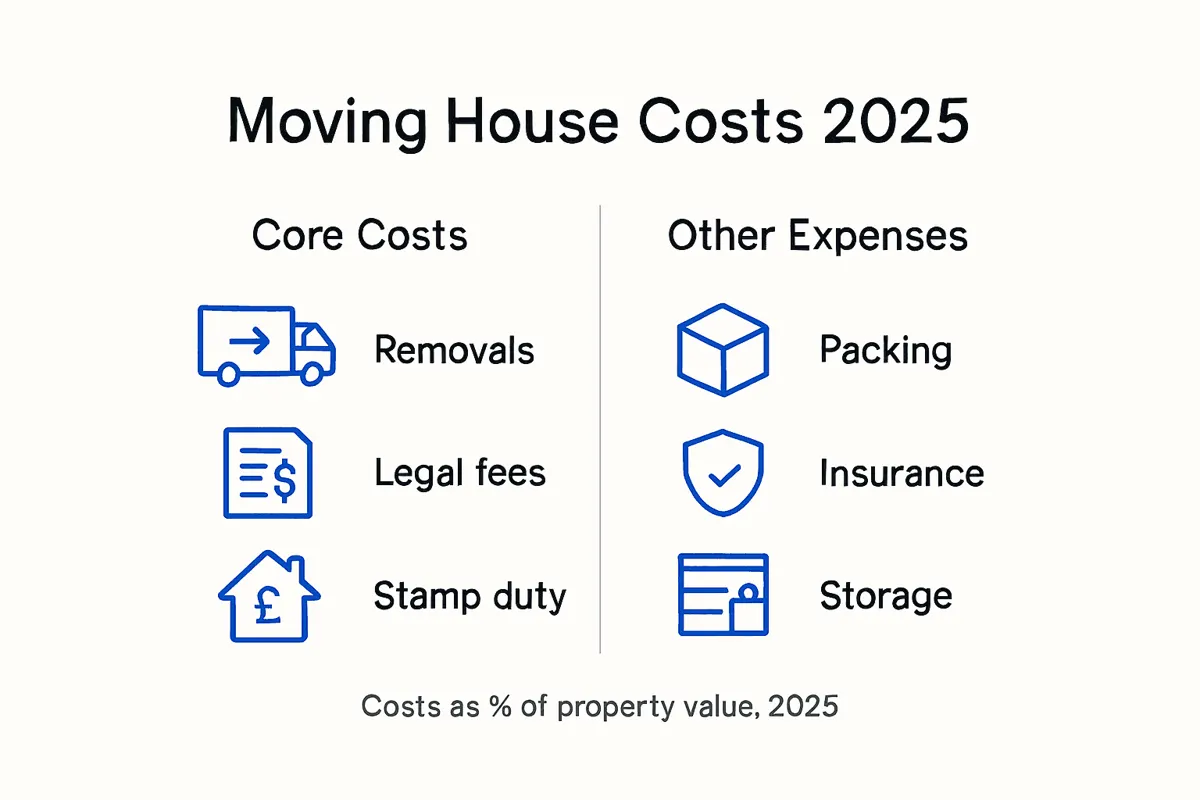
Pro tip: Create a detailed moving budget spreadsheet at least three months before your planned relocation, accounting for every potential expense and including a 15-20% contingency fund for unexpected costs.
Key Types of Moving Expenses Explained
Understanding the intricacies of moving expenses is crucial for homeowners in the North East of England, particularly those planning relocations in County Durham and surrounding areas. Moving house involves a multifaceted financial commitment that extends well beyond simple transportation costs. The expenses associated with relocation can be categorised into several critical components that require meticulous planning and strategic budgeting.

The primary categories of moving expenses include professional removal services, which form a significant portion of the overall relocation budget. These services encompass comprehensive travel and transportation costs that homeowners must carefully consider. Additional expenses typically involve packing materials, protective wrapping for fragile items, specialised equipment for heavy furniture, and potential storage solutions. Homeowners should also factor in mileage and fuel allowances if using personal vehicles during the moving process, which can contribute to the overall financial outlay.
Beyond direct moving services, homeowners must budget for ancillary expenses such as legal fees, property transfer documentation, potential property preparation costs, and interim accommodation if required. Insurance coverage for belongings during transit represents another critical expense that should not be overlooked. Professional removals companies often provide comprehensive insurance packages, but homeowners might need additional coverage depending on the value and complexity of their possessions. The total moving expenses can typically range between 8-15% of the property’s value, with variations based on distance, volume of belongings, and specific service requirements.
Pro tip: Request detailed, itemised quotes from multiple removal companies and compare not just total costs, but the specific services included to ensure comprehensive coverage and avoid hidden expenses.
Regional Variations Across the UK
Moving house costs in the United Kingdom demonstrate significant geographical complexity, with substantial variations emerging across different regions and nations. The financial landscape of relocation is far from uniform, presenting unique challenges and opportunities for homeowners depending on their specific geographic location. Understanding these regional disparities becomes crucial for effective financial planning and strategic moving decisions.
Regional private rent and house price data reveals striking differences in moving expenses across the UK. Metropolitan areas like London consistently demonstrate substantially higher moving costs compared to regions in the North East of England, such as County Durham and Darlington. These variations stem from multiple factors including property values, transportation infrastructure, local economic conditions, and the competitive landscape of removal services. Cities with higher population densities typically experience more complex and consequently more expensive moving processes.
The UK House Price Index reports highlight nuanced regional economic patterns that directly impact moving expenses. Scotland, Wales, and Northern Ireland each present unique cost structures, with rural areas often experiencing different pricing dynamics compared to urban centres. Factors such as distance between properties, accessibility of locations, and local removal company competition significantly influence the overall moving expenditure. Homeowners must conduct thorough local research to understand the specific cost implications in their target region, recognising that a move within the same county can present markedly different financial requirements compared to inter-regional relocations.
The following table outlines regional differences in moving costs across the UK:
| Region | Typical Moving Cost Trend | Main Cost Drivers |
|---|---|---|
| London | Highest in the UK | High property values, congestion |
| North East England | Among lowest nationally | Lower demand, competitive services |
| Scotland | Highly variable | Rural vs. urban price differences |
| Wales | Moderate and region-dependent | Accessibility, local infrastructure |
| Northern Ireland | Varied, generally moderate | Distance, local competition |
Pro tip: Request local removal quotes from multiple providers in your specific region, as moving costs can vary dramatically even within short geographical distances.
Legal Fees, Stamp Duty, and Surveys
Moving house in the United Kingdom involves navigating a complex landscape of legal requirements and financial obligations that extend far beyond the simple act of relocating. Homeowners must carefully budget for a range of professional services and mandatory government charges that can significantly impact the overall cost of moving. Understanding these financial components is crucial for effective planning and avoiding unexpected expenses.
The Stamp Duty Land Tax regulations represent a critical financial consideration for property purchasers in England and Northern Ireland. These taxes are calculated based on the property’s purchase price, with varying rates applied to different property value brackets. First-time buyers enjoy certain exemptions, while additional property purchases incur higher tax rates. In regions like the North East, including County Durham and Darlington, the stamp duty implications can vary dramatically depending on the specific property value and buyer circumstances.
Legal fees constitute another substantial component of moving expenses, encompassing solicitor services, property searches, and land registration charges. Homeowners typically require comprehensive property surveys to assess the condition and potential issues with their new home. These surveys range from basic condition reports to more extensive structural investigations, with costs varying based on the property’s size, age, and complexity. Professional survey services help identify potential structural problems, ensuring buyers make informed decisions and avoid costly repairs in the future. The total legal and survey expenses can represent between 2-5% of the property’s purchase price, making them a significant financial consideration in the house moving process.
Pro tip: Request fixed-fee quotes from multiple solicitors and compare their comprehensive service packages, ensuring you understand exactly what is included to prevent unexpected additional charges.
Removals, Packing, and Storage Services
Moving house involves a complex ecosystem of professional services designed to simplify the challenging process of relocation. Homeowners in the North East of England, particularly in areas like County Durham and Darlington, must carefully navigate the intricate landscape of removals, packing, and storage solutions to ensure a smooth transition between properties. Understanding the nuanced offerings of professional removal companies becomes crucial in managing both logistical challenges and financial considerations.
Consumer price inflation trends indicate significant variations in removal service costs throughout 2025, reflecting broader economic pressures. Professional removal services typically offer comprehensive packages that include packing, transportation, and unpacking. These services range from basic transport-only options to full-service solutions involving complete packing, careful handling of fragile items, disassembly and reassembly of furniture, and specialised transportation for valuable or delicate possessions.
Storage services represent another critical component of modern moving strategies, offering flexible solutions for homeowners experiencing complex relocation timelines. Short-term and long-term storage options provide crucial flexibility, allowing individuals to bridge gaps between property purchases, manage downsizing, or handle interim periods during international or inter-regional moves. These services often include secure, climate-controlled facilities with comprehensive insurance coverage, ensuring the safety of personal belongings during transitional periods. Prices for storage services vary significantly based on unit size, duration of storage, and additional security features, typically ranging from £50 to £300 per month depending on specific requirements.
Pro tip: Request itemised quotes from removal companies and compare not just total costs, but the specific services included to ensure you’re getting comprehensive coverage without hidden expenses.
Risks, Hidden Costs, and Money-Saving Tips
Moving house represents a complex financial journey fraught with potential unexpected expenses and strategic challenges. Homeowners in regions like County Durham and the North East must approach relocation with meticulous planning and a comprehensive understanding of potential financial pitfalls that can dramatically impact their moving budget.
Household spending trends reveal that non-essential and hidden costs frequently derail moving budgets. Common risks include unexpected property maintenance requirements, additional insurance premiums, temporary accommodation expenses, and unanticipated removal service charges. Professional removal companies often present base quotes that do not encompass comprehensive services, leading to substantial supplementary expenses. Homeowners should anticipate potential additional costs such as specialist packing for fragile items, extended insurance coverage, temporary storage solutions, and potential vehicle transportation.
Strategic money-saving approaches can significantly mitigate moving expenses. Tactics include conducting thorough comparative research across multiple removal companies, negotiating comprehensive service packages, scheduling moves during off-peak periods, and carefully reviewing insurance and additional service provisions. Accommodation cost analyses highlight the importance of understanding fee structures and potential emergency expenses. Homeowners should create a contingency fund representing approximately 15-20% of their total moving budget to address unforeseen circumstances, ensuring financial flexibility during the relocation process.
Pro tip: Create a detailed, itemised spreadsheet tracking every potential moving expense, including a dedicated column for unexpected costs, to maintain precise financial control throughout your relocation.
Manage Your Moving House Costs with Trusted Experts
Moving house in 2025 presents many challenges such as unexpected expenses, legal fees, and organising professional removal and storage services. When facing these financial hurdles and the stress of coordinating your relocation, choosing a reliable partner makes all the difference. Schott Removals, with over 30 years of experience based in Darlington, understands the specific demands homeowners face in the North East and across the UK.

Take the worry out of your move by exploring our comprehensive services including local and national removals, packing, and secure storage solutions at https://schottremovals.co.uk. Learn how we deliver reliability and professionalism with genuine customer satisfaction shown in our Testimonial Showcase. For helpful insights and practical moving tips, visit our resourceful Uncategorised Archives. Don’t leave your moving costs to chance – act now and get a free online quote tailored to your unique requirements.
Frequently Asked Questions
What are the main costs associated with moving house in 2025?
The primary costs include professional removal services, packing materials, legal fees, stamp duty, and insurance. Homeowners should budget approximately 8-12% of the property value to cover these expenses.
How can I save money when moving house?
To save money, consider comparing quotes from multiple removal companies, scheduling your move during off-peak periods, and packing your belongings yourself. Additionally, maintain a contingency fund of about 15-20% of your total budget for unexpected expenses.
What should I include in my moving budget?
Your moving budget should include removal service fees, packing materials, legal fees, transportation costs, insurance, and a contingency for unexpected expenses. It’s advisable to track all potential costs to ensure comprehensive coverage.
Are there hidden costs I should be aware of when moving?
Yes, common hidden costs include unexpected property maintenance, additional insurance premiums, temporary accommodation, and unanticipated charges from removal companies for extra services such as specialist packing or storage solutions.
Recommended
- Cost to Move House UK 2025: Guide for Homeowners and Businesses | Schott Removals
- House Removals Costs UK 2025: Guide for Families, Businesses, & High-Value Moves | Schott Removals
- Cost to Move House UK 2025: Guide for Homeowners and Businesses – Schott Removals
- How Much Do Movers Cost in 2025? UK, North East & International Guide | Schott Removals
- Renter Friendly Solutions – Smart Home HQ