
Facing a relocation from Darlington often means weighing affordable housing and lifestyle benefits against the practicalities of staying connected to major UK cities. With Darlington’s position on the East Coast Main Line offering direct access to London, Manchester, and Edinburgh in under 2.5 hours, homeowners enjoy a unique blend of value and flexibility. For a seamless move, finding a trustworthy, insured removals service is just as vital as understanding the town’s strong transport links and community atmosphere.
Table of Contents
- Commuting From Darlington Defined and Explained
- Transport Modes and Major Routes Available
- Typical Commute Costs and Journey Times
- Common Challenges and Regional Trends in 2026
- Relocation Advice for New Darlington Residents
Key Takeaways
| Point | Details |
|---|---|
| Commuting Trends | Darlington serves as an attractive base for commuters, thanks to affordable housing and excellent rail connectivity to major cities like London and Newcastle. |
| Transport Options | A multimodal transport network, including rail, road, and active travel, provides commuters with flexible choices to suit their needs. |
| Cost Considerations | Rail commuting proves competitive regarding costs, particularly for long-distance travel, compared to local bus and car options. |
| Planning and Integration | New residents should test commute routes and engage with local experts to ensure they choose suitable neighbourhoods that align with their commuting patterns. |
Commuting From Darlington Defined and Explained
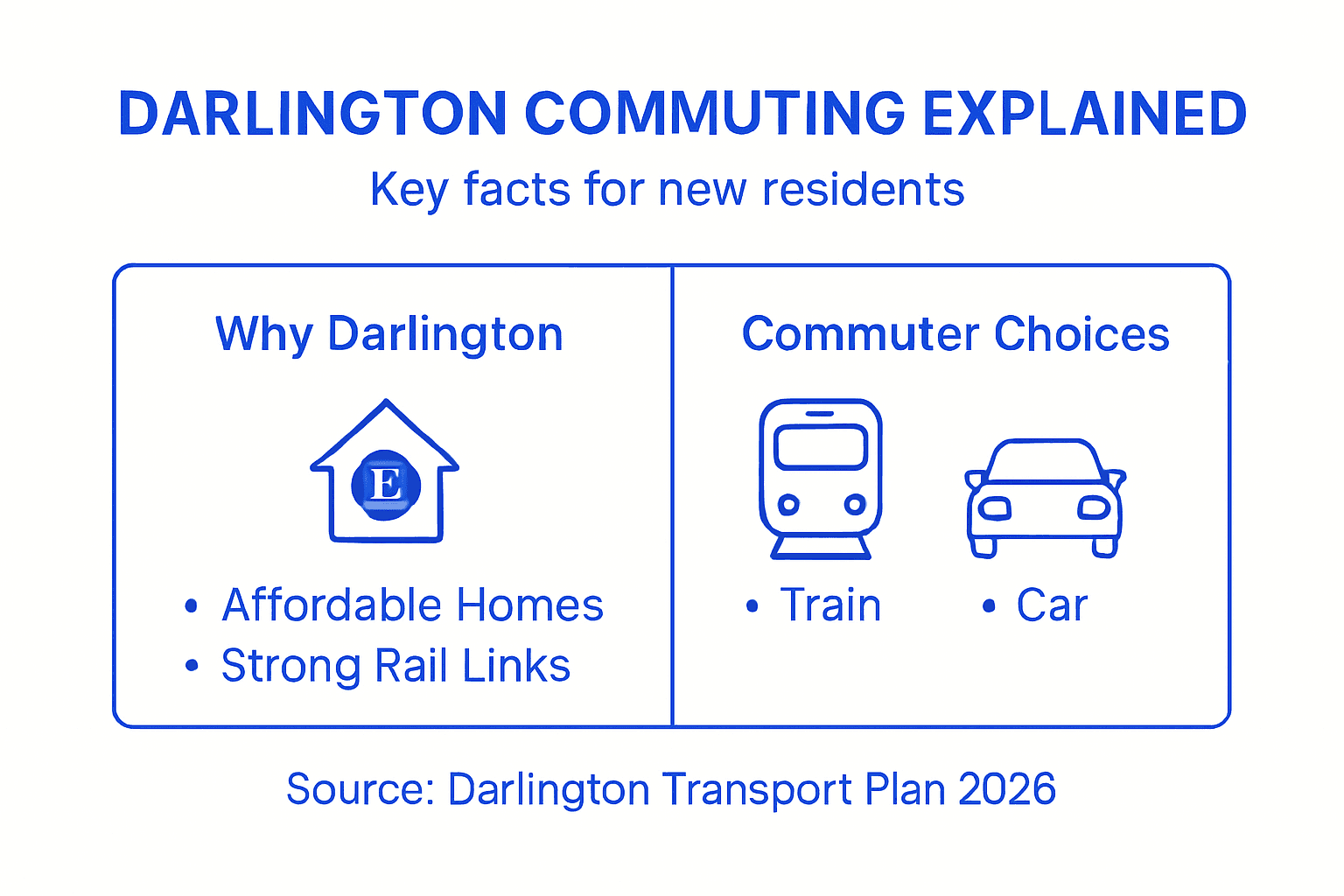
Commuting from Darlington means using the town as your residential base whilst travelling to work elsewhere in the UK. It’s a growing trend for professionals who want affordable housing, strong community connections, and modern amenities without sacrificing access to major employment hubs. Darlington sits strategically on the East Coast Main Line, making it possible to reach cities like London, Manchester, and Edinburgh within reasonable timeframes.
At its core, commuting from Darlington works because the town offers a compelling mix of factors. Property prices remain considerably lower than comparable areas in the South East, yet the town boasts excellent rail connectivity that connects you directly to major employment centres. You get solid schools, green spaces, and a genuine sense of community that larger cities often lack.
The town serves three distinct commuting patterns. Daily commuters travel to nearby Newcastle, Leeds, or Middlesbrough for work. Hybrid workers use Darlington as a base, commuting to offices occasionally whilst maintaining flexible home working arrangements. Long distance commuters catch early trains to London or other major cities, making this feasible through modern rail infrastructure and digital connectivity supporting remote work flexibility.
Understanding commuting from Darlington also means recognising the broader transport context. The Darlington Transport Plan shapes future developments, promoting sustainable travel options whilst supporting economic growth and community connection. Road access to major motorways complements rail options, giving you flexibility in how you travel.
When you’re relocating to Darlington as a commuter, the town’s appeal lies in balancing lifestyle with practicality. You gain affordable housing, strong local amenities, and genuine community roots. At the same time, you maintain seamless connections to employment opportunities across the broader UK region.
Pro tip: Before moving, test your commute route during peak hours using multiple transport methods to confirm journey times match your expectations and budget for season tickets or petrol costs accordingly.
Transport Modes and Major Routes Available
Darlington’s transport network gives you genuine choice in how you reach work each day. The town sits at a crossroads of multiple transport modes, meaning you’re not locked into one option. Whether you prefer rail, road, bus, or active travel, the infrastructure supports real flexibility for commuters.
Rail remains the backbone of commuting from Darlington. The East Coast Main Line provides direct services to London, Edinburgh, Leeds, and Manchester with journey times around 2.5 hours to London. Trains run throughout the day, making both daily commuting and occasional office visits manageable. Off-peak fares can significantly reduce your transport costs if your employer offers flexible working patterns.
Road connections complement the rail network effectively. Darlington sits at junctions 58 and 59 of the A1(M), giving you rapid access to major motorway corridors. The A66 and A19 provide east-west routes, connecting you to surrounding regions. This motorway access matters if you’re driving to nearby Newcastle, Middlesbrough, or Leeds for work.

Local bus services fill the gaps for shorter journeys within the region. They connect Darlington to smaller surrounding towns and villages, useful if your workplace sits outside the main rail corridor. Bus travel costs less than rail for many local routes and works well for hybrid workers making occasional office trips.
Active travel is gaining ground too. Plans are underway to expand walking, cycling, and wheeling routes throughout the town centre, with new crossings and shared paths improving safety and connectivity. If you work locally, cycling becomes genuinely practical. Durham Tees Valley Airport, whilst small, offers occasional flight connections for longer commutes.
Multimodal commuting works best here. You might cycle to the station on most days, take the train during bad weather, and drive when you need flexibility. Test different combinations before committing to a home purchase.
Pro tip: Download Traveline and journey planner apps for real-time journey planning, then purchase season tickets once you’ve confirmed your regular commute pattern saves you money over pay-as-you-go fares.
Typical Commute Costs and Journey Times
Understanding what you’ll actually spend on commuting is crucial before moving to Darlington. The costs vary dramatically depending on your chosen transport mode and destination, so it’s worth calculating your specific situation rather than making assumptions.
Rail commuting to London offers surprisingly competitive economics. Two direct trains per hour reach London in under 2.5 hours, beating journey times from Durham and Newcastle. Annual season tickets from Darlington to London typically cost between £3,000 and £4,500 depending on the time period and railcard discounts. Compare this to driving, which takes roughly 4.5 hours and consumes significantly more fuel. For frequent commuters, the maths heavily favour rail.
Local commutes cost considerably less. Travelling to Newcastle or Middlesbrough by train runs £1,500 to £2,200 annually with season tickets. Bus fares for shorter local journeys sit around £50 to £100 monthly depending on distance. Cycling costs virtually nothing beyond the initial bike purchase and maintenance.
Car commuting presents hidden expenses. Petrol, maintenance, insurance, and potential parking charges accumulate quickly. Road travel to London specifically takes 4.5 hours, making it impractical for daily commuting unless you’re splitting the week with home working.
Hybrid working changes the equation entirely. If you’re commuting just two or three days weekly rather than five, your annual transport costs drop by 40 to 60 percent. This is why many professionals relocate from London, Leeds, and Manchester specifically because hybrid patterns reduce overall commuting expenses whilst allowing relocation to cheaper housing markets.
Park and ride facilities deserve consideration too. Using local car parks near train stations costs less than driving into city centres and paying premium parking fees. This combination approach works well for commuters who prefer flexibility without pure car dependency.
Here is a summary comparing major commuting options from Darlington:
| Mode of Transport | Typical Annual Cost | Usual Journey Time | Ideal For |
|---|---|---|---|
| Rail (London) | £3,000–£4,500 | Under 2.5 hours | Long-distance commuters |
| Rail (Newcastle/Middlesbrough) | £1,500–£2,200 | 30–60 minutes | Daily local commuters |
| Bus (local routes) | £600–£1,200 | 30–70 minutes | Regional/local commutes |
| Car (e.g., to London) | £5,000+ (inc. fuel/parking) | Around 4.5 hours | Occasional, flexible working |
| Cycling | Minimal (upkeep only) | 10–40 minutes | Local active travel |
Pro tip: Calculate your monthly commute cost by testing your actual journey for a full week, including peak and off-peak fares, then multiply by 50 to establish your annual budget before accepting a relocation.
Common Challenges and Regional Trends in 2026
Darlington’s commuting landscape is evolving rapidly, bringing both opportunities and real challenges for relocating homeowners. Understanding what’s changing helps you make informed decisions about timing your move and choosing where to live within the town.
Sustainability pressures are reshaping how people commute. The region is pushing hard toward reducing carbon emissions and shifting away from car dependency. Active travel infrastructure improvements including walking and cycling routes are expanding, which is positive for local commuters but signals that driving may face additional costs or restrictions in future years. Public support for these changes is strong, though concerns about development impacts remain.
Road safety and infrastructure quality present ongoing concerns. The Darlington Transport Plan identifies maintenance and safety improvements as key priorities for meeting 2026 targets. This means some routes may experience temporary disruption during upgrades. Plan your commute with flexibility for occasional delays during construction periods.
Funding for bus services comes with performance conditions attached. Regional grants support enhanced services, but councils must meet strict accountability targets. This means bus frequency and reliability should improve, but budget pressures could affect smaller routes serving outlying areas. If your workplace sits on a main corridor, you’ll benefit. Remote locations may see less frequent service.
Public satisfaction with transport services remains below desired levels. This gap between what exists and what people want suggests ongoing changes ahead. New services, route adjustments, and fare structures may shift as feedback drives improvements. Don’t assume current pricing or timetables will remain static through 2026 and beyond.
The trend is clear though: Darlington is investing in becoming a more sustainable, connected commuter town. For homeowners willing to use rail or active travel, this trend works in your favour. For those committed to driving, costs and convenience may gradually decline.
The table below highlights common challenges and strategies for commuters in Darlington 2026:
| Challenge | Impact on Commuters | Suggested Response |
|---|---|---|
| Infrastructure upgrades | Potential route disruptions | Allow extra journey time |
| Sustainability policies | Possible car restrictions | Embrace rail/active travel |
| Variable bus reliability | Risk of service changes | Check routes before moving |
| Changing fare structures | Budget unpredictability | Lock in season tickets early |
Pro tip: Before purchasing a property, check the specific active travel routes planned for your neighbourhood and confirm how any ongoing infrastructure projects might affect your commute during the next two years.
Relocation Advice for New Darlington Residents
Moving to Darlington as a commuter requires thinking beyond the physical house move itself. You’re not just relocating property; you’re integrating into a community with specific transport patterns, local rhythms, and evolving infrastructure. Success depends on planning ahead on these fronts.
Start by testing your actual commute before you complete your purchase. Don’t rely on online journey planners alone. Travel during peak hours when you’ll genuinely be commuting, experiencing real crowding, delays, and actual journey times. Visit your future workplace from your prospective neighbourhood on a typical working day. This single step prevents costly mistakes that arise when theoretical commute times meet real world conditions.
Engage with local professionals who understand Darlington’s specifics. Estate agents familiar with commuter patterns can recommend neighbourhoods that genuinely suit your transport needs. They know which areas have reliable bus connections, which stations see less crowding, and where digital infrastructure actually works reliably for remote working days. This local knowledge saves months of trial and error.
Understand that Darlington’s appeal for commuters stems from affordable housing, strong connectivity, and robust community amenities. However, your specific neighbourhood choice matters enormously. Living near the station differs vastly from living in outlying areas in terms of transport accessibility. Calculate whether you’ll walk to the station, use buses, or drive to park and ride facilities. This determines both convenience and actual costs.
Integrate yourself into Darlington’s transport culture early. The council actively encourages new residents to use public transport and active travel options as part of broader sustainability goals. Understanding cycling routes, bus corridors, and upcoming infrastructure changes positions you to make better daily choices. Awareness of station upgrades and new cycling facilities coming through 2026 helps you plan for temporary disruption.
Finally, connect with your moving company early. Experienced removals firms understand Darlington’s access roads, parking constraints near properties, and logistical realities that generic movers miss. They can advise on timing your move to avoid transport disruptions and can often coordinate with council roadworks schedules.
Pro tip: Arrange your first few months of commuting using flexibility like annual leave or working from home on days when you’re still learning routes, then establish your permanent pattern once you’ve lived the commute rather than theorising about it.
Seamless Moves for Darlington Commuters Start Here
Relocating to Darlington to enjoy its excellent transport links and affordable housing comes with unique challenges, especially around managing your commute during the move. Whether you are balancing hybrid work patterns or planning your daily rail journeys, the stress of moving can impact your transition. At Schott Removals, we understand the importance of reliable, professional support to make your relocation as smooth as your commute. From local moves to national house removals, our family-run service brings over 30 years of expertise directly to Darlington commuters.
Experience the peace of mind that comes from working with a team who knows Darlington and its surroundings intimately. Check out our clients’ real stories in the Testimonial Showcase Archives – Schott Removals for proof of our commitment to customer satisfaction. Ready for a stress-free move that lets you focus on planning your perfect commute? Visit Schott Removals today and discover how our tailored services help you settle quickly into your new home. For more insights on the moving process, explore our Uncategorised Archives – Schott Removals and start your journey with confidence.
Frequently Asked Questions
What are the main commuting options available from Darlington?
Darlington offers a range of commuting options including rail services to major cities, road access to the A1(M), local bus services for shorter journeys, and active travel routes for cycling and walking.
How much does it typically cost to commute from Darlington to London by train?
Annual season tickets from Darlington to London generally cost between £3,000 and £4,500, which can be more economical than driving when considering fuel and parking costs.
What are some tips for new residents commuting from Darlington?
New residents should test their actual commute during peak hours before moving, engage with local estate agents for transport advice, and be mindful of changing infrastructure and services that may affect their commuting patterns.
How does hybrid working impact commuting costs for residents of Darlington?
Hybrid working can significantly reduce transport costs—commuters who only travel to work two or three times a week can save 40 to 60 percent on their commuting expenses compared to full-time travel.
Recommended
- Moving to Darlington Tips for a Smooth 2025 Relocation | Schott Removals
- What to Know Moving to Darlington in 2025: Tips for a Smooth Relocation | Schott Removals
- 7 Best Neighbourhoods in Darlington for Easy Relocation – Schott Removals
- 7 Best Neighbourhoods in Darlington for a Smooth Move – Schott Removals
- What Is Long-Distance Taxi? How It Transforms Airport Travel