
Office relocation is a major endeavour for any british business, and one small mistake can lead to weeks of disruption or thousands of pounds in hidden costs. Many office managers in places like County Durham and Darlington underestimate the complexity involved in moving an entire workspace. Learning what truly counts as an office moving mistake helps you avoid costly pitfalls and protect your business during this challenging transition.
Table of Contents
- What Counts As An Office Moving Mistake
- Types Of Mistakes And Their Causes
- Key Steps For Minimising Disruption
- Legal And Data Security Pitfalls
- Real Costs Of Moving Errors And Delays
Key Takeaways
| Point | Details |
|---|---|
| Importance of Planning | Comprehensive planning is essential to avoid logistical and strategic errors during an office move. Engage stakeholders and develop a detailed relocation strategy ahead of time. |
| Backup and Security | Ensure data protection and backup strategies are firmly in place before the move to prevent data loss and maintain compliance with regulations. |
| Communication is Key | Maintain transparent communication with staff, clients, and partners throughout the relocation process to manage expectations and reduce uncertainties. |
| Financial Preparedness | Establish a financial contingency plan, allocating at least 20% of the moving budget for unexpected issues to safeguard against potential financial strain. |
What Counts As An Office Moving Mistake
Office moving mistakes are more than simple logistical errors – they represent potential business disruptions that can cost significant time, money, and operational efficiency. A mistake during relocation isn’t just about misplaced furniture or delayed transportation; it involves complex challenges that can dramatically impact business continuity. Understanding these mistakes requires recognising their subtle yet profound consequences across different operational domains.
Some critical office moving mistakes include inadequate planning, poor inventory management, and insufficient communication. When businesses fail to create a comprehensive relocation strategy, they expose themselves to unnecessary risks. This might involve underestimating the time required for moving, not properly cataloguing equipment, or neglecting to communicate transition details with staff and stakeholders. Small oversights can cascade into significant operational challenges, potentially creating weeks of disruption for companies in regions like County Durham and the North East.
Particularly for businesses in smaller cities like Darlington, moving mistakes can have outsized consequences. These might include failing to backup critical digital infrastructure, not arranging appropriate insurance coverage, or miscalculating the physical space requirements in the new office. Professional movers understand that each piece of equipment, each server rack, and every workstation represents more than just an object – it represents a critical component of business functionality.
Pro tip: Create a detailed, timeline-based moving checklist at least three months before your planned office relocation to mitigate potential operational disruptions and ensure a smooth transition.
Types Of Mistakes And Their Causes
Office relocations present a complex landscape of potential mistakes that can significantly impact business operations. These mistakes are typically categorised into strategic, logistical, financial, and technological domains, each presenting unique challenges for organisations attempting to transition their workspace. Understanding these categories helps businesses develop more comprehensive and resilient moving strategies.
Strategic mistakes often stem from inadequate office relocation planning, which can derail entire moving processes. These might include failing to develop a detailed transition timeline, not identifying potential risks, or neglecting to communicate effectively with key stakeholders. For businesses in smaller regions like County Durham and Darlington, such oversights can be particularly damaging, potentially causing extended operational disruptions that small enterprises cannot easily absorb.
Logistical and technological mistakes represent another critical category of office moving errors. These frequently involve improper equipment handling, insufficient data backup protocols, network infrastructure challenges, and inadequate inventory management. Professional movers recognise that each piece of technological infrastructure requires meticulous planning – from server migrations to workstation relocations. Businesses must consider not just physical transportation, but also the complex digital ecosystem that supports their daily operations.
Financial mistakes during office moves can emerge from unexpected budgetary overruns, underestimating transition costs, or failing to account for potential productivity losses. These errors can create significant strain on an organisation’s financial resources, potentially compromising both short-term operational capabilities and long-term strategic planning.
Below is a summary of common office moving mistakes and their wider business impact:
| Mistake Type | Description | Potential Business Impact |
|---|---|---|
| Strategic | Poor planning or unclear objectives | Prolonged downtime, stakeholder delays |
| Logistical | Mishandled assets or poor inventory | Equipment loss, workflow disruption |
| Technological | Insufficient IT preparation | Data loss, extended service outages |
| Financial | Underestimated costs or overruns | Unplanned expenditure, reduced growth |
Pro tip: Develop a comprehensive risk assessment matrix that quantifies potential financial and operational impacts before initiating your office relocation process.
Key Steps For Minimising Disruption
Minimising disruption during an office move requires a strategic and meticulously planned approach that addresses multiple operational dimensions simultaneously. Successful businesses understand that relocation is more than physical transportation – it’s about maintaining continuous productivity while transitioning complex workplace ecosystems. This demands comprehensive planning that anticipates potential challenges and develops robust mitigation strategies.
The first critical step involves comprehensive moving preparation, which includes creating detailed transition timelines and identifying potential operational risks. For businesses in regions like County Durham and Darlington, this means developing phased moving strategies that allow core business functions to remain operational. Key considerations include mapping out exact equipment movement schedules, ensuring minimal downtime, and establishing clear communication protocols with all stakeholders.

Technological infrastructure represents another pivotal area requiring careful management during office relocations. Businesses must develop comprehensive IT migration plans that protect critical digital assets, ensure uninterrupted network connectivity, and maintain data integrity throughout the transition. This involves coordinating with internet service providers, backing up essential digital systems, and creating contingency plans for potential technological disruptions. Professional movers recognise that technological preparedness can significantly reduce potential operational setbacks.
Communication emerges as a fundamental element in minimising relocation disruptions. This requires transparent, consistent messaging with employees, clients, and external partners about moving timelines, potential service interruptions, and new operational parameters. Effective communication helps manage expectations, reduces uncertainty, and maintains organisational momentum during what can be a challenging transitional period.
Pro tip: Create a dedicated internal communication channel specifically for managing and tracking office move-related updates to ensure all team members remain informed and aligned.
Legal And Data Security Pitfalls
Office relocations present a complex landscape of legal and data security challenges that can expose businesses to significant risks if not carefully managed. The intricate web of regulatory requirements, particularly around data protection and employee rights, demands meticulous attention and strategic planning. Companies must approach these challenges with a comprehensive understanding of their legal obligations and potential vulnerabilities.
Data protection emerges as a critical concern during office moves, with GDPR compliance representing a paramount consideration for businesses in the United Kingdom. This involves ensuring that all sensitive information remains secure during transportation, with rigorous protocols for handling physical and digital assets. For businesses in regions like County Durham and Darlington, this means developing robust data migration strategies that prevent potential breaches, implementing secure chain of custody processes, and maintaining comprehensive documentation of all data handling procedures.
Employee rights constitute another critical legal dimension of office relocations. Businesses must navigate complex contractual obligations, considering potential impacts on workforce arrangements, workplace agreements, and individual employment contracts. This involves transparent communication about relocation implications, potential changes to working conditions, and ensuring that all statutory requirements are carefully addressed. Professional legal consultation becomes essential in managing these intricate employment law considerations, helping organisations mitigate potential disputes and maintain positive employee relationships.
Health and safety regulations add another layer of complexity to office moves. Organisations must ensure that new premises meet all statutory requirements, including accessibility standards, emergency protocols, and workplace safety regulations. This involves comprehensive risk assessments, detailed documentation, and proactive planning to demonstrate compliance with current legal frameworks. Professional movers with expertise in commercial relocations can provide invaluable guidance in navigating these complex regulatory landscapes.
Pro tip: Engage a specialised legal consultant who understands data protection and employment law to conduct a comprehensive compliance review before initiating your office relocation.
Real Costs Of Moving Errors And Delays
Office relocations can quickly transform from strategic transitions into financially devastating events when errors and delays accumulate. The true impact of moving mistakes extends far beyond immediate transportation expenses, encompassing complex financial and operational consequences that can potentially cripple business performance. Understanding these multifaceted costs requires a comprehensive examination of how seemingly minor disruptions can escalate into significant organisational challenges.
Productivity losses represent the most immediate and quantifiable financial impact of relocation errors. When moving costs compound, businesses can experience substantial revenue interruptions. A delayed move might result in days or even weeks of reduced operational capacity, with employees unable to work effectively, critical systems offline, and customer services compromised. For smaller enterprises in regions like County Durham and Darlington, these disruptions can be particularly devastating, potentially representing thousands of pounds in lost revenue and opportunity costs.
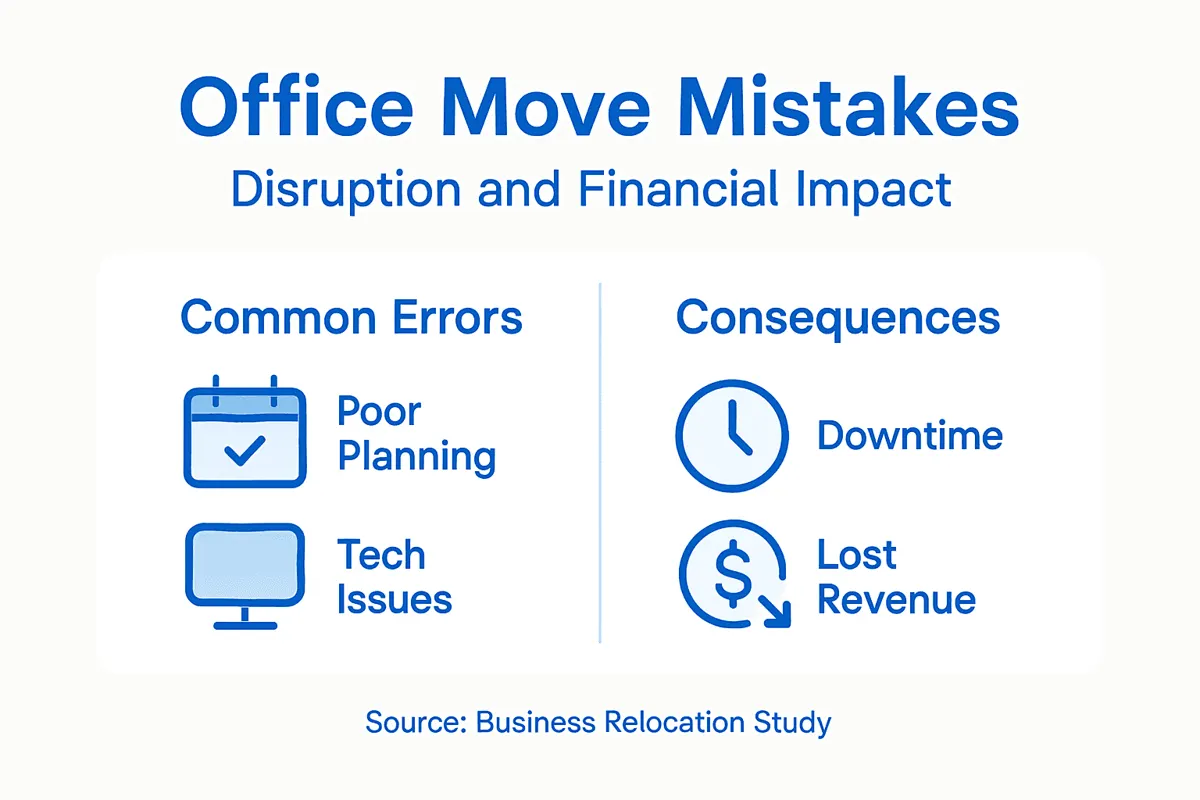
Indirect financial consequences emerge through damaged professional relationships and reputational harm. Clients and stakeholders expect seamless operational continuity, and any significant moving-related disruption can erode trust and potentially trigger contract losses. Technology infrastructure failures, communication breakdowns, and extended downtime can signal organisational inefficiency, potentially causing long-term business relationship damage that far exceeds the immediate moving expenses. Professional movers understand that each hour of operational interruption carries exponential financial risks.
Additional hidden costs manifest through increased labour expenses, emergency remediation efforts, and potential contractual penalties. Businesses might need to employ additional temporary staff, pay overtime for catch-up work, or invest in rapid technology redeployment. These unexpected expenditures can rapidly transform a seemingly controlled moving process into a financial nightmare, consuming resources that could have been strategically invested in business growth and development.
Here is a comparison of direct versus indirect costs caused by office moving mistakes:
| Cost Type | Examples | Long-Term Consequences |
|---|---|---|
| Direct | Downtime, temporary staff fees | Immediate financial strain |
| Indirect | Lost clients, reputational damage | Lost contracts, long-term losses |
Pro tip: Develop a comprehensive financial contingency plan that allocates at least 20% of your moving budget to unexpected delays and potential operational disruptions.
Avoid Costly Office Moving Mistakes with Expert Support
Moving your business office comes with many challenges such as poor planning, technological disruptions, and unexpected financial costs as highlighted in the article. These common pitfalls cause downtime, equipment loss, and damaged client relationships that can negatively impact your productivity and growth. Understanding these risks is the first step towards a smooth relocation.
At Schott Removals, a trusted family-run company based in Darlington with over 30 years of experience, we specialise in tailored commercial moving solutions designed to prevent these very mistakes. Our comprehensive approach ensures clear communication, careful asset handling and expert logistical support throughout your move. Discover how our professionalism and reliability have earned the trust of clients by reading real success stories in our Testimonials.
Get peace of mind for your next office move and avoid costly delays. Contact us today via our main website to benefit from our trusted services and access useful moving resources in our Uncategorised Archives. Take the first step towards a seamless relocation with Schott Removals now.
Frequently Asked Questions
What are common office moving mistakes that can disrupt business?
Inadequate planning, poor inventory management, insufficient communication, and neglecting legal and data security aspects are common mistakes that can severely disrupt business operations during an office move.
How can poor planning affect an office relocation?
Poor planning can lead to prolonged downtimes, stakeholder delays, and a lack of clear objectives, which can cause significant operational disruptions and impact productivity.
What steps can be taken to mitigate disruption during an office move?
To minimise disruption, businesses should create a detailed transition timeline, develop IT migration plans, and maintain clear communication with all stakeholders involved in the relocation process.
Why is data protection important during an office move?
Data protection is crucial to ensure compliance with regulations like GDPR and to prevent potential data breaches. Maintaining the security of sensitive information during the moving process is vital for protecting the business and its stakeholders.
Recommended
- The Complete Office Removals Process Guide for 2025 | Schott Removals
- Office Furniture Dismantling Guide 2025: Trusted UK Solutions | Schott Removals
- Commercial Relocation Checklist 2025: Essential Steps for UK Moves | Schott Removals
- Commercial Removals Process Guide 2025 for North East Moves | Schott Removals
- Scheduling Error Examples: Complete Breakdown Guide – WhenNOT Blog
- Why Invest In Modern Intranet For Enterprises
- The 5 pitfalls in internal communication (and how to avoid them)