
Over half of all british families find international relocation emotionally and financially challenging, with hidden expenses and bureaucracy often taking them by surprise. Moving across borders involves more than just packing your bags. It means navigating new cultures, legal requirements, and adapting to unfamiliar environments. This guide outlines the real challenges british individuals, families, and businesses face during international moves and offers practical insights to help you prepare for a smoother transition.
Table of Contents
- Defining International Relocation Challenges
- Types of Relocation: Family, Business, Personal
- Legal Requirements and Customs Regulations
- Cultural Differences and Language Barriers
- Financial Costs and Planning Pitfalls
- Emotional and Family Considerations
Key Takeaways
| Point | Details |
|---|---|
| Comprehensive Preparation | Initiate relocation planning at least six months in advance to ensure smooth navigation of administrative tasks and milestones. |
| Understanding Legal Requirements | Familiarise yourself with legal frameworks and customs regulations to avoid complications during the moving process. |
| Cultural and Emotional Factors | Invest in language and cultural training to facilitate smoother social integration and emotional adaptation. |
| Financial Strategy | Develop a detailed budget including potential hidden costs, allowing for contingencies to manage financial impacts effectively. |
Defining International Relocation Challenges
International relocation represents a complex process involving multiple strategic and personal challenges that extend far beyond simply moving physical belongings from one geographical location to another. For individuals and families contemplating a significant transition, understanding these nuanced challenges becomes paramount to successful navigation.
Students and professionals undertaking international moves encounter multifaceted obstacles ranging from administrative complexities to deeply personal adaptation struggles. International students in the UK face unique transition challenges that illuminate the broader relocation experience. These challenges often include cultural adjustment, bureaucratic navigation, and emotional resilience required to establish oneself in an unfamiliar environment.
The spectrum of international relocation challenges encompasses several critical dimensions. These include legal documentation requirements, visa processing, understanding local employment regulations, managing financial transfers, securing appropriate housing, and navigating social integration. Individuals must simultaneously manage practical logistics while preparing themselves psychologically for significant life changes. Each relocation scenario presents unique complexities, whether moving for professional opportunities, educational pursuits, or personal reasons.
Pro Tip: Comprehensive Preparation Strategy: Begin your international relocation planning at least six months in advance, meticulously documenting every administrative requirement and creating a structured timeline for each critical milestone in your transition process.
Types of Relocation: Family, Business, Personal
Relocation encompasses diverse scenarios, each presenting unique challenges and considerations that demand tailored strategic approaches. From individual professional transitions to comprehensive family migrations, understanding the distinct characteristics of different relocation types is crucial for successful movement and adaptation.
Professional relocations represent a significant category with complex dynamics. International faculty members’ relocation decisions are shaped by intricate professional and personal considerations, balancing career opportunities with personal values. Professionals must evaluate factors like job market conditions, potential salary increments, career progression, and geographical implications before committing to a move.
Personal and family relocations introduce additional layers of complexity beyond professional considerations. Family moves require comprehensive planning that encompasses educational opportunities for children, healthcare accessibility, social integration, and emotional preparedness. The migration patterns demonstrate that mobility is not merely a logistical challenge but a deeply personal journey involving psychological and social adaptation. Scientific mobility research suggests that age and distance significantly influence relocation decisions, highlighting the nuanced nature of human movement.
Business relocations demand meticulous strategic planning, involving considerations of operational continuity, workforce management, infrastructure transfer, and potential economic implications. These moves often require coordinated efforts across multiple departments, ensuring minimal disruption to ongoing business activities while facilitating smooth geographical transition.
Pro Tip: Comprehensive Relocation Assessment: Conduct a holistic audit of personal, professional, and familial needs at least three months before planned relocation, creating a detailed matrix that objectively evaluates potential benefits and challenges of the proposed move.
The following table provides a concise comparison of different international relocation types and their primary considerations:
| Relocation Type | Main Challenges | Key Stakeholders |
|---|---|---|
| Professional | Job market adaptation, networking | Employee, employer, local authorities |
| Family | Schooling, healthcare, integration | All family members, schools, medical providers |
| Business | Operational continuity, compliance | Executive team, staff, regulators |
Legal Requirements and Customs Regulations
International relocation demands intricate understanding of complex legal frameworks and customs regulations, which vary significantly across different jurisdictions and can substantially impact the entire moving process. Navigating these regulatory landscapes requires meticulous preparation and comprehensive knowledge of official requirements.
The UK Transfer of Residence (ToR) scheme provides crucial provisions for individuals relocating their primary residence, offering a mechanism to import personal belongings without incurring additional customs duty or VAT. This regulatory framework represents a critical consideration for individuals planning comprehensive international moves, presenting specific conditions that must be carefully evaluated and understood prior to relocation.
Customs declarations represent a fundamental aspect of international movement, requiring precise documentation and adherence to governmental regulations. Recent Customs Miscellaneous Amendments Regulations aim to simplify and clarify customs rules, providing clearer guidelines for individuals navigating complex international relocation processes. These regulations encompass detailed declaration requirements, specifying exact protocols for reporting imported goods and ensuring compliance with international agreements.
Key legal considerations for international relocation include comprehensive documentation management, understanding specific visa requirements, comprehending tax implications, and maintaining precise records of personal and professional assets being transferred. Each jurisdiction presents unique regulatory challenges, necessitating thorough research and potentially professional legal consultation to ensure full compliance throughout the relocation process.
Pro Tip: Documentation Preparation Strategy: Compile a comprehensive digital and physical portfolio of all essential legal documents at least two months before relocation, including passport, visa paperwork, professional certifications, and detailed inventory of belongings being transported internationally.
Cultural Differences and Language Barriers
Cultural adaptation represents one of the most complex and challenging aspects of international relocation, requiring individuals to navigate intricate social landscapes while managing psychological and communication transitions. The process extends far beyond simple geographical movement, demanding profound emotional intelligence and interpersonal flexibility.

International students experience multiple interconnected cultural contexts during relocation, demonstrating the multifaceted nature of cultural integration. These contexts include not just the host nation’s social environment, but also interactions within international communities and specific professional or academic disciplines. Each layer presents unique communication challenges that require nuanced understanding and strategic navigation.
Language barriers emerge as a critical dimension of cultural adaptation, affecting professional opportunities, social interactions, and personal well-being. Effective communication transcends mere linguistic translation, involving complex understanding of cultural nuances, non-verbal communication patterns, and contextual interpretations. Professionals and individuals relocating must develop robust communication strategies that encompass both verbal and non-verbal communication techniques, recognising that language proficiency involves more than grammatical accuracy.
Successful cultural integration requires a combination of emotional resilience, open-mindedness, and proactive learning. This involves developing cultural competence through active listening, observing social norms, demonstrating respect for local customs, and maintaining a curious and humble approach to new social environments. Understanding that cultural differences are not obstacles but opportunities for personal growth becomes crucial in navigating international transitions.
Pro Tip: Cultural Learning Strategy: Invest in language classes and cultural workshops before relocation, focusing not just on linguistic skills but on understanding social etiquette, communication styles, and unspoken cultural norms of your destination.
Financial Costs and Planning Pitfalls
International relocation represents a complex financial undertaking that demands meticulous strategic planning and comprehensive budget management. The financial landscape of moving involves numerous interconnected expenses that extend far beyond simple transportation costs, requiring individuals and businesses to develop sophisticated financial strategies.
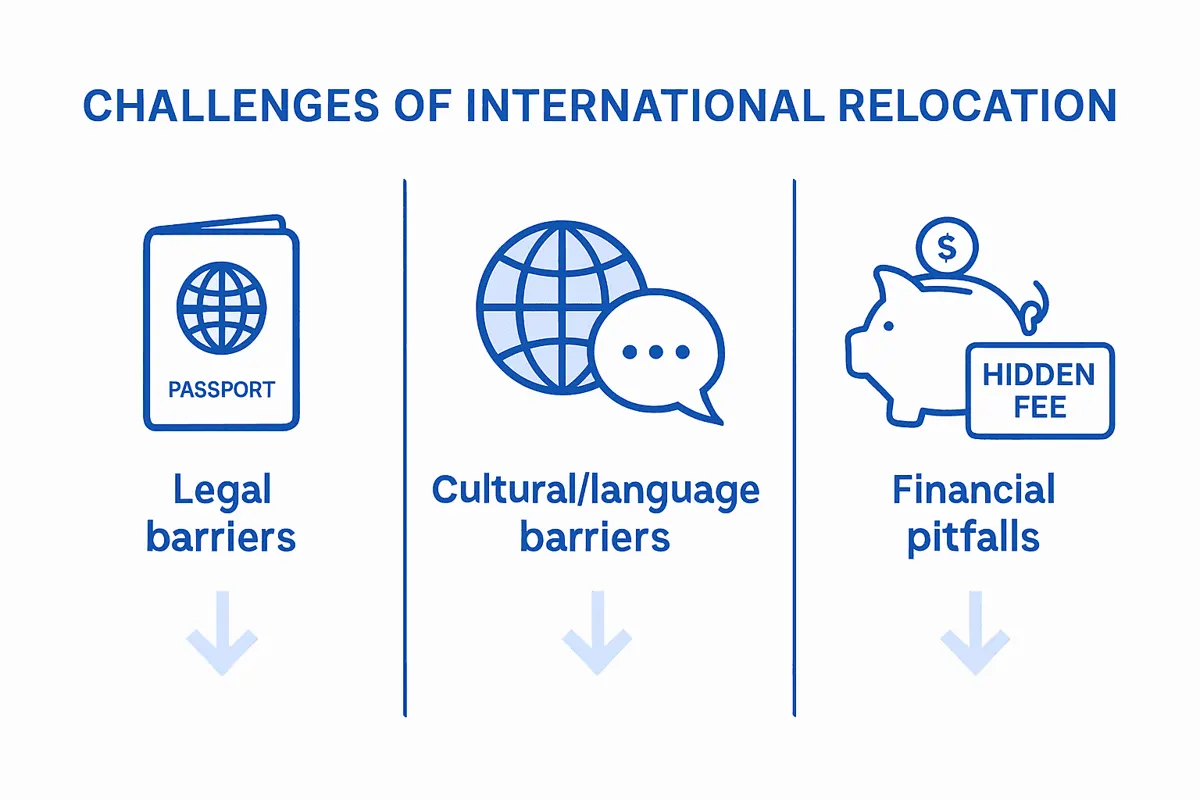
Businesses in the UK encounter significant financial challenges when recruiting international staff, particularly related to visa processing and intricate immigration procedures. These administrative and financial barriers can create substantial obstacles, especially for smaller organisations with limited resources. The cumulative expenses associated with international recruitment and relocation can quickly escalate, necessitating careful financial forecasting and budgeting.
Hidden expenses represent a critical consideration in international relocation planning. Beyond obvious costs like transportation and shipping, individuals must account for potential taxation implications, temporary accommodation expenses, potential salary adjustments, insurance coverage, and unexpected administrative fees. The UK’s Transfer of Residence scheme offers potential financial relief, allowing individuals to avoid customs duties and VAT on personal belongings, but requires precise documentation and adherence to specific qualifying conditions.
Successful financial planning for international relocation demands a multi-dimensional approach that incorporates detailed research, comprehensive risk assessment, and flexible financial provisioning. This involves creating robust contingency funds, understanding potential currency exchange fluctuations, evaluating long-term financial implications, and maintaining detailed financial records throughout the transition process.
Pro Tip: Financial Preparation Strategy: Create a comprehensive spreadsheet tracking all potential relocation expenses at least four months before moving, allocating a 15-20% buffer for unexpected costs and maintaining detailed documentation of all financial transactions.
This table summarises common hidden and unexpected costs associated with international relocation, helping readers to anticipate potential financial pitfalls:
| Expense Category | Potential Hidden Costs | Example Mitigation Strategy |
|---|---|---|
| Accommodation | Temporary housing, deposits | Research local rental markets |
| Financial Transactions | Transfer fees, currency loss | Set up international accounts |
| Documentation | Visa, legal, admin charges | Prepare a comprehensive checklist |
Emotional and Family Considerations
International relocation transcends physical movement, representing a profound emotional journey that challenges familial dynamics, individual psychological resilience, and intricate interpersonal relationships. The transition involves navigating complex emotional landscapes that extend far beyond geographical repositioning, demanding substantial emotional intelligence and adaptive capacity.
International faculty members carefully balance professional opportunities with personal and familial considerations, recognising that relocation decisions impact not just individual career trajectories but entire family ecosystems. These decisions often involve nuanced negotiations between professional aspirations and family well-being, with potential short-term relocations creating unique psychological pressures and uncertainties.
Mobility patterns reveal profound insights into the emotional complexity of relocation. Scientific research demonstrates that personal factors such as age and distance significantly influence migration decisions, highlighting how emotional and familial considerations dynamically interact with geographical and professional constraints. Younger individuals might demonstrate greater mobility, while established families with intricate social networks may experience heightened emotional resistance to potential moves.
Successful emotional navigation during relocation requires comprehensive family preparation, open communication, and proactive psychological support strategies. This involves acknowledging individual family members’ emotional responses, creating safe spaces for expressing concerns, maintaining existing social connections while simultaneously fostering excitement about new opportunities, and developing collective resilience through shared planning and mutual support.
Pro Tip: Family Transition Strategy: Schedule weekly family discussion sessions during the relocation process, allowing each member to express their feelings, concerns, and expectations, thereby creating a collaborative and supportive transition environment.
Overcome the Complexities of International Relocation with Expert Support
International relocation involves many challenges from legal requirements and customs regulations to cultural adaptation and financial planning. If you are planning a move to or from the UK, these obstacles can feel overwhelming. Common pain points include managing visa paperwork, navigating customs rules, safeguarding your belongings, and adjusting to a new culture. Schott Removals understands these concerns and offers tailored moving and storage solutions designed to ease your transition.

Choose a trusted partner with over 30 years of experience supporting families, professionals, and businesses throughout UK, European, and international relocations. From careful packing and reliable transportation to secure storage options, our team ensures your move is handled professionally and with care. Visit our Uncategorised Archives – Schott Removals for insights and tips to help you plan effectively. Ready to make your international move stress free Take the next step now by requesting a quote or discovering more about our services at Schott Removals. Let us guide you through every stage so you can focus on your new beginning.
Frequently Asked Questions
What are the main challenges faced during international relocation?
International relocation involves challenges such as legal documentation, visa processing, cultural adaptation, financial planning, and finding suitable housing, all of which require careful planning and preparation.
How can I prepare for the cultural differences when moving internationally?
Invest in language classes and cultural workshops before your move to enhance your understanding of social etiquette and communication styles specific to the new environment.
What financial costs should I anticipate when relocating internationally?
Be aware of various costs including transportation, shipping, temporary accommodation, visa and legal charges, and hidden expenses like unexpected administrative fees. It’s wise to allocate a buffer in your budget for unforeseen expenses.
How can families better manage the emotional aspects of relocation?
Families can manage emotional challenges by scheduling regular discussions to share feelings and concerns, maintaining social connections, and creating a supportive environment that fosters open communication throughout the relocation process.