
Relocating your office can bring a wave of uncertainty, especially with the complex web of UK regulations to consider. For business owners across the North East of England, the prospect of moving premises means tackling legal, financial, and operational challenges that demand careful attention. This article breaks down the key business relocation regulations in the United Kingdom, highlighting practical steps and potential pitfalls so you can make confident, compliant decisions throughout your move.
| Point | Details |
|---|---|
| Comprehensive Regulations | The UK has intricate regulations governing business relocations, addressing legal, financial, and operational aspects. Organisations must be familiar with these to ensure compliance and smooth transitions. |
| Types of Moves | Different types of business relocations, such as full workforce moves and partial shifts, entail varying legal complexities that necessitate tailored approaches. |
| Statutory Duties | Businesses must adhere to statutory duties including tax compliance, health and safety, and planning consent during relocations to protect employee rights and ensure operational integrity. |
| Common Pitfalls | Organisations frequently face compliance challenges due to inadequate planning and communication; thorough preparation and legal consultations are essential to mitigate these risks. |
Business relocation regulations in the United Kingdom represent a complex legal framework designed to ensure smooth transitions for organisations while maintaining compliance with national standards. These regulations encompass multiple dimensions, including legal, financial, and operational considerations that businesses must carefully navigate when planning a move.
The UK Government has developed a comprehensive approach to business relocation guidelines, focusing on reducing administrative complexities and supporting corporate mobility. Regulatory reforms aim to streamline business moves by minimising bureaucratic obstacles and providing clear guidance for companies transitioning between premises. This approach balances regulatory oversight with practical support, recognising that business relocations can be intricate processes requiring strategic planning.
Companies must consider several key regulatory domains when planning a move, including property leasing agreements, health and safety compliance, employment law implications, and local planning permissions. Comprehensive legislative frameworks govern these aspects, ensuring businesses protect employee rights, maintain operational continuity, and adhere to national standards. Specific considerations include lease transfer protocols, workplace safety requirements during relocation, and potential impacts on workforce arrangements.
Pro tip: Consult with a specialised business relocation legal advisor at least three months before your planned move to ensure comprehensive regulatory compliance and minimise potential legal complications.
Business relocations in the United Kingdom are not one-size-fits-all processes, with distinct legal frameworks governing different types of corporate moves. Understanding these variations is crucial for organisations to ensure compliance and minimise potential legal complications during their transition.
Corporate relocation strategies reveal several primary categories of business moves, each with unique legal implications. These include full workforce relocations, partial functional moves, and single-site or multi-site transitions. The legal complexity increases with the scale and nature of the move, particularly when considering aspects such as employment contracts, immigration permissions, and operational continuity.
Specifically, businesses must navigate intricate legal differences depending on their relocation type. Corporate immigration regulations play a significant role in moves involving employee transfers, especially for organisations with international workforce components. Key legal considerations include maintaining employee rights, managing visa status for international staff, ensuring contractual compliance, and addressing potential tax implications of workplace relocation.
Different types of business moves require tailored legal approaches. A complete company relocation involves more complex regulatory requirements compared to relocating a single department or function. Factors such as workforce size, geographical distance, and the nature of business operations significantly influence the legal framework governing the move.

Below is a comparison of primary business relocation types and their distinct legal considerations in the UK:
| Relocation Type | Legal Complexity | Main Legal Concerns | Common Regulatory Bodies |
|---|---|---|---|
| Full Workforce Move | High | Contracts, immigration, tax compliance | Home Office, HMRC, Employment Tribunal |
| Partial Department Shift | Medium | Contractual adjustments, workforce rights | Employment Tribunal, Local Authority |
| Single-site Transition | Moderate | Lease transfer, planning consent | Local Planning Authority, Solicitors |
| Multi-site Expansion | Very High | Multiple leases, health & safety, tax | HMRC, Health & Safety Executive |
Pro tip: Engage a specialised corporate relocation legal consultant who can provide bespoke guidance specific to your organisation’s unique move characteristics and legal requirements.
Business relocations in the United Kingdom involve a complex web of statutory duties that organisations must carefully navigate to ensure legal compliance and operational integrity. These obligations extend across multiple regulatory domains, requiring businesses to maintain meticulous attention to legal requirements throughout their premises transition.
Statutory relocation expenses represent a critical area of compliance, with specific tax and National Insurance regulations governing how businesses manage financial aspects of moving. Employers must understand their reporting responsibilities, ensuring that any relocation-related payments are properly documented and taxed according to Her Majesty’s Revenue and Customs (HMRC) guidelines. These requirements include detailed record-keeping of relocation costs, employee reimbursements, and potential tax implications for both the organisation and its staff.
The comprehensive legal framework for business relocations encompasses several key statutory duties. Businesses must ensure compliance with planning regulations, which involve obtaining necessary permits and approvals for premise changes. Health and safety laws require organisations to conduct thorough risk assessments during the relocation process, protecting employee welfare and maintaining workplace standards. Additionally, employment protection regulations mandate that businesses manage staff transfers with transparency, protecting employee rights and ensuring minimal disruption to workforce arrangements.
Specific statutory obligations vary depending on the nature and scale of the business move. Large organisations face more complex compliance requirements, including detailed notification processes, potential consultation with employee representatives, and comprehensive documentation of the relocation strategy. Smaller businesses must equally demonstrate due diligence in meeting legal requirements, albeit with potentially simpler implementation processes.
The following table summarises statutory duties businesses must manage when relocating premises in the UK:
| Duty Area | Typical Requirement | Business Impact | Key Stakeholder |
|---|---|---|---|
| Tax & NI Compliance | Report relocation payments to HMRC | Affects employee benefits | HMRC |
| Health & Safety | Conduct risk assessments | Protects staff well-being | Health & Safety Executive |
| Planning Consent | Secure local authority approval | Ensures legal use of premises | Local Council |
| Employment Rights | Transparent staff consultation | Maintains morale, avoids dispute | Workforce/Trade Union |
Pro tip: Create a comprehensive compliance checklist at the outset of your relocation planning, documenting each statutory requirement and assigning specific responsibility for meeting these obligations.
Transferring business leases and securing appropriate planning consent represents a critical legal process for organisations relocating their premises in the United Kingdom. The complexity of these procedures demands meticulous attention to detail and comprehensive understanding of statutory requirements.
Comprehensive lease transfer regulations govern the intricate process of changing business premises, encompassing multiple legal considerations. Businesses must navigate complex interactions between landlords, tenants, local authorities, and planning departments. Key aspects include understanding lease assignment conditions, negotiating transfer terms, and ensuring compliance with existing contractual obligations. This process involves detailed documentation, potential financial negotiations, and securing explicit approvals from relevant stakeholders.
Planning consent emerges as another crucial component of business relocation. Local planning authorities require businesses to submit detailed applications demonstrating that proposed premises changes meet specific zoning regulations, environmental standards, and community impact assessments. These applications must comprehensively outline proposed modifications, potential infrastructure changes, and detailed justifications for the relocation. Businesses must anticipate potential challenges, preparing robust supporting documentation that addresses potential concerns from local planning committees.
The legal landscape surrounding lease transfers and planning consent varies significantly based on factors such as property type, business sector, and geographical location. Larger commercial properties often face more stringent regulatory scrutiny, requiring more extensive documentation and potentially longer approval processes. Smaller businesses might encounter relatively streamlined procedures, though they must still demonstrate full compliance with all relevant statutory requirements.
Pro tip: Engage a specialised commercial property solicitor early in your relocation planning to navigate lease transfer complexities and ensure comprehensive planning consent preparation.
Business relocations in the United Kingdom involve complex legal obligations to protect employee health, safety, and fundamental workplace rights. Employers must navigate a multifaceted landscape of statutory requirements that safeguard staff welfare throughout the entire transition process.
Employee relocation legal protections mandate comprehensive risk assessments and proactive management of potential workplace hazards during organisational moves. Businesses are legally required to conduct thorough evaluations of potential health and safety risks, ensuring minimal disruption to employee wellbeing. This includes identifying potential physical risks associated with changing premises, managing psychological impacts of workplace transitions, and maintaining clear communication channels with staff throughout the relocation process.
Statutory regulations require employers to provide detailed information and consultation regarding relocation implications. This involves transparent communication about potential changes to working conditions, geographical locations, and contractual arrangements. Relocation benefit requirements specify that employees must receive fair compensation and support during workplace transitions, including potential reimbursement for relocation expenses, protection of existing employment terms, and guarantees of continued job security.
The legal framework surrounding employee rights during business relocations is particularly stringent for organisations with significant workforce implications. Larger companies must demonstrate more extensive consultation processes, potentially involving trade union negotiations and comprehensive impact assessments. Smaller businesses, while subject to similar legal principles, may encounter relatively streamlined compliance requirements.
Pro tip: Document every stage of your relocation planning with detailed records of employee consultations, risk assessments, and communication strategies to ensure comprehensive legal compliance.
Business relocations in the United Kingdom involve intricate regulatory landscapes that can easily become minefields for unprepared organisations. Understanding the most common compliance pitfalls is crucial for ensuring smooth transitions and avoiding potentially costly legal complications.
Regulatory compliance risks emerge from multiple dimensions of business moves, with inadequate planning representing a primary challenge. Many organisations underestimate the complexity of legal requirements, failing to conduct comprehensive due diligence before initiating relocation processes. These oversights can result in significant operational disruptions, unexpected financial penalties, and potential legal disputes that could have been prevented through meticulous preparation.
Emerging regulatory changes introduce additional layers of complexity for businesses planning relocations in 2026. Key compliance challenges include navigating evolving employment law requirements, managing increased administrative burdens, and addressing new sustainability regulations. Organisations must remain particularly vigilant about changes in workplace mobility rules, immigration permissions, and contractual obligations that can significantly impact relocation strategies.
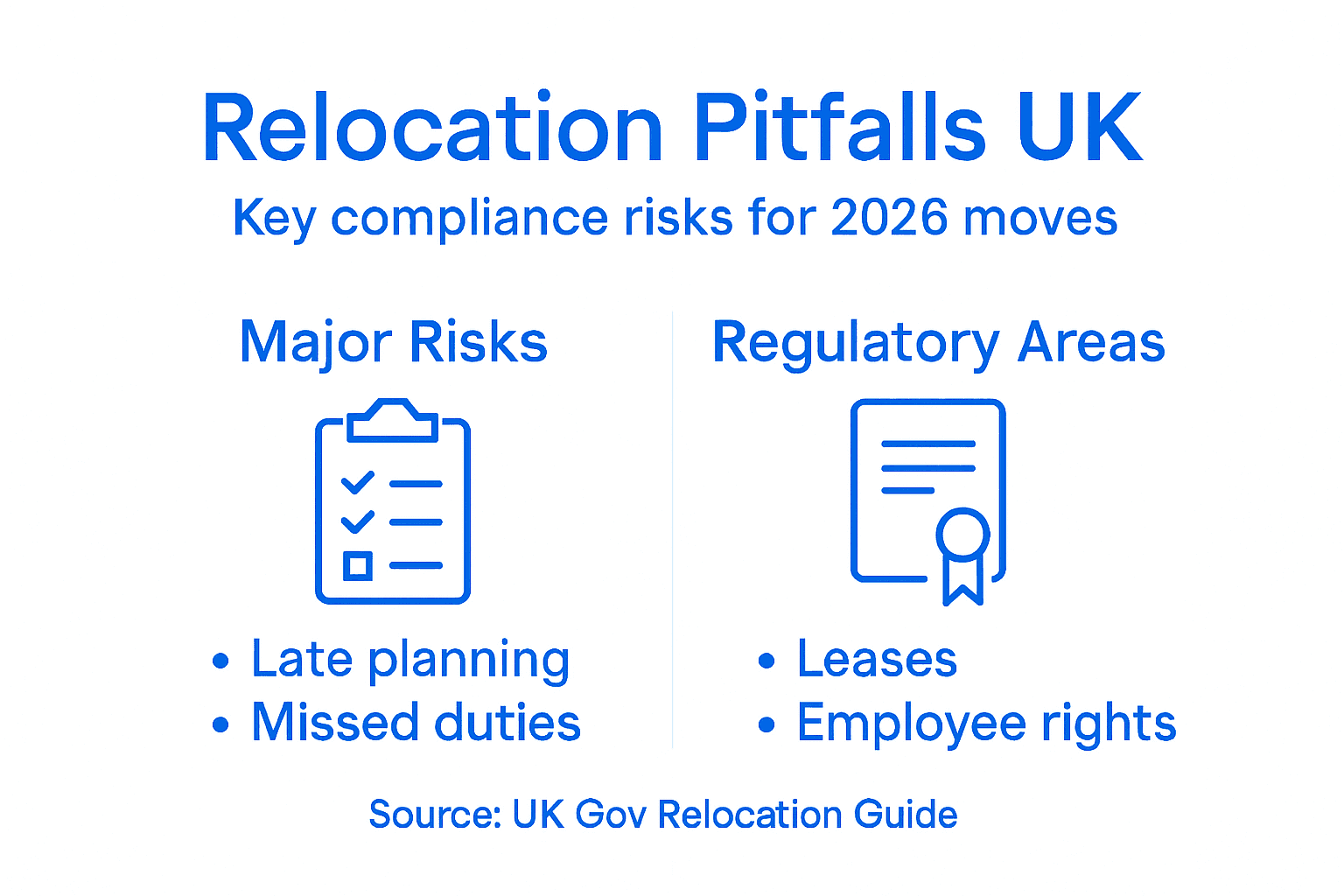
The most frequent compliance pitfalls typically involve inadequate communication, incomplete documentation, and failure to anticipate regulatory nuances. Smaller businesses often struggle with understanding the full scope of their legal obligations, while larger organisations may encounter challenges in coordinating complex multi-departmental transitions. Critical areas of potential non-compliance include improper handling of employee contracts, insufficient risk assessments, and neglecting to obtain necessary planning permissions.
Pro tip: Create a comprehensive compliance checklist at least six months before your planned relocation, involving legal experts to review every aspect of your transition strategy.
Navigating the intricate landscape of business relocation regulations in the United Kingdom demands experienced hands who understand the legal complexities around leases, employee rights, and planning consents. Whether you are facing high legal complexity or statutory duties such as health and safety compliance, Schott Removals brings over 30 years of trusted expertise to ensure your move is seamless and legally sound. Our family-run company based in Darlington specialises in tailored relocation solutions that minimise disruption and protect your business interests throughout the entire process.
Ready to overcome the challenges of your 2026 business move with confidence Trust the reliability and professionalism showcased in our Testimonials Archives. Discover how Schott Removals can guide you through every stage of your move from comprehensive planning to expert execution Visit us today at https://schottremovals.co.uk and explore insights in our Uncategorised Archives to prepare your business for a compliant and stress-free relocation.
When relocating a business in the UK, the main regulations to consider include property leasing agreements, health and safety compliance, employment law implications, and local planning permissions. Businesses must navigate these legal frameworks carefully to ensure compliance and protect employee rights.
The type of business relocation, whether it’s a full workforce move, partial department shift, single-site transition, or multi-site expansion, influences the legal complexity and requirements. Each type has distinct legal implications for contracts, immigration, tax compliance, and operational continuity.
Businesses must manage several statutory duties during relocation, including tax and National Insurance compliance, health and safety assessments, planning consent, and the protection of employee rights through transparent consultation. Comprehensive documentation and attention to these obligations are crucial.
Common pitfalls include inadequate planning, poor communication, incomplete documentation, and failure to anticipate regulatory changes. Businesses should conduct thorough due diligence, maintain clear communication, and consult with legal experts to mitigate these risks.
Unit 20, Lingfield Point
McMullen Road,
Darlington
DL1 1RW
Telephone: 01325 487091
Email: info@schottremovals.co.uk