
Nearly half of people moving household goods experience unexpected British customs delays or extra charges. Whether you are planning a permanent move or a temporary relocation, understanding customs procedures for entering the United Kingdom will help you avoid costly mistakes. This guide clarifies common challenges and highlights practical steps, ensuring your belongings reach their new British home smoothly and without surprise expenses.
| Point | Details |
|---|---|
| Understanding Customs Regulations | Familiarise yourself with UK customs procedures and documentation to ensure a smooth transition when importing personal belongings. |
| Required Documentation | Prepare a comprehensive inventory list and proof of ownership to facilitate customs clearance. |
| Tax Implications | Be aware of potential customs duties and VAT, especially for high-value items, and maintain detailed records to navigate financial obligations effectively. |
| Avoid Common Mistakes | Prevent critical errors by ensuring all documentation is complete and accurately reflects the value and nature of imported items. |
Moving household belongings across international borders requires careful navigation of complex customs regulations. When relocating to the United Kingdom, understanding the intricate process of importing personal items is crucial to ensure a smooth transition and avoid potential financial penalties. The UK customs regulations provide comprehensive guidelines for individuals planning to move their personal effects into the country.
Customs procedures involve detailed documentation and potential assessment of duties on imported household goods. Individuals moving to the UK must be prepared to provide a comprehensive inventory of their belongings, including detailed descriptions, estimated values, and proof of ownership. Certain items may be subject to import restrictions or additional taxation, making it essential to research and prepare thoroughly before shipping personal possessions. The international moving process can be complex, with varying requirements depending on the origin of your household items and your personal circumstances.
Key considerations for household moves into the UK include understanding potential VAT and customs duty implications. Most personal effects brought for permanent residence are typically exempt from import duties, but specific categories of items might incur charges. Valuable items like artwork, antiques, or high-end electronic equipment could potentially attract additional taxation. Proper documentation, including detailed inventories and proof of previous ownership, can help streamline the customs clearance process and minimise potential financial complications during your relocation.
Relocating to the United Kingdom requires meticulous preparation and understanding of specific documentation requirements for importing personal belongings. The transfer of residence process involves completing critical paperwork that ensures smooth customs clearance and potential duty exemptions. Individuals must be prepared to submit comprehensive documentation demonstrating the nature and value of their household items.
Primary documentation for household moves includes a detailed inventory of personal possessions, which must include specific information about each item’s value, quantity, and origin. The online declaration system enables individuals to pre-emptively report their imported goods, streamlining the customs process. Key documents typically required include:
Special attention must be paid to high-value items or potentially restricted goods. Electronic equipment, artwork, antiques, and luxury items may require additional documentation or attract specific customs scrutiny. Professional removal companies experienced in international relocations can provide invaluable guidance in navigating these complex procedural requirements, ensuring that all necessary paperwork is accurately completed and potential customs complications are minimised.
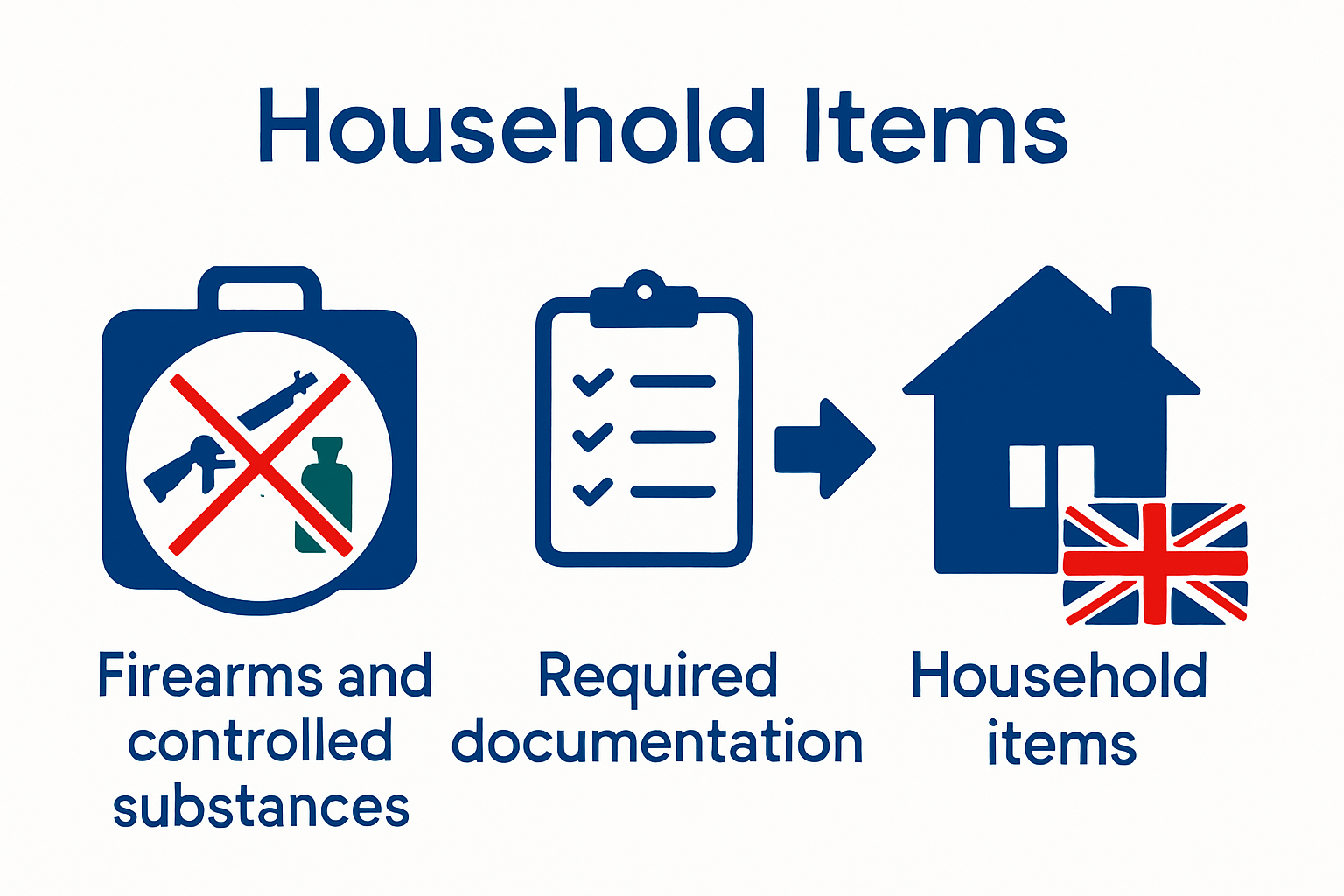
Moving household belongings into the United Kingdom requires careful consideration of restricted and prohibited items. Customs regulations impose strict guidelines on importing certain goods to protect public safety, national security, and environmental health. Individuals must thoroughly understand these restrictions to avoid potential legal complications, financial penalties, or complete seizure of prohibited items.
The UK maintains comprehensive lists of items that are either completely banned or require special permits for importation. These typically include:
Additionally, some items may require specific documentation or quarantine procedures. Customs checks for imported goods are thorough and designed to ensure compliance with national regulations. Electronic equipment, antiques, and high-value items might attract additional scrutiny, potentially requiring detailed provenance documentation or payment of import duties. Professional removal companies can provide expert guidance in navigating these complex restrictions, helping individuals understand which items may pose potential challenges during the customs clearance process.
Understanding the financial implications of importing household belongings into the United Kingdom is crucial for a smooth relocation process. The simplified rates for personal goods provide a comprehensive framework for calculating potential customs duties and taxes. Most individuals relocating permanently are eligible for certain exemptions, which can significantly reduce the financial burden of importing personal possessions.
Customs duty and Value Added Tax (VAT) regulations vary depending on several key factors:
Permanent residents typically benefit from transfer of residence relief, which allows duty-free importation of personal effects. However, tax and duty obligations can become complex for items exceeding specific value thresholds. High-value items like artwork, antiques, or luxury electronics may attract additional charges, requiring careful documentation and potentially professional valuation.

Navigation of these financial requirements demands meticulous preparation. Individuals should maintain detailed inventories, retain original purchase receipts, and be prepared to provide comprehensive documentation demonstrating the personal nature of imported goods. Professional removal companies experienced in international relocations can offer invaluable guidance in managing potential tax implications, ensuring a transparent and compliant customs process that minimises unexpected financial surprises.
Importing household belongings into the United Kingdom requires careful attention to detail and thorough understanding of customs regulations. Many individuals inadvertently make critical errors that can lead to significant financial penalties, delays in customs clearance, or even potential legal complications. Awareness and proactive preparation are key to navigating the complex customs process successfully.
Typical mistakes that individuals often encounter during household moves include:
The process of declaring goods demands absolute precision and transparency. Professional removal companies recommend maintaining comprehensive inventories with detailed descriptions, original purchase documentation, and accurate valuations. Individuals should meticulously review their belongings before shipping, ensuring they understand the specific regulations surrounding each item. High-value possessions, antiques, electronic equipment, and items with potential cultural or historical significance require extra scrutiny and potentially additional documentation to ensure smooth customs clearance.
Navigating UK customs regulations for household moves can feel overwhelming with complex documentation, potential import duties and strict restrictions. If you want to avoid costly delays and ensure your personal effects clear customs smoothly, professional support is essential. Schott Removals understands the challenges you face, from preparing detailed inventories to managing customs duty exemptions and adhering to restricted goods policies.
Take control of your relocation today by choosing a trusted company with over 30 years of experience. Visit our Testimonials Archives to see how we help customers move with confidence. Explore our Uncategorised Archives for additional tips on stress-free moves. Ready to get started? Contact us now at Schott Removals and discover seamless solutions tailored for your UK customs household move.
Individuals must prepare a detailed inventory of their personal possessions, proof of residence, passport and visa documentation, a valuation of household goods, and evidence of previous ownership to facilitate smooth customs clearance.
Yes, many individuals relocating permanently can benefit from transfer of residence relief, allowing them to import personal effects duty-free, provided they meet specific eligibility criteria.
Restricted or prohibited items include controlled substances, firearms, certain animal products, counterfeit goods, and medications without appropriate medical documentation. Understanding these restrictions is crucial to avoid penalties or legal complications.
Common mistakes include incomplete documentation, undervaluing items, failing to declare restricted goods, and miscalculating duty and tax obligations. Careful preparation and thorough understanding of customs regulations can help prevent these issues.
Unit 20, Lingfield Point
McMullen Road,
Darlington
DL1 1RW
Telephone: 01325 487091
Email: info@schottremovals.co.uk