
Moving to Darlington or the North East can feel stressful, especially when valuable possessions are at stake. Nearly half of British homeowners underestimate the risk of loss or damage during relocation, making specialized insurance essential for peace of mind. With the right insured removal service, you can safeguard everything from antiques to electronics while avoiding costly mistakes. This guide reveals what comprehensive removal insurance covers—so your treasured items receive complete protection every step of the journey.
| Point | Details |
|---|---|
| Importance of Removal Insurance | Removal insurance provides targeted financial protection during relocations, covering damage or loss that standard home insurance may not fully address. |
| Types of Coverage | UK removal insurance options include Total Loss Cover, Partial Loss Cover, and Comprehensive Removal Insurance, allowing for tailored protection based on the move’s specifics. |
| Claims Process | Promptly reporting damage and maintaining thorough documentation are essential for successful claims, as insurers require evidence to validate losses. |
| Common Mistakes to Avoid | Policyholders often underestimate item values or fail to disclose high-risk items, which can adversely affect claim outcomes; thorough inventories and professional valuations are recommended. |
Removals insurance provides crucial financial protection during what can often be a stressful and complex process of relocating your belongings. Unlike standard insurance policies, removal insurance specifically safeguards your possessions from potential damage, loss, or unexpected incidents during transportation and relocation.
The core components of removal insurance typically include comprehensive debris removal coverage, which helps manage expenses involved in clearing and restoring items after potential damage. This coverage ensures that if something goes wrong during your move, you won’t be left bearing the entire financial burden of replacing or repairing damaged goods.
While standard home insurance might offer limited protection, dedicated removal insurance provides more targeted coverage. It often encompasses scenarios such as accidental damage during packing, transit-related incidents, and potential losses that could occur between your old and new property. Key protections usually include:
Understanding the nuanced protection offered by umbrella insurance policies can also provide additional layers of liability coverage beyond standard removal insurance, ensuring comprehensive protection during your move.
Pro tip: Always request a detailed breakdown of your removal insurance policy and clarify exactly what scenarios are covered before finalising your moving arrangements.
Navigating the landscape of removal insurance requires understanding the various types of coverage available to protect your belongings during relocation. In the United Kingdom, multiple insurance options exist to ensure comprehensive protection for your move, with each policy designed to address specific risks and scenarios.
Home Contents Insurance typically provides a baseline level of protection, but specialised removal insurance policies offer more targeted coverage specifically for the moving process. These policies are crafted to address the unique vulnerabilities associated with transporting household items across different locations.
The primary types of removal insurance in the UK include:
Homeowners and renters can choose between different levels of protection, with options ranging from basic coverage to comprehensive plans that include additional services like professional packing protection and temporary storage coverage. Many removal companies in the UK offer integrated debris removal coverage, which helps manage potential cleanup and replacement costs associated with unexpected damage during relocation.
To help you choose the right insurance, here is a comparison of common removal insurance types and their ideal usage scenarios:
| Insurance Type | Typical Coverage Scope | Best For |
|---|---|---|
| Total Loss Cover | All items destroyed in transit | Full household moves |
| Partial Loss Cover | Selected or partial item damage | Moves with fragile items |
| High-Value Item Insurance | Specific expensive possessions | Valuable art or jewellery |
| Transit-Only Insurance | Items while in transport | Simple, direct transfers |
| Comprehensive Removal Insurance | End-to-end, all scenarios | High-risk or long-distance moves |
Pro tip: Always compare multiple insurance policies and carefully review the specific exclusions and claim processes before selecting your removal insurance coverage.
Removals insurance operates through a carefully structured claims process designed to protect homeowners during the complex transition of moving belongings. Insurance claims require precise documentation of any potential damage or loss, ensuring that individuals receive appropriate compensation for unexpected incidents during their relocation.

The typical insurance coverage during house removals follows a systematic approach. When damage occurs, the policyholder must first notify the insurance provider and provide comprehensive evidence of the loss. An insurance adjuster will then be dispatched to inspect the damaged items, assess the extent of the damage, and estimate replacement or repair costs. This initial assessment helps determine the potential payout and validates the claim’s legitimacy.
Key stages of the claims process typically include:
Debris removal and associated costs are often integrated into removal insurance policies, helping homeowners manage unexpected expenses during the moving process. Insurance providers may coordinate directly with contractors to streamline the cleanup and replacement process, ensuring minimal disruption to the relocation.
Pro tip: Keep a detailed inventory of your belongings and take clear photographs before and during the move to strengthen your potential insurance claim.
Understanding the intricacies of removal insurance requires careful examination of policy exclusions and limitations. Not all potential damages are covered, and policyholders must be acutely aware of the specific circumstances that might invalidate their insurance claim during a house move.
Typical exclusions in removal insurance often include:
The claim procedures are equally critical, with specific limitation periods governing when and how claims can be filed. In the United Kingdom, most insurance contracts have a six-year window for filing claims, though personal injury related claims typically have a three-year limitation. This means that prompt reporting and documentation are essential for successful insurance claims.
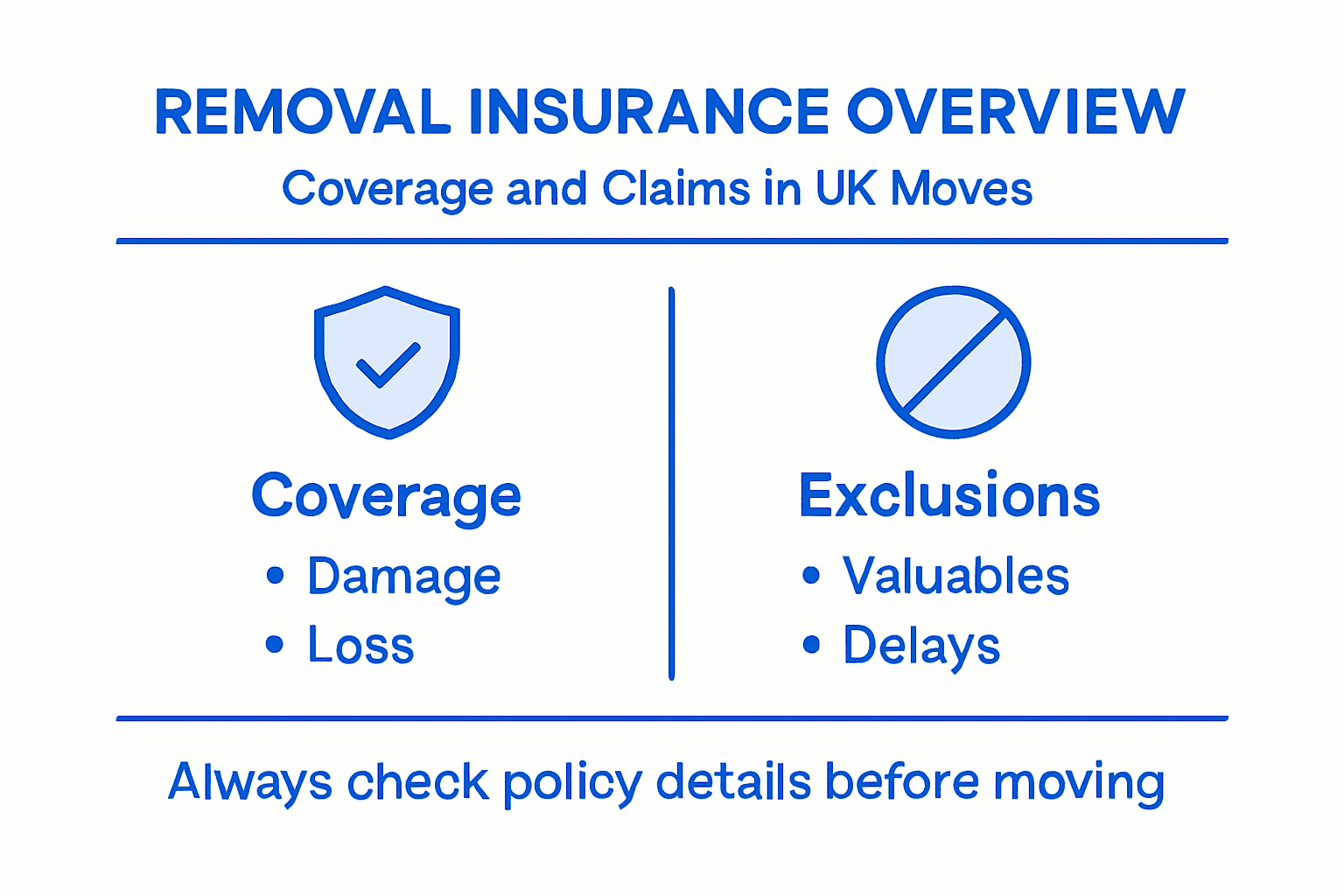
Insurance providers typically require comprehensive documentation during the claims process, including detailed inventories, photographs of damage, and timely incident reporting. Policyholders must meticulously record every detail and submit claims within the specified timeframe to ensure potential compensation.
Pro tip: Create a comprehensive digital and physical record of your belongings before moving, including photographs, serial numbers, and estimated values, to streamline potential insurance claims.
Removals insurance pricing is a nuanced process that requires careful consideration of multiple factors. Homeowners insurance statistics reveal that the true cost of coverage extends beyond simple premium calculations, incorporating potential risks and potential claim scenarios.
Value assessment involves several critical components:
Removal insurance costs depend significantly on the comprehensive documentation of belongings and potential risks during transportation. Insurers typically calculate premiums based on the estimated value of items, the distance of relocation, and the perceived complexity of the move.
Common mistakes that can compromise insurance effectiveness include underestimating item values, failing to disclose high-risk possessions, and choosing inadequate coverage levels. Policyholders often overlook the importance of maintaining detailed inventories and professional valuations, which can significantly impact claim outcomes.
Here is a summary of frequent removal insurance claim mistakes and practical prevention strategies:
| Common Mistake | Impact on Claims | How to Prevent It |
|---|---|---|
| Underestimating item value | Lower compensation received | Conduct professional valuation |
| Not disclosing high-risk items | Exclusions or denied claims | Declare all valuable items |
| Inadequate inventory records | Delayed or reduced payout | Maintain detailed inventory |
| Choosing low coverage limits | Insufficient protection | Select appropriate policy limits |
Pro tip: Conduct a professional valuation of your belongings and maintain a digital inventory with photographs and serial numbers to ensure accurate insurance coverage.
Moving home in the UK can bring many challenges, especially when it comes to safeguarding your valuable possessions from damage or loss. This article discusses the importance of removal insurance and the key challenges like understanding coverage types, exclusions, and claim procedures. At Schott Removals, we understand how vital it is to have dependable protection paired with a professional, reliable moving service that puts your mind at ease.
Whether you need comprehensive removal insurance advice or seamless relocation support, our family-run company offers over 30 years of expertise in local, national, and international moves. We prioritise clear communication and customer satisfaction as reflected in our detailed testimonial showcase. Trust Schott Removals to handle your move with care and professionalism, reducing the stress of intricate coverage and claims requirements.
Discover how we combine expert removals with a deep understanding of protecting your belongings. Start your stress-free move now by visiting Schott Removals. Learn more about how we ensure your possessions are safe by checking our uncategorised archives for insights and tips. See how we have helped others just like you through honest feedback in our testimonials. Act today and make your next move the safest yet.
Removal insurance typically covers damage, loss, or theft of your belongings during the moving process. This includes full replacement value for damaged items, coverage for professional packing materials, and compensation for items lost in transit.
There are several types of removal insurance, including Total Loss Cover, Partial Loss Cover, High-Value Item Insurance, Transit-Only Insurance, and Comprehensive Removal Insurance, each designed to address specific risks associated with moving.
The claims process involves notifying your insurance provider of any damage, providing documentation and evidence, and allowing an insurance adjuster to assess the loss. Compensation is calculated based on the terms of your policy after verifying the damage.
Typical exclusions may include intentional damage, wear and tear, improper packing, and items transported using non-approved vehicles. It’s essential to review your policy to understand what is not covered.
Unit 20, Lingfield Point
McMullen Road,
Darlington
DL1 1RW
Telephone: 01325 487091
Email: info@schottremovals.co.uk