
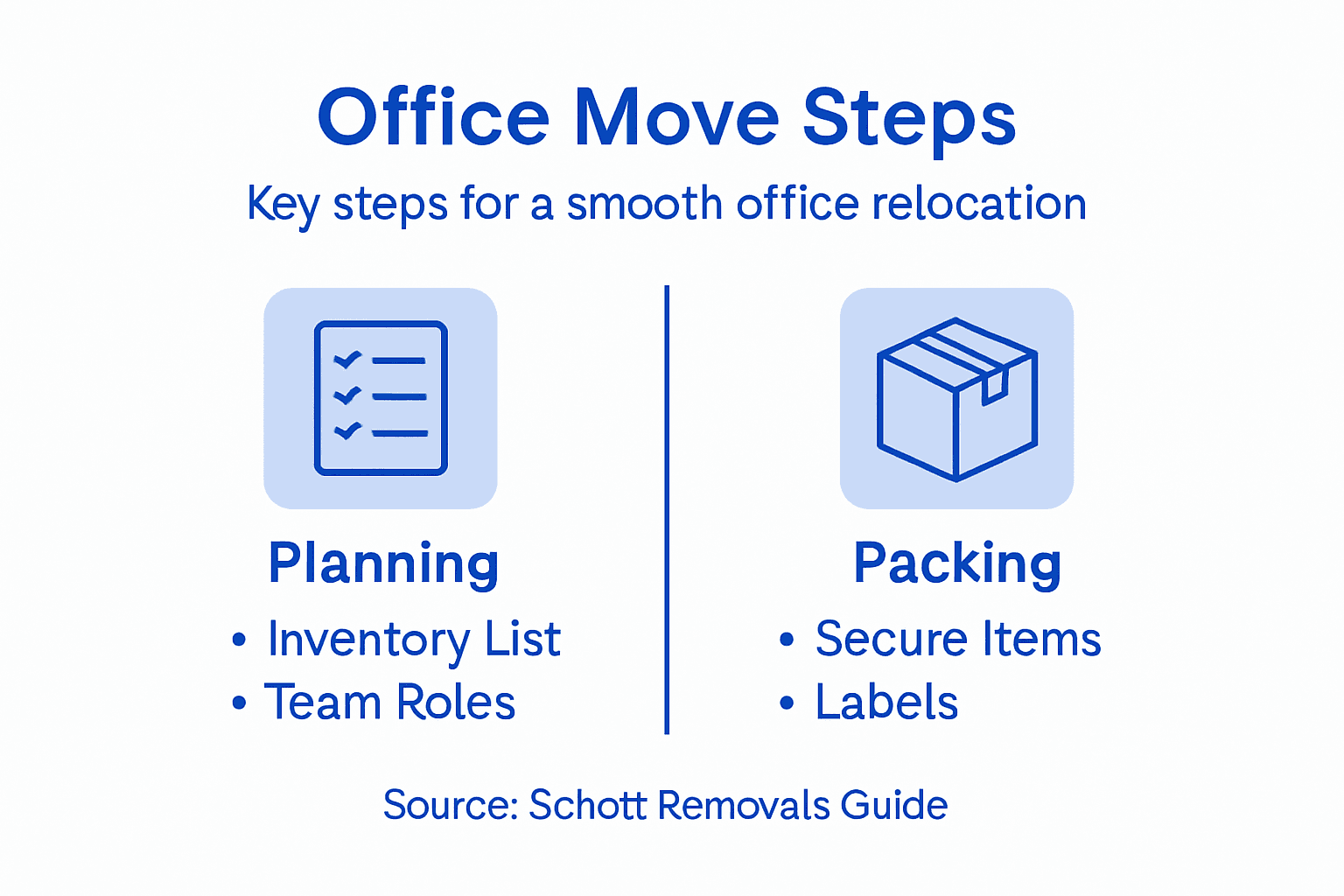
Planning an office move across the North East UK can quickly become overwhelming without a solid strategy. Office managers juggle decisions about safeguarding assets while keeping relocations efficient and organised. By focusing on systematic inventory management and secure packing practices, you can reduce stress and prevent costly oversights, unlocking a smoother transition and making your team’s workload more manageable throughout the moving process.
| Important Insight | Clear Explanation |
|---|---|
| 1. Assess Office Inventory | Conduct a thorough inventory to categorize items for effective management during the move. |
| 2. Organise Packing Supplies | Gather the right packing materials and create a comprehensive labelling system to protect items. |
| 3. Secure Equipment and Documents | Follow best practices for packing sensitive items to ensure protection and confidentiality. |
| 4. Coordinate Moving Logistics | Design a clear communication plan and timeline to streamline every aspect of the relocation process. |
| 5. Verify and Prepare | Conduct detailed checks before moving day to ensure everything is ready for transport. |
Assessing your office inventory before a move is crucial for an efficient relocation process. This step helps you understand exactly what equipment, furniture, and assets you’ll need to transport and how best to manage them during the move.
Start by creating a comprehensive inventory using a systematic counting procedure. This approach ensures nothing gets overlooked. Break down your inventory into clear categories:
For each category, document the following details:
As you catalogue items, decide which will be:
By following the guidance in The Green Book, you can create a thorough and strategic inventory assessment that simplifies your entire relocation process.

Pro tip: Create a digital spreadsheet for your inventory to make tracking and updating items quick and easy during the move.
Here’s a summary of key considerations when deciding the fate of office inventory items:
| Inventory Category | Move to New Office | Sell or Donate | Discard or Recycle | Place in Storage |
|---|---|---|---|---|
| Furniture | Good condition, fits | Surplus or outdated | Damaged or broken | Seasonal or rarely used |
| Technology | Up-to-date, necessary | Old but functional | End-of-life or faulty | For phased deployment |
| Office Supplies | High usage, current | Excess stationery | Expired or unusable | Bulk consumables |
| Specialised Equipment | Essential, certified | No longer needed | Obsolete or unsafe | Intermittent project use |
Preparing your packing supplies and developing a robust labelling system is fundamental to ensuring a smooth and organised office relocation. Your goal is to protect your equipment while creating a tracking mechanism that prevents items from getting lost or misplaced during the move.
Start by gathering essential logistics labelling materials that will help you systematically manage your office items. Your packing supplies checklist should include:
When labelling, follow these crucial steps:
Adopt a standardised packing approach that ensures every item is traceable. This means developing a consistent labelling system where each box receives a comprehensive label that includes:
A well-organised labelling system reduces moving day chaos and helps your team quickly locate essential items.
Pro tip: Create a digital spreadsheet that matches each box’s unique identifier with its detailed contents for ultimate tracking efficiency.
Securing your office equipment and sensitive documents is critical during a relocation to prevent damage, loss, and maintain confidentiality. Careful packing ensures that your valuable assets arrive safely at the new location while protecting critical business information.
Begin by addressing document security through secure document handling protocols. Different types of documents require specific protection strategies:
When packing electronic equipment, follow these essential steps:
Proper packing is not just about physical protection, but also safeguarding your business’s most valuable information assets.
Prioritise the protection of sensitive items by creating a separate, secure inventory of critical documents and high-value equipment. This allows you to track and prioritise these items throughout the moving process.
Pro tip: Create digital backups of all important documents and store them in a secure cloud service as an additional layer of protection during your office move.
The table below compares document and equipment protection methods during office moves:
| Item Type | Protection Method | Security Measure | Benefit |
|---|---|---|---|
| Confidential Files | Lockable, secure boxes | Tamper-evident seals | Maintains confidentiality |
| Digital Devices | Anti-static bubble wrap | Unique label, access log | Prevents data loss |
| Financial Records | Waterproof totes | Numbered seals, tracked list | Protects sensitive data |
| Electronic Equipment | Original or cushioned boxes | Inspected by tech supervisor | Prevents physical damage |
Coordinating storage and moving logistics requires meticulous planning and clear communication to ensure a seamless office relocation. Your primary goal is to create a comprehensive strategy that minimises disruption and maximises efficiency during the transition.
Appoint a dedicated relocation coordination team responsible for managing every aspect of the move. This team should develop a detailed moving timeline and communication plan that covers:
When selecting storage and moving services, consider these critical factors:
Following comprehensive office relocation guidance, develop a robust communication strategy that keeps all stakeholders informed throughout the process.
Effective coordination transforms a potentially chaotic move into a smooth, well-orchestrated transition.
Maintain flexible timelines and build buffer periods into your moving schedule to accommodate unexpected challenges. This approach allows for adaptability and reduces potential stress during the relocation.
Pro tip: Create a centralised digital dashboard where all team members can track moving progress, storage details, and communication updates in real-time.
Preparing for your office removal day requires a systematic approach to ensure everything is accounted for and ready for transportation. Your goal is to minimise potential disruptions and guarantee a smooth transition to the new location.
Conduct a thorough pre-move item verification process by cross-referencing your inventory with packed items. This critical step helps prevent potential losses or misplacements during the move.
Complete a comprehensive final check using these key steps:
Prepare a detailed handover package that includes:
Meticulous preparation transforms a potentially stressful moving day into a well-orchestrated transition.
Ensure all team members understand their roles and responsibilities during the move. Designate a point of contact who will coordinate with the removal team and address any last-minute queries.
Pro tip: Create a digital backup of your entire inventory and keep a printed copy with you on moving day as a redundant tracking method.
Packing for an office relocation can feel overwhelming with the countless details like inventory assessments, secure packing, and seamless logistics coordination. The challenge of organising your assets while protecting sensitive equipment and documents demands precision and reliability. At Schott Removals, we understand the pressures of managing every step, from detailed packing systems to the final removal day. Our decades of experience means we make your move stress-free and efficient, so you can focus on your business without disruption.
Discover how a professional partner can transform your relocation. Whether you need expert packing services, secure storage solutions, or comprehensive moving support, Schott Removals is here to guide you. Take the next step to a smooth transition by exploring our Uncategorised Archives for practical advice and learn from the experiences shared in our Testimonials Archives. Start planning with confidence today at Schott Removals.
To assess your office inventory effectively, create a detailed list of all items, categorising them into furniture, technology, office supplies, and specialised equipment. Document the total quantity, condition, and any special handling needs for each item. Aim to complete this assessment at least 2-3 weeks before your move to ensure ample time for planning.
Essential packing supplies for an office move include sturdy moving boxes in various sizes, packing tape and dispensers, bubble wrap, and markers for labelling. Gather these items beforehand to ensure you have everything ready; consider assembling your packing supplies within a week of your relocation date to streamline the process.
To securely pack sensitive documents, use lockable, tamper-evident boxes and clearly label each box to identify its contents. Back up all digital files prior to packing and ensure all documents are waterproofed, if necessary. Start this packing process at least one week before the move to maintain organisation and security.
On removal day, conduct a final inventory check by comparing packed items against your master list, ensuring that all equipment is properly packaged. Designate a point of contact to liaise with the removal team, and prepare a detailed handover package with critical information. Aim to verify these details early in the day to avoid last-minute complications.
Create a unique identifier for each box and include information on its contents, destination, and handling instructions. Use colour-coded labels to differentiate between departments or item types. Implement this labelling system during the packing phase, ideally a few days before the move, to enhance tracking and organisation.
Unit 20, Lingfield Point
McMullen Road,
Darlington
DL1 1RW
Telephone: 01325 487091
Email: info@schottremovals.co.uk