
Moving house in Darlington brings enough stress without worrying if your sofa or treasured keepsakes will make it to your new place safely. With every relocation—whether across County Durham or overseas—there is real risk of damage or loss. Choosing the right moving insurance gives Darlington homeowners vital peace of mind, offering protection for your possessions as they travel from one door to another. This guide sheds light on your cover options and the safeguards that matter most when moving in the United Kingdom.
| Point | Details |
|---|---|
| Importance of Moving Insurance | Moving insurance is essential for protecting personal belongings against damage or loss during relocation. It is a strategic investment for peace of mind during a move. |
| Types of Coverage Available | Understand different types of insurance such as Transit Insurance, Total Loss Insurance, and All-Risk Insurance to choose the best coverage for your needs. |
| Legal Obligations | Familiarise yourself with the legal requirements and your rights regarding moving insurance to avoid pitfalls and ensure compliance. |
| Documentation for Claims | Maintain detailed documentation and inventory of valuable items to support any insurance claims during your move, enhancing the likelihood of successful compensation. |
Moving insurance represents a critical safeguard for households navigating the complexities of relocation within the United Kingdom. At its core, moving insurance provides financial protection against potential damage, loss, or theft of personal belongings during transportation from one residence to another.
Understanding the nuanced landscape of moving insurance requires recognising the multiple layers of coverage available. The Removals and Relocations Framework highlights the structured approach to protecting personal assets during moves across the UK public sector, offering insights into comprehensive relocation protection strategies.
Key components of moving insurance typically include:
While standard home insurance might offer limited protection, dedicated moving insurance provides specialised coverage tailored specifically to the unique risks associated with relocation. Different policies can range from basic transit protection to full-value replacement coverage, allowing homeowners to select a plan matching their specific needs and budget.
Moving insurance isn’t just an optional extra – it’s a strategic investment in protecting your most valuable possessions during a potentially stressful transition.
The legal framework surrounding moving insurance in the UK emphasises the importance of understanding your rights and obligations. Moving house guidance recommends carefully reviewing policy details, ensuring comprehensive protection throughout your relocation process.
Pro tip: Always photograph and document valuable items before packing, creating a comprehensive inventory that can support any potential insurance claims during your move.
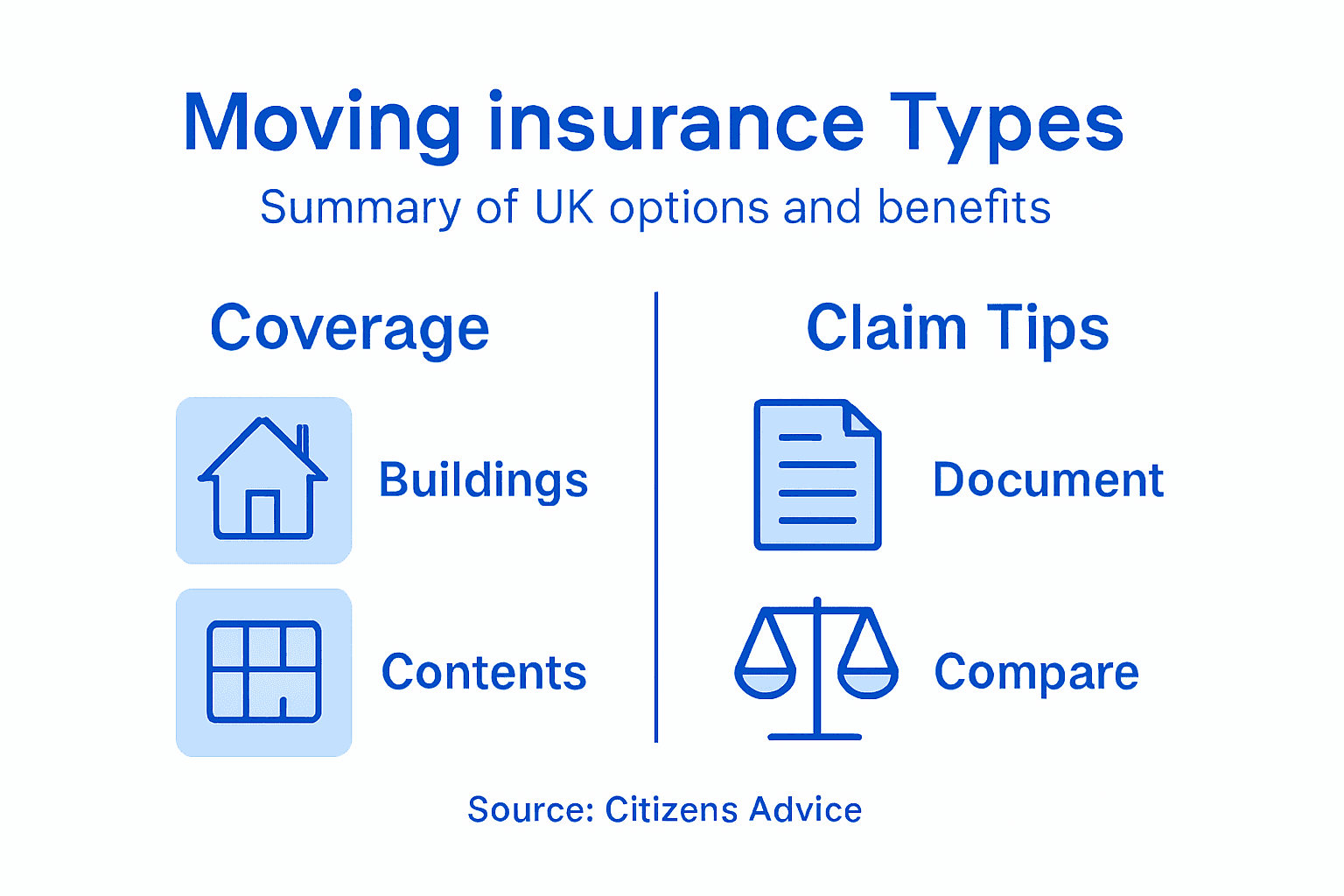
Moving insurance in the United Kingdom encompasses several distinct types of coverage designed to protect households during relocation. Home insurance policies typically offer two primary categories of protection: buildings insurance and contents insurance, each addressing different aspects of potential risk during a move.
The key types of moving insurance cover available include:
Buildings insurance protects the physical structure of your property, while contents insurance safeguards personal possessions. Homeowners should carefully assess their specific requirements, considering factors like distance of relocation, value of belongings, and potential transportation risks.

Here’s a concise comparison of the main types of moving insurance cover in the UK:
| Insurance Type | Best For | Main Advantage | Typical Limitation |
|---|---|---|---|
| Transit Insurance | Short-distance moves | Protection during transport | Limited to transit only |
| Total Loss Insurance | High-volume relocations | Covers entire shipment loss | No partial damage compensation |
| All-Risk Insurance | Valuable or fragile belongings | Extensive damage scenarios | Higher premiums |
| Restricted Coverage | Budget-conscious movers | Specific risks covered | Excludes many damage types |
| Additional Value Protection | High-value items | Extra protection for valuables | Requires accurate valuation |
Selecting the appropriate moving insurance is not just about financial protection, but about ensuring peace of mind during a potentially stressful transition.
Understanding the nuanced differences between policy types can help movers make informed decisions. Citizens Advice recommends thoroughly reviewing policy details, comparing coverage options, and understanding specific exclusions before finalising any moving insurance arrangement.
Pro tip: Request detailed written quotes from multiple insurance providers, comparing not just price but comprehensive coverage options for your specific moving circumstances.
Moving insurance policies in the United Kingdom operate through a complex framework of risk assessment and financial protection. Home insurance policies typically function by providing compensation for potential damages or losses during the relocation process, with specific conditions and exclusions clearly defined in the contract.
The operational mechanism of moving insurance involves several key stages:
Insurers typically require detailed documentation of belongings, including photographs, valuation certificates, and comprehensive inventory lists. This meticulous approach helps establish a clear baseline for potential claims and ensures transparent compensation processes.
The effectiveness of a moving insurance policy hinges on understanding its intricate details and specific coverage parameters.
Understanding the nuanced approach to home insurance coverage requires careful consideration of various risk factors. Different policies may cover specific scenarios such as accidental damage, theft, or loss during transit, with variations in protection levels and compensation methods.
Pro tip: Photograph and document each valuable item before packing, creating a comprehensive visual record that can substantiate potential insurance claims during your move.
The legal landscape of moving insurance in the United Kingdom is governed by a complex set of regulations and statutory requirements that define the rights and responsibilities of property owners, tenants, and insurance providers. Landlord and tenant rights establish critical guidelines for insurance obligations during residential moves and property transitions.
Key legal obligations in moving insurance include:
Property owners must navigate a nuanced legal framework that distinguishes between buildings insurance and contents insurance. Different regulations apply to homeowners, landlords, and tenants, with each group having distinct legal responsibilities for protecting their assets during relocation.
Legal compliance in moving insurance is not merely a recommendation, but a fundamental requirement for protecting your financial interests.
The comprehensive guide to landlord responsibilities highlights the importance of specialist insurance that extends beyond standard home coverage. This includes provisions for potential loss of rent, landlord liability, and specific protections unique to rental properties.
Pro tip: Consult a legal professional specialising in property insurance to ensure your moving insurance fully complies with current UK regulations and provides comprehensive protection.
Navigating the complex world of moving insurance requires a thorough understanding of potential policy exclusions and common pitfalls that can derail insurance claims. Home insurance policies typically contain numerous specific conditions that can unexpectedly invalidate coverage during a move.
Common exclusions and potential claim challenges include:
Insurers meticulously evaluate claims based on precise policy language. Insurance exclusion categories often relate to risks deemed inappropriate for standard coverage, including potential moral hazards or circumstances beyond typical protection parameters.
The burden of proof in insurance claims can be complex, with policy wording determining the threshold for successful compensation.
To maximise the likelihood of a successful claim, movers must maintain comprehensive documentation, including detailed inventories, photographic evidence, and precise records of item conditions before and during transit. Professional removals companies can provide critical supporting documentation that strengthens insurance claims.
This table summarises typical exclusions and claim difficulties in UK moving insurance policies:
| Exclusion Category | What’s Excluded | Impact on Claims |
|---|---|---|
| Wear and Tear | Natural item deterioration | Claim usually denied |
| Pre-existing Damage | Damage before the move | Insufficient proof leads to rejection |
| Improper Packing | Losses from poor packaging | Often invalidates coverage |
| High-Value Item Limits | Maximum payout for expensive items | Compensation capped by policy |
| Specific Risk Exception | Unusual events (e.g. floods, war) | Not covered in most policies |
Pro tip: Create a comprehensive digital and physical record of all valuable items, including serial numbers, photographs, and valuation certificates, to substantiate potential insurance claims during your move.
Moving insurance is essential for protecting your belongings against damage or loss during relocation across the United Kingdom. However, understanding coverage types and avoiding claim pitfalls can be overwhelming. That is why partnering with a trusted, experienced removal company that values professionalism and reliability is crucial to ensure your possessions are handled carefully and your move goes smoothly.
Schott Removals, a family-run business with over 30 years of experience, specialises in local and national house removals, European shipping, and storage solutions tailored to your unique moving needs. We understand the importance of comprehensive protection and peace of mind during your transition, which is why we work closely with you to offer expert advice, meticulous packing services, and thorough documentation to support any insurance claims.
Discover how our proven excellence and dedication can transform your moving experience. Visit our Testimonials Archives – Schott Removals to see how we have helped countless families. Learn more about our services at Uncategorised Archives – Schott Removals and take the first step towards a secure and stress-free move by contacting us directly through Schott Removals. Act now to protect your most valuable possessions every step of the way.
Moving insurance provides financial protection against loss, damage, or theft of personal belongings during relocation. It is essential for safeguarding your possessions during the moving process.
Moving insurance typically includes transit insurance, total loss insurance, all-risk insurance, restricted coverage, and additional value protection for high-value items. Each type varies in the extent of coverage and cost.
To claim on your moving insurance, document the loss or damage thoroughly, including photographs and inventory lists. Then, contact your insurer to report the claim, ensuring you comply with their specific documentation requirements.
Yes, moving insurance policies often include exclusions such as wear and tear, pre-existing damage, and losses due to improper packing. It’s crucial to read the policy details to understand what is not covered.
Unit 20, Lingfield Point
McMullen Road,
Darlington
DL1 1RW
Telephone: 01325 487091
Email: info@schottremovals.co.uk