
Facing an office move can quickly turn from excitement to uncertainty when legal requirements start piling up. For small business owners in North East England, staying compliant during a relocation is more than ticking boxes. Rules like the Transfer of Undertakings (Protection of Employment) regulations ensure employee rights remain intact, while lease agreements and health and safety laws demand careful attention. This guide breaks down the critical legal obligations and practical steps needed to protect your business and staff throughout your move.
| Point | Details |
|---|---|
| Legal Compliance is Essential | Understanding key regulations like TUPE is critical to protect employee rights and ensure smooth transitions during business relocations. |
| Thorough Consultation Required | Businesses must engage and communicate transparently with employees about the relocation process to mitigate concerns and ensure compliance. |
| Risk Management Strategies Needed | Comprehensive insurance coverage and proactive planning are necessary to address potential liabilities and operational risks associated with moving. |
| Engage Professionals | Collaborating with legal, health and safety, and insurance experts can enhance compliance and reduce risks during the relocation process. |
When relocating a business in the United Kingdom, understanding the legal landscape is crucial for maintaining smooth operations and protecting organisational interests. Legal requirements encompass multiple complex dimensions that business owners must carefully navigate to ensure compliance and minimise potential risks.
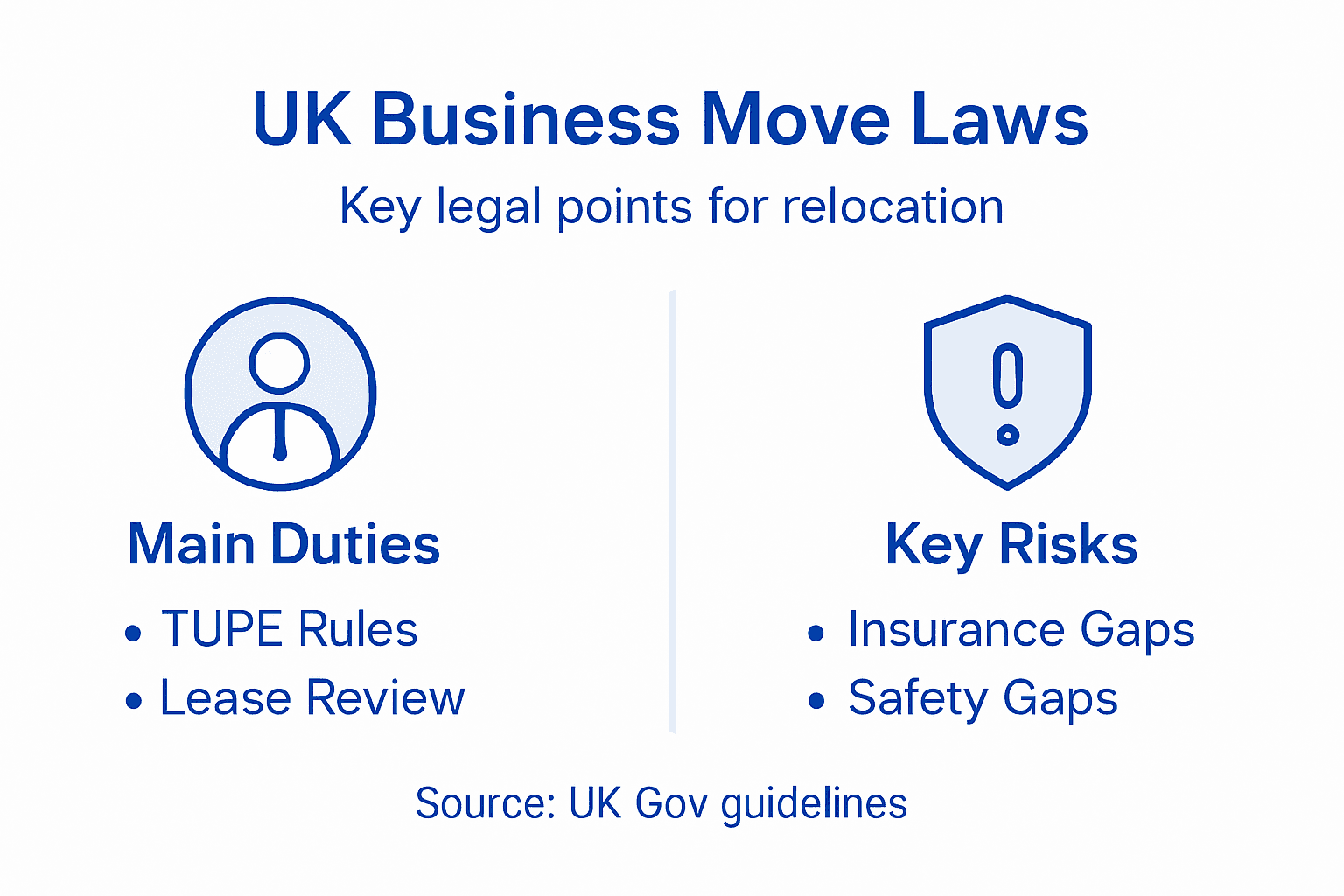
The primary legal framework governing business moves centres around several key regulations, with the Transfer of Undertakings (Protection of Employment) regulations (TUPE) being particularly significant. TUPE protections ensure that employee rights remain safeguarded during business transitions, mandating that employment contracts transfer seamlessly and maintaining existing terms and conditions.
Businesses must consider multiple legal obligations during relocation, including:
Additionally, legal compliance for business transfers requires meticulous documentation and forward planning. This involves comprehensive contract reviews, understanding potential liabilities, and developing strategies to mitigate potential legal complications that might arise during the move.
The following table summarises the main legal focus areas during a business move in the UK and their strategic business impact:
| Focus Area | Core Legal Requirement | Strategic Impact |
|---|---|---|
| Employee Transfer | Adherence to TUPE regulations | Retains skilled workforce, avoids disputes |
| Lease Arrangements | Reviewing and updating contracts | Prevents costly penalties and ensures flexibility |
| Data Management | Compliance with GDPR | Safeguards client trust and reputation |
| Risk Mitigation | Insurance and liability planning | Minimises financial losses and operational delays |
Pro tip: Consult with a specialised employment law solicitor before initiating your business move to ensure comprehensive legal coverage and minimise potential risks.
Office relocation demands meticulous attention to legal compliance, with numerous complex considerations that businesses must carefully navigate. Commercial lease management represents one of the most critical aspects of ensuring a legally sound office move, requiring comprehensive understanding of contractual obligations and potential risks.
Office relocation legal considerations encompass several key areas that demand thorough examination. These include:
Businesses must also address broader legal compliance frameworks beyond simple property transfer. Lease negotiations and sustainability obligations require strategic planning to ensure operational continuity and regulatory adherence. This involves carefully aligning lease terms with organisational needs, understanding environmental standards, and developing flexible contractual arrangements that protect the company’s interests.
The complexity of office relocation legal requirements necessitates a proactive and comprehensive approach. Companies should engage legal professionals who specialise in commercial property law to conduct thorough due diligence, review all documentation, and develop robust strategies for managing potential legal challenges during the transition.

Pro tip: Conduct a comprehensive legal audit of your existing lease and relocation plans at least six months before your intended move date to identify and mitigate potential legal risks.
Business relocations involve complex health and safety considerations that demand meticulous planning and proactive risk management. Employers must navigate a comprehensive legal landscape to ensure employee protection and regulatory compliance throughout the moving process.
Employer relocation health and safety responsibilities require businesses to implement robust protective strategies. These obligations include:
The legal framework emphasises the importance of comprehensive planning and employee welfare. Businesses must develop detailed strategies that address physical risks, psychological stress, and potential disruptions associated with workplace relocation. This involves creating structured communication plans, managing workspace transitions, and supporting employees through potentially challenging changes.
Companies should approach health and safety regulations as more than a legal checkbox. Effective implementation requires a holistic approach that considers individual employee needs, potential workplace disruptions, and the broader organisational impact of the move. Engaging professional health and safety consultants can provide invaluable guidance in navigating these complex requirements.
Pro tip: Create a dedicated health and safety working group within your organisation to oversee and manage all aspects of relocation risk management.
Business relocations involve intricate legal requirements surrounding staff communication and documentation. Employers must navigate complex consultation processes to ensure transparency, protect employee rights, and maintain operational continuity during workplace transitions.
Employer consultation obligations mandate comprehensive engagement with staff throughout the relocation process. These critical responsibilities include:
The legal framework under TUPE regulations requires meticulous record-keeping and proactive staff engagement. Businesses must develop structured communication strategies that address both collective and individual employee concerns, ensuring that every staff member understands their rights, potential responsibilities, and the broader implications of the organisational move.
Effective consultation goes beyond mere legal compliance. It represents an opportunity to build organisational trust, manage potential anxieties, and create a collaborative approach to workplace transition. Employers should view these processes as strategic engagement opportunities that can significantly impact staff morale, retention, and overall organisational adaptability.
Pro tip: Create a dedicated relocation communication log documenting every consultation, discussion, and staff communication to demonstrate thorough compliance and transparency.
Business relocations involve complex risk management strategies that demand comprehensive insurance coverage and proactive legal planning. Companies must carefully navigate potential financial and operational vulnerabilities associated with physical moves and organisational transitions.
Risk management for office relocations requires businesses to address multiple critical dimensions of potential exposure. Key considerations include:
Businesses must develop nuanced insurance strategies that extend beyond standard policy provisions. This involves conducting thorough risk assessments, identifying potential vulnerabilities during the relocation process, and negotiating tailored insurance products that provide robust protection across different stages of organisational movement.
Effective risk management transcends mere insurance procurement. Companies should engage legal professionals to review and negotiate lease agreements, allocation of responsibilities, and potential liability scenarios. A strategic approach involves understanding the intricate relationships between insurance coverage, contractual obligations, and potential financial exposures during business transitions.
This quick reference table outlines professional support roles vital for a compliant and efficient office relocation:
| Professional Adviser | Role in Relocation |
|---|---|
| Employment Law Solicitor | Ensures staff rights protection and contract compliance |
| Commercial Property Lawyer | Handles lease reviews and negotiations |
| Health & Safety Consultant | Manages risk assessments and staff training |
| Insurance Broker | Arranges comprehensive risk cover and claims support |
Pro tip: Conduct a comprehensive risk audit at least three months before relocation to identify potential insurance gaps and develop targeted mitigation strategies.
Relocating your business in the UK involves more than just moving assets it requires absolute confidence in meeting legal requirements such as TUPE regulations, lease negotiations, and health and safety compliance. The challenges of protecting employee rights, ensuring contractual adherence, and managing risk can be overwhelming without the right support. At Schott Removals, we understand these critical concerns and provide tailored moving and storage solutions designed to complement your legal and operational needs seamlessly.
Experience the assurance of a family-run company with over 30 years of expertise committed to professionalism and reliability. Whether you are handling an office relocation or sensitive commercial equipment transport we help safeguard your business continuity every step of the way. Read what our satisfied clients say in our Testimonial Showcase Archives – Schott Removals and discover how we make complex moves straightforward. Get started today by exploring our comprehensive services at Schott Removals or browse our Uncategorised Archives – Schott Removals to find expert tips and insights tailored for your next business move.
Businesses must comply with various legal obligations, including adhering to TUPE regulations for employee rights, reviewing commercial lease agreements, ensuring data protection compliance, and managing regulatory reporting duties.
TUPE regulations ensure that employees’ contracts transfer seamlessly during a business move, with their terms and conditions being preserved. This protects employees from losing their rights amid the transition.
A risk assessment should identify potential hazards during packing, transportation, and unpacking, ensure safe handling of equipment, maintain clear communication about risks, and provide necessary training and protective equipment to staff.
To ensure compliance, conduct thorough risk assessments, implement protective strategies, communicate risks transparently to employees, and provide training on safety procedures and equipment use.
Unit 20, Lingfield Point
McMullen Road,
Darlington
DL1 1RW
Telephone: 01325 487091
Email: info@schottremovals.co.uk