
Over 60 percent of british businesses face major setbacks when tackling international office relocations. Moving operations abroad is far more complicated than simply shifting desks and computers. Every decision can impact budgets, productivity, and team morale. With so many legal hurdles, shifting regulations, and cultural adjustments, understanding the entire relocation process is vital. This guide sheds light on the most important strategies, highlights potential pitfalls, and reveals how careful planning can make international office moves far smoother for any british company.
| Point | Details |
|---|---|
| Comprehensive Planning is Essential | Successful international office relocations require meticulous planning that integrates legal, logistical, and human resource considerations. Implementing detailed relocation roadmaps is crucial for anticipating challenges. |
| Selecting the Right Partners is Critical | Choosing relocation partners with expertise in global mobility can streamline the move and minimise disruption. Evaluate potential partners beyond cost, focusing on their capability to handle complex compliance and logistics. |
| Navigating Legal and Compliance Issues | Organisations must have a comprehensive understanding of immigration and customs regulations to ensure smooth transitions. Developing robust compliance frameworks is essential in handling regulatory challenges. |
| Effective Risk Management | Financial and operational challenges demand proactive risk assessment and contingency planning. Implementing sophisticated financial models and tracking mechanisms is key to mitigating potential disruptions during the transition. |
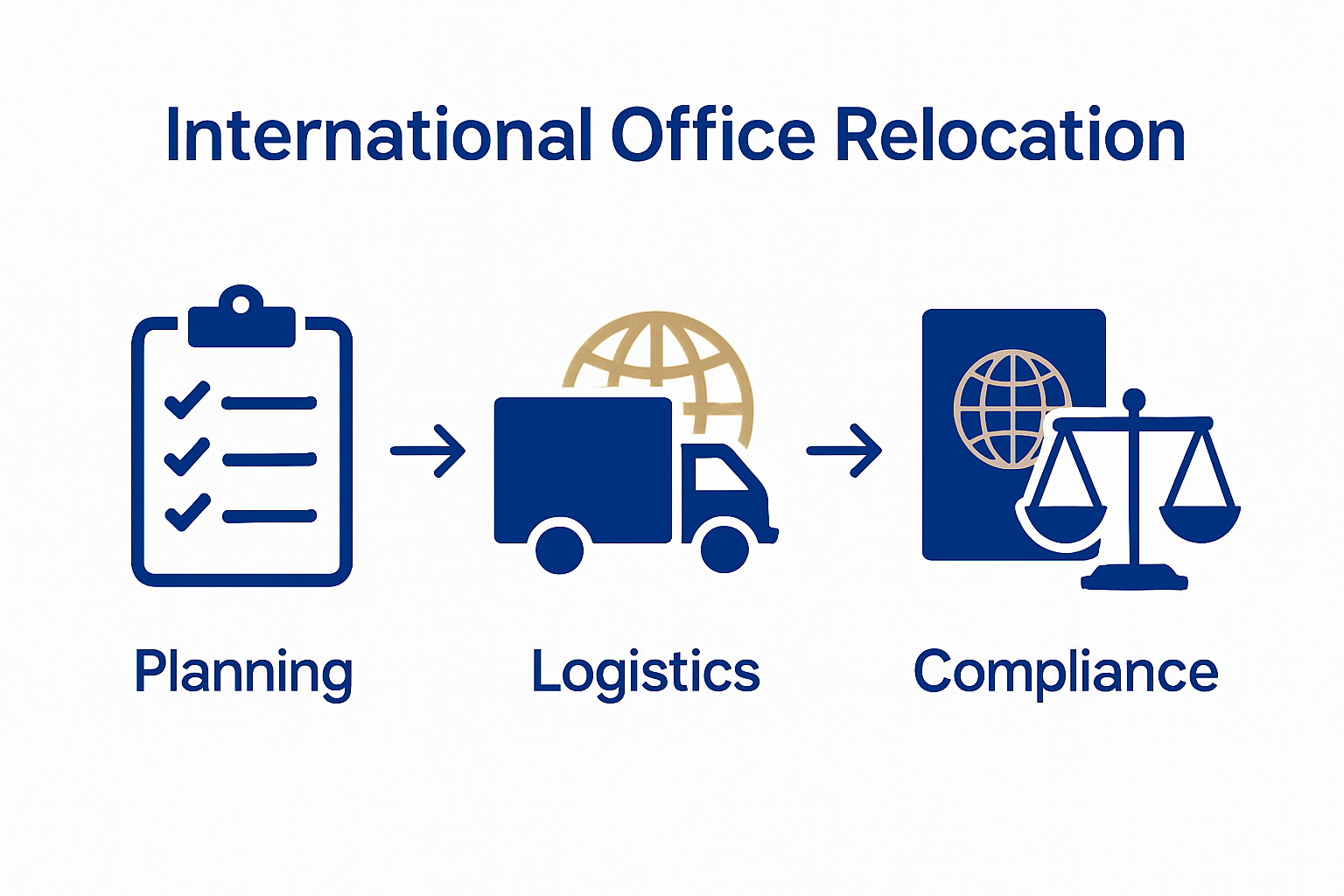
International office relocation represents a complex logistical challenge that requires meticulous planning, strategic coordination, and comprehensive understanding of global mobility requirements. Businesses contemplating an international move must navigate intricate legal, cultural, and operational landscapes to ensure seamless transition. Unlike domestic relocations, international moves demand nuanced approaches that account for diverse regulatory environments, shipping regulations, and potential workforce disruptions.
The core components of successful international office relocation encompass several critical stages. These include comprehensive inventory management, strategic asset assessment, compliance with international shipping protocols, and careful personnel considerations. International removals planning requires businesses to develop robust frameworks that anticipate potential challenges and mitigate risks associated with cross-border transitions.
Key preparatory steps involve detailed documentation processes, understanding customs regulations, and developing precise logistics strategies. Organisations must conduct thorough equipment audits, assess transportation requirements, and develop contingency plans for potential disruptions. This involves meticulously cataloguing office assets, determining appropriate packing methodologies for specialised equipment, and establishing clear communication channels with international moving partners who understand the complexities of global relocation dynamics.
Navigating cultural and operational differences represents another significant aspect of international office moves. Businesses must consider factors beyond physical transportation, including workforce integration, technology infrastructure transfer, and alignment with local business practices. Successful international relocations demand holistic approaches that balance logistical precision with strategic workforce management, ensuring minimal operational interruption during the transition period.
Global office moves demand comprehensive strategic planning that transcends traditional relocation methodologies. Organisations must develop robust frameworks that anticipate complex challenges across multiple operational domains, including legal, logistical, and human resource considerations. The intricacies of international moves require businesses to adopt holistic approaches that balance precision planning with adaptive strategies.

Pre-assignment preparation emerges as a critical initial stage in successful global relocations. Commercial relocation planning necessitates detailed evaluations of infrastructure, personnel readiness, and operational continuity. Businesses must conduct comprehensive assessments that include thoroughly mapping existing workflows, identifying potential disruption risks, and developing contingency protocols to maintain organisational effectiveness during transition periods.
Key planning stages incorporate multiple interconnected elements. Organisations must develop detailed relocation roadmaps that address critical components such as:
Navigating cultural and operational differences represents another fundamental aspect of global office moves. Successful relocations require nuanced understanding of local business practices, workforce integration strategies, and potential logistical complexities. Strategic planners must develop flexible frameworks that accommodate regional variations while maintaining core organisational objectives, ensuring minimal disruption to business continuity and maintaining high levels of employee engagement throughout the transition process.
Selecting appropriate relocation partners represents a critical strategic decision that can dramatically impact the success of an international office move. Organisations must conduct thorough due diligence to identify partners with proven expertise in managing complex global mobility challenges. The right relocation partner transforms what could be an overwhelming process into a streamlined, efficient transition that minimises operational disruption and supports comprehensive organisational objectives.
Choosing removal companies requires a multifaceted evaluation process that extends beyond simple cost comparisons. Businesses must assess potential partners across several key dimensions, including:
The selection process demands careful consideration of partners who can provide tailored relocation services that address the unique complexities of international moves. Organisations should prioritise partners demonstrating deep understanding of cross-border mobility challenges, with capabilities to support not just physical transportation, but also critical elements like immigration documentation, cultural transition support, and comprehensive operational continuity planning.
Successful international relocation partnerships extend beyond transactional relationships. Strategic partners must offer holistic support frameworks that encompass detailed pre-move planning, real-time communication protocols, and post-relocation integration assistance. By selecting partners who view the relocation process as a comprehensive journey rather than a mere logistical exercise, organisations can ensure smoother transitions, reduced operational risks, and enhanced employee experiences throughout the complex international mobility process.
International office relocations involve intricate legal and regulatory landscapes that demand meticulous attention to detail and comprehensive understanding of cross-border compliance requirements. Organisations must navigate complex frameworks of immigration regulations, customs protocols, and international business legislation to ensure seamless and legally compliant transitions across national boundaries.
International moving regulations represent a critical component of successful global mobility strategies. Businesses must develop robust compliance frameworks that address multiple essential dimensions:
The legal complexity of international relocations extends beyond simple paperwork management. Organisations must develop sophisticated approaches that anticipate potential regulatory challenges, including intricate details surrounding employee transfers, equipment transportation, and jurisdictional legal variations. Proactive compliance strategies involve thorough research, expert consultation, and development of flexible protocols that can adapt to evolving international regulatory environments.
Successful navigation of legal and customs requirements demands a holistic approach that integrates strategic planning, meticulous documentation, and comprehensive understanding of international mobility regulations. Businesses must invest significant resources in understanding nuanced legal frameworks, engaging specialised legal counsel, and developing robust compliance mechanisms that protect organisational interests while facilitating smooth international transitions.
International office relocations present complex financial and operational challenges that require sophisticated strategic planning and risk management approaches. Organisations must develop comprehensive frameworks that anticipate potential disruptions, minimise financial exposure, and maintain operational continuity throughout the transition process. The intricate nature of global mobility demands a holistic approach that balances economic considerations with strategic organisational objectives.
Preparing for international shipping involves developing robust financial risk mitigation strategies that address multiple critical dimensions. Key cost management and risk reduction approaches include:
The financial complexity of international relocations extends beyond direct transportation costs. Organisations must conduct thorough cost-benefit analyses that incorporate hidden expenses, potential productivity losses, and long-term strategic implications. This involves developing sophisticated financial models that account for currency fluctuations, tax implications, regulatory compliance costs, and potential operational inefficiencies during the transition period.
Successful management of relocation risks requires a proactive and adaptive approach. Businesses must invest in comprehensive risk assessment processes, develop flexible contingency frameworks, and maintain robust communication channels that enable rapid response to unexpected challenges. By implementing strategic planning methodologies, organisations can transform potential relocation risks into opportunities for organisational growth and strategic repositioning.
International office moves involve detailed planning, legal compliance, and precise logistics as outlined in our guide. If the complexity of managing asset inventories, customs regulations, and cultural transition feels overwhelming your business is not alone. Schott Removals brings over 30 years of family-run experience to take the stress out of your international relocation by providing tailored services that cover every critical element from packing to logistics.
Partner with a removal company that understands the importance of operational continuity and employee support. Our professional team specialises in international moves offering strategic guidance, comprehensive insurance, and real-time communication to minimise downtime and risk. Discover how our customers share their seamless moving experiences by visiting our Testimonial Showcase Archives – Schott Removals.
Looking for expert advice on international removals?
Take control of your office relocation today with Schott Removals. Visit https://schottremovals.co.uk to explore our comprehensive services and start your move with confidence. For additional insights and practical tips check out our Uncategorised Archives – Schott Removals. Your smooth transition abroad is just a click away.
Successful international office relocation involves several key steps, including comprehensive inventory management, compliance with international shipping protocols, strategic asset assessment, and personnel considerations. Developing a relocation roadmap that addresses legal, logistical, and human resource aspects is essential.
To ensure compliance with international moving regulations, businesses need to manage comprehensive documentation, understand visa and work permit requirements, and adhere to customs declaration procedures. Consulting with legal experts on international business legislation is also crucial to navigate regulatory landscapes effectively.
When selecting relocation partners, organizations should evaluate their international logistics capabilities, regulatory compliance expertise, and technology infrastructure support. A proven track record in global mobility management, flexibility, and comprehensive insurance protocols are also important factors to consider.
Companies can manage costs and risks by developing detailed budgets with contingency allocations, ensuring comprehensive insurance coverage, and implementing phased migration strategies to minimise operational disruption. Advanced scenario planning for potential logistical challenges is critical for effective risk management.
Unit 20, Lingfield Point
McMullen Road,
Darlington
DL1 1RW
Telephone: 01325 487091
Email: info@schottremovals.co.uk